Japanese Cheesecake (Soufflé): Cotton-Soft Texture Through Meringue Folding
Dessert
|
February 27, 2026
Japanese cheesecake, also called cotton cheesecake or soufflé cheesecake, has a texture unlike any other cheesecake I have eaten. It is light, airy, and jiggly, more closely resembling a cross between a cheesecake and a sponge cake than the dense, creamy New York-style version. The lift comes from a stiff meringue that is folded into the cream cheese batter, and the technique of folding is the single most critical step in the entire recipe.
I have made this cheesecake dozens of times, and the difference between a perfect one and a collapsed one always comes down to how the meringue is incorporated.
Cream Cheese and Egg Yolk Base
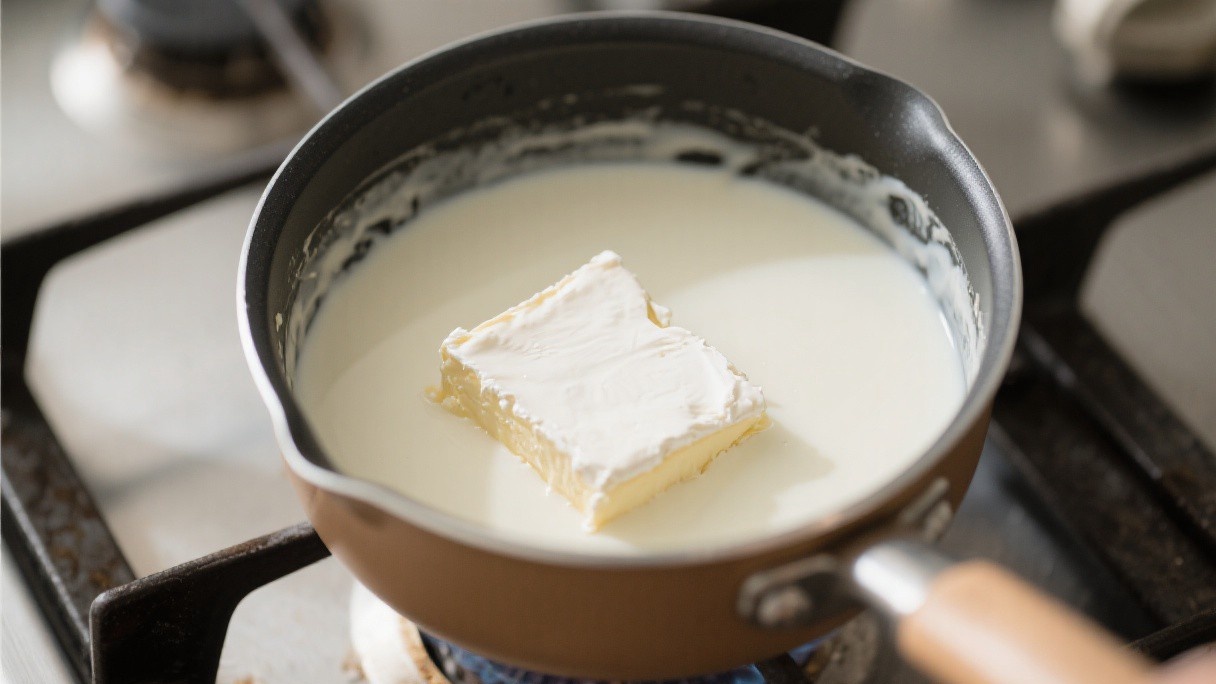
I start with 225 grams of full-fat cream cheese, 60 grams of unsalted butter, and 100 milliliters of whole milk. These three ingredients go into a heatproof bowl set over a pot of simmering water, and I stir them together until the mixture is completely smooth and no lumps remain. The gentle heat softens the cream cheese and butter without cooking the eggs that will be added later.
Once smooth, I remove the bowl from the heat and let it cool for 5 minutes. Then I whisk in 6 egg yolks, one at a time, followed by 60 grams of cake flour and 20 grams of cornstarch that have been sifted together. The resulting batter is thick, smooth, and pale yellow. I strain it through a fine-mesh sieve to remove any flour lumps or bits of unmelted cream cheese.
Whipping the Meringue to Stiff Peaks
In a separate bowl, I whip 6 egg whites with an electric mixer on medium speed until frothy, then add 80 grams of sugar in three additions, continuing to whip on medium-high speed. The meringue needs to reach stiff peaks, which means that when the whisk is lifted, the peaks stand straight up without curling at the tips. This takes about 6 to 8 minutes depending on the mixer.
I add a quarter teaspoon of cream of tartar at the beginning to stabilize the meringue and help it hold its volume. The bowl and whisk must be completely clean and free of any grease or egg yolk residue, because even a trace of fat will prevent the whites from reaching full volume. The finished meringue should be glossy and thick, with a texture that holds its shape when the bowl is inverted.
The Folding Technique That Preserves Volume
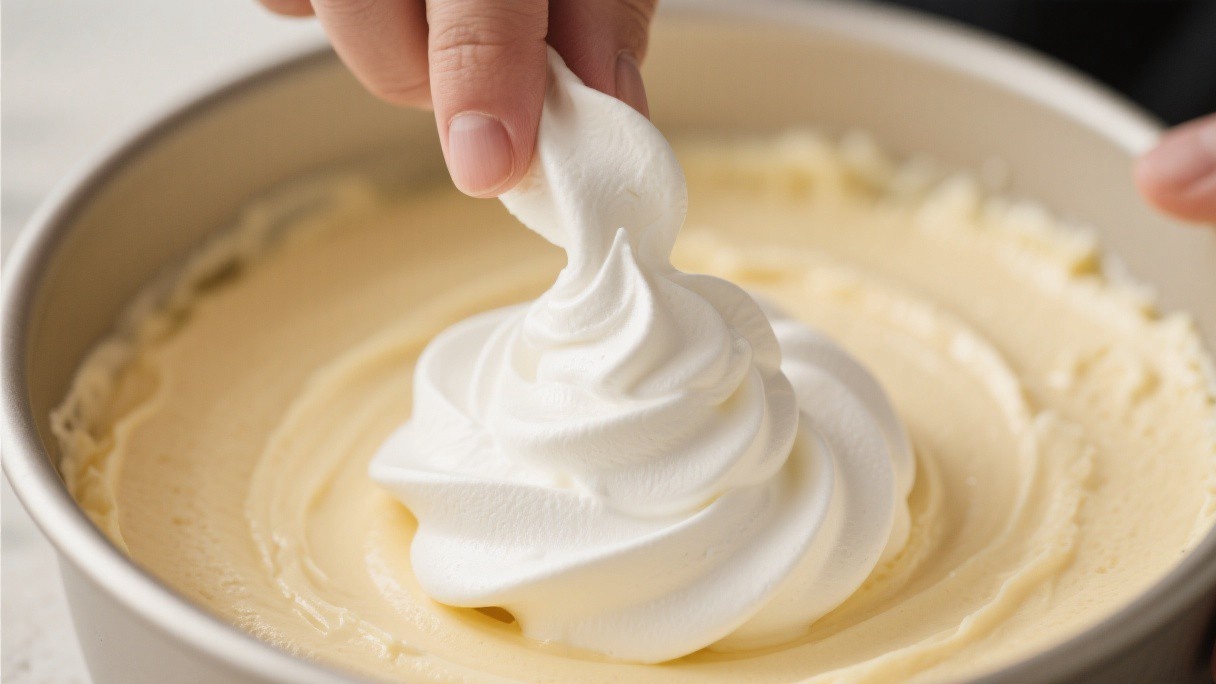
Folding is where the cheesecake is made or broken. I transfer the meringue to the cream cheese batter in three additions. For the first addition, I stir it in more aggressively to lighten the heavy batter, using about 15 strokes with a large spatula. For the second and third additions, I fold gently, scooping from the bottom of the bowl and turning the mixture over itself.
I rotate the bowl as I fold and count my strokes, aiming for no more than 20 to 25 total folds after the first addition. The goal is to combine the ingredients until no visible streaks of white meringue remain, while losing as little volume as possible. Over-folding deflates the meringue and produces a dense, flat cake. Under-folding leaves white streaks that create an uneven texture. The finished batter should be light, airy, and pourable in a thick ribbon.
Water Bath Baking Method
I line a 20-centimeter round cake pan with parchment paper on the bottom and grease the sides lightly. The batter is poured into the pan, which is then placed inside a larger roasting pan. I pour hot water into the roasting pan until it reaches about 2 centimeters up the sides of the cake pan.
The water bath serves two purposes: it moderates the oven temperature and provides steam that keeps the surface of the cheesecake from drying out and cracking. I bake at 160 degrees Celsius for 60 to 70 minutes. The cheesecake is done when the top is lightly golden and the center jiggles like gelatin when the pan is gently shaken. I turn off the oven, crack the door open slightly, and let the cheesecake cool inside for 1 hour.
This slow cooling prevents the cake from collapsing as the internal structure sets.
Serving and Storage
After the cheesecake has cooled to room temperature, I run a thin knife around the edge of the pan and invert it onto a plate. The cheesecake will have risen significantly during baking and then settled to about two-thirds of its peak height, which is normal. I dust the top with powdered sugar just before serving. Japanese cheesecake is best eaten on the day it is made, when the texture is at its lightest and most ethereal.
It can be refrigerated for up to 3 days, but the cold causes it to become slightly denser. I bring refrigerated slices to room temperature for 30 minutes before eating, which restores some of the original softness. The cake pairs well with fresh berries, a dollop of whipped cream, or a simple fruit compote.
Japanese cheesecake requires careful folding and precise timing, but the result is unlike any other dessert. The cotton-soft texture and delicate flavor make it worth the effort. Serve it fresh from the oven with a cup of green tea for an authentic experience.