French Confit: Duck Legs Slow-Cooked in Their Own Fat
Meat
|
March 21, 2026
Duck confit is one of the oldest methods of meat preservation in French cooking, and it produces a result that is difficult to achieve through any other technique. The duck legs are salted, then cooked very slowly submerged in their own rendered fat, which effectively poaches the meat in a temperature-controlled bath of pure fat. The result is meat that is extraordinarily tender, with a texture that is almost gelatinous, and a flavor that is deeply savory and rich.
I make duck confit several times a year, and each batch yields legs that I can store in the refrigerator for weeks or in the freezer for months, ready to be crisped and served at a moment's notice.
Curing the Duck Legs with Salt and Herbs
I use whole duck legs, about 300 to 350 grams each, with the skin on. For 4 duck legs, I mix 40 grams of coarse sea salt, 4 cloves of garlic, minced, 2 teaspoons of fresh thyme leaves, 1 teaspoon of cracked black pepper, 1 bay leaf crumbled, and 1 teaspoon of ground coriander. I rub this cure mixture thoroughly over each duck leg, pressing it into every crevice and under the skin where possible.
The legs go into a single layer in a glass dish, covered with plastic wrap, and cure in the refrigerator for 24 to 36 hours. The salt draws out moisture from the skin and penetrates the meat, seasoning it throughout and beginning the process of breaking down the proteins. After curing, I rinse each leg under cold water to remove the excess salt and herbs, then pat them completely dry with paper towels.
Rendering Duck Fat
I need enough duck fat to submerge the legs completely during cooking, which requires about 1 liter for 4 legs. If I do not have enough rendered fat saved from previous cooking, I render my own from the fat caps trimmed from whole ducks or from pieces of duck fat purchased from a butcher. I cut the raw fat into 2-centimeter cubes and place them in a heavy-bottomed pot over the lowest possible heat.
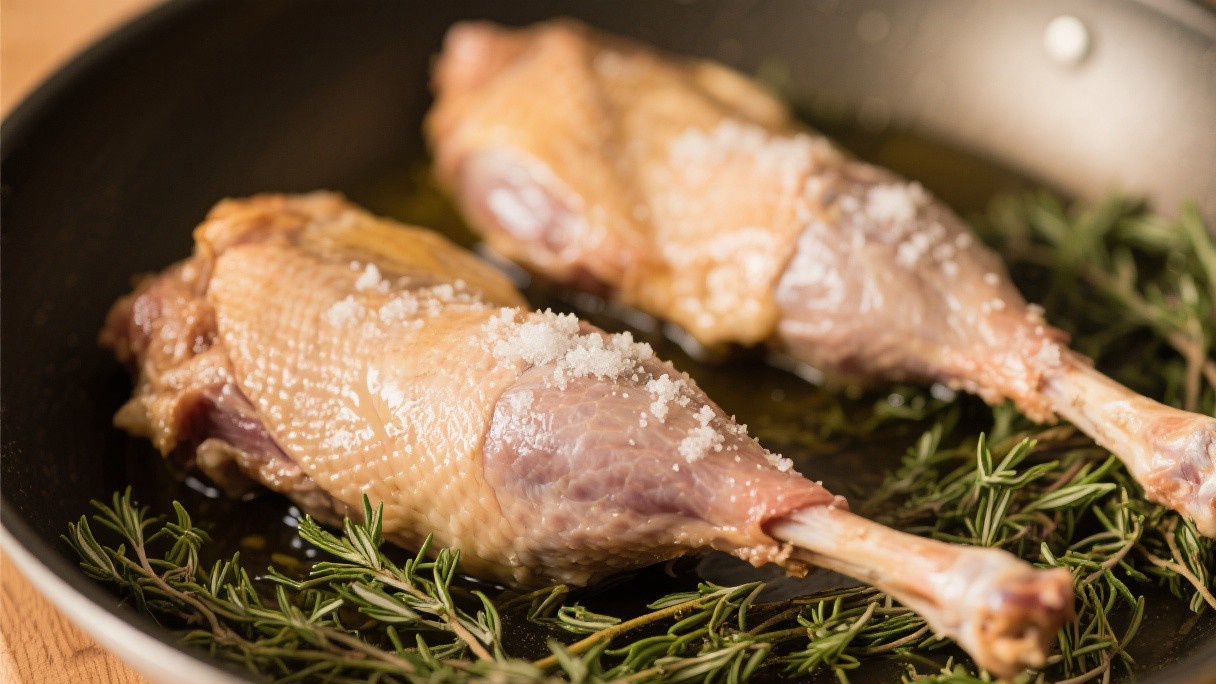
I cook them for 1.5 to 2 hours, stirring occasionally, until the fat has completely rendered and the remaining solids, called cracklings, are golden brown and crisp. I strain the fat through a fine-mesh sieve lined with cheesecloth and let it cool to room temperature. The rendered fat is solid at room temperature and has a clean, slightly savory aroma.
The Slow Cooking Process
I arrange the cured duck legs in a single layer in a heavy pot or Dutch oven. I melt the duck fat and pour it over the legs until they are completely submerged by at least 2 centimeters. The pot goes into an oven set to 120 degrees Celsius, where it cooks undisturbed for 3 to 4 hours.
The low temperature is essential; if the fat gets too hot, above 130 degrees Celsius, it will fry the skin rather than gently poach the meat. After 3 hours, I check the legs by inserting a fork into the thickest part of the thigh; the meat should offer no resistance and should pull away from the bone easily. If there is any resistance, I continue cooking for another 30 minutes and check again.
Storing in Fat for Extended Keeping
Once the legs are cooked, I let them cool in the fat to room temperature, which takes about 2 hours. Then I transfer the legs and fat to a clean container, arranging the legs in a single layer and making sure they are fully covered by the solidified fat. The layer of fat on top seals the meat from air and prevents spoilage. I store the container in the refrigerator, where the confit will keep for up to 3 weeks.
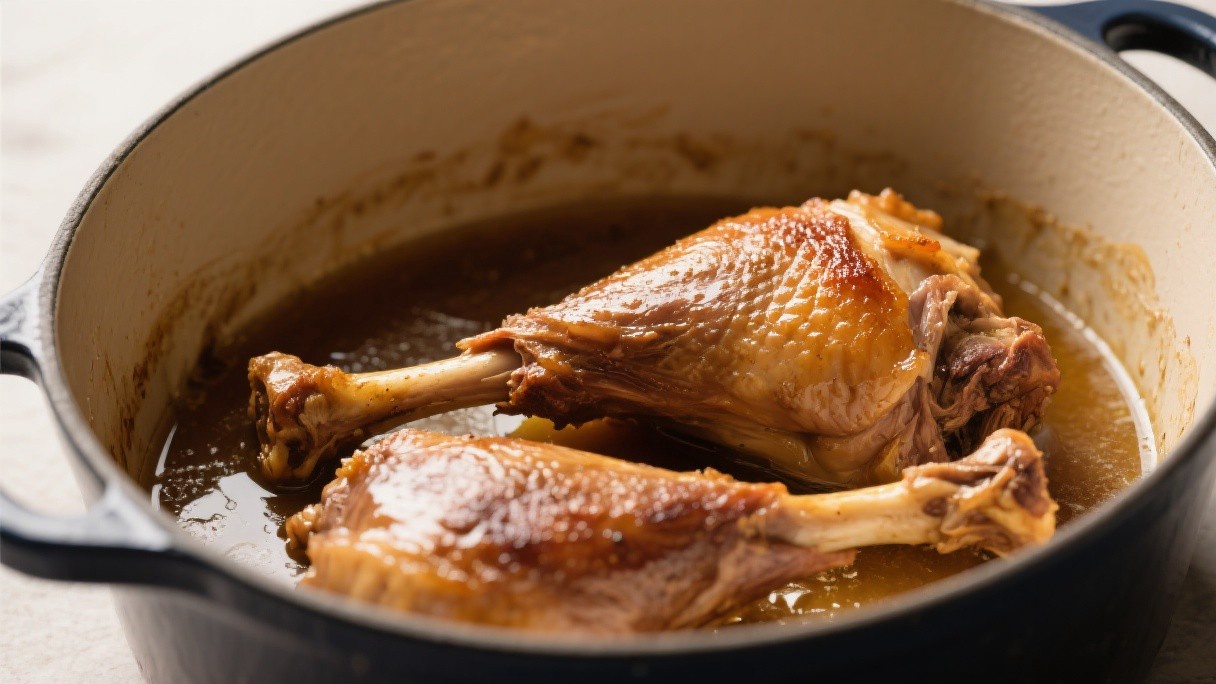
For longer storage, I portion the legs individually with enough fat to cover each one and freeze them for up to 6 months. The fat can be strained, reused, and refrozen multiple times without degradation, making it a valuable cooking medium that improves with each use.
Crisping and Serving
To serve, I remove the duck legs from the fat and scrape off the excess. I place them skin-side down in a cold cast-iron skillet, then turn the heat to medium-low. Starting in a cold skillet allows the fat under the skin to render slowly, which produces a crisp, golden skin without overcooking the meat.
I cook the legs for 8 to 10 minutes on the skin side, pressing them gently with a spatula to ensure even contact with the pan. Once the skin is deeply golden and crisp, I flip the legs and cook for 2 more minutes on the meat side just to warm through.
I serve the confit alongside lentils braised with carrots and onions, or over a bed of frisee salad dressed with a warm Dijon vinaigrette, which cuts through the richness of the duck fat.
The most important step is the first one. Gather your ingredients, set aside uninterrupted time, and commit to following the process through. Even imperfect results will taste better than anything mass-produced, and the skills you build here carry over to countless other recipes.