The Maillard Mastery: Restaurant-Quality Steak Searing at Home
Meat
|
March 12, 2026
Learning to make Maillard Mastery at home is one of the most satisfying culinary projects you can undertake. The process connects you to centuries of tradition while giving you room to develop your own style. Each attempt teaches you something new about ingredients, timing, and technique, building confidence with every batch.
The Maillard Reaction Essentials
The Maillard reaction requires temperatures above 280°F and dry surfaces. Wet steak steams instead of searing. Salt draw moisture to the surface, so pat steak completely dry before cooking, and season only just before hitting the pan. The surface must be screaming hot—water should dance and evaporate instantly on contact.
Cast Iron: Non-Negotiable
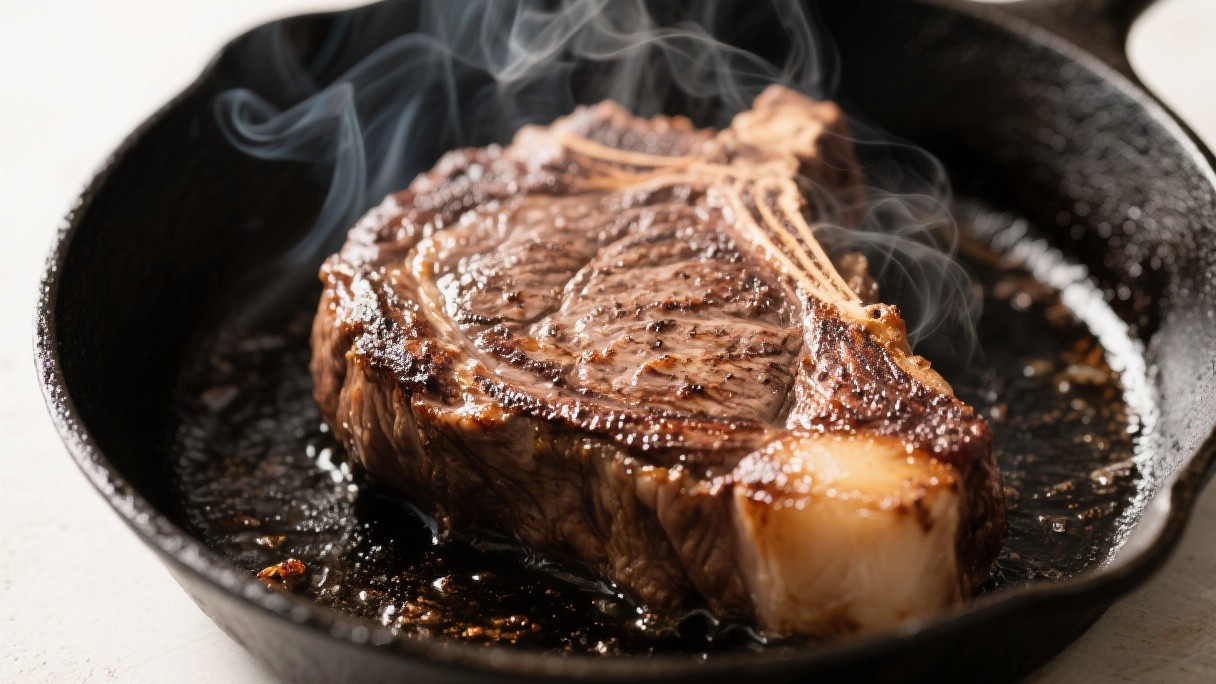
Cast iron retains and conducts heat perfectly for high-temperature searing. Preheat the skillet for 10+ minutes until smoking. Add high-smoke-point oil (avocado, grapeseed), wait 30 seconds, then add steak. The pan temperature will drop when meat hits, so starting super-hot compensates. Don't crowd the pan—overlapping causes steaming.
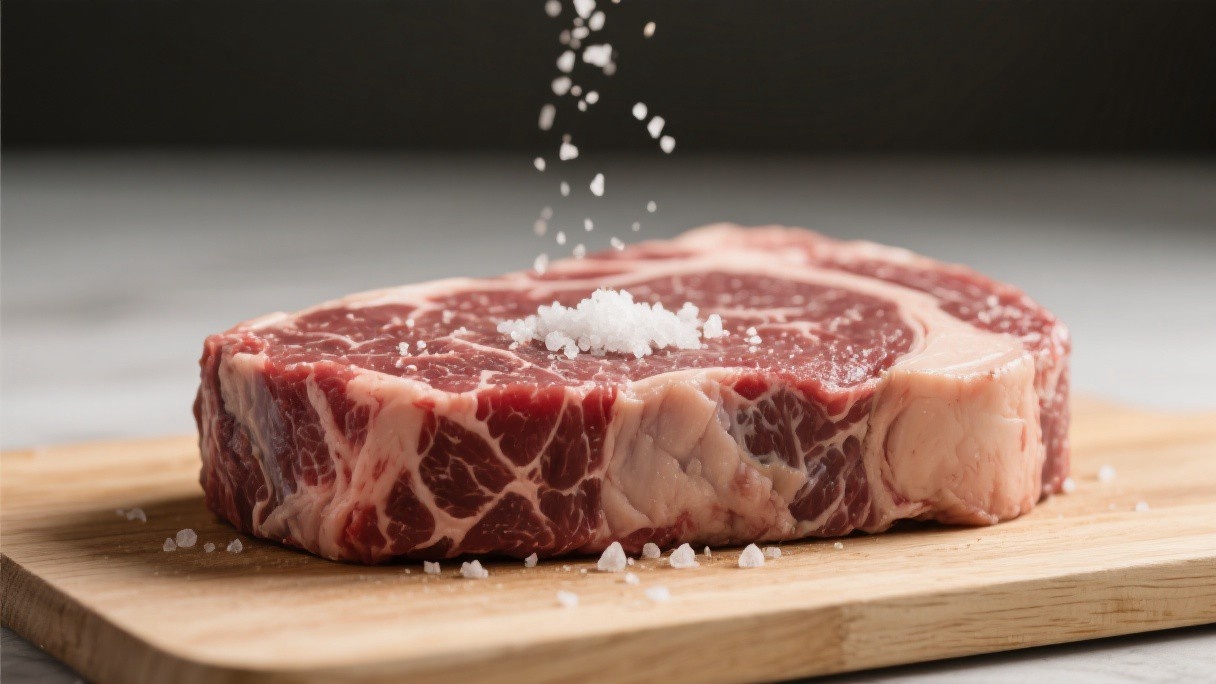
📷 Perfectly seared ribeye on cast iron
The Flip Once Myth
Traditional wisdom says flip only once for even cooking. Research proves otherwise—flipping every 2-3 minutes creates more uniform doneness and equally brown crusts. Each side gets multiple heat exposures, preventing gradient issues where one side is overcooked while the other remains underdone.
Butter Basting: The Finishing Touch
For the final 2 minutes, add butter, garlic, and herbs to the pan. Tilt pan and spoon melted butter over the steak repeatedly. This basting flavors the crust and adds richness. Use a probe thermometer to monitor internal temperature—remove steak at 125°F for medium-rare, as residual cooking continues during resting.
📷 Steak resting before slicing
Rest steak 10 minutes after cooking—never skip this. The juices redistribute throughout the meat; cutting too soon releases them onto the cutting board instead of your plate. The crust stays crust; the interior stays juicy. That's the Maillard mastery goal.
Blending Notes
I keep a journal of my blends, noting proportions and results. Some combinations were immediate successes; others took multiple attempts to perfect. This documentation has been invaluable, preventing me from forgetting winning formulas.
Seasonal Rotation
My blends change with the seasons—warming spices in winter, cooling mints in summer. This rotation keeps my daily tea ritual interesting, aligned with my body's changing needs throughout the year.
Selecting the Right Cut
Not every steak benefits from the same searing approach. Ribeye, with its generous marbling, is forgiving and develops excellent crust through the Maillard reaction. New York strip has a firmer texture and pronounced beefy flavor that pairs well with compound butter. Filet mignon, while tender, lacks the fat needed for a deep crust on its own, so wrapping it in bacon or basting with butter during searing helps.
I always choose steaks that are at least one and a half inches thick, as thinner cuts overcook before developing a proper crust.
The Reverse Sear Method
After years of experimentation, I have found that the reverse sear method produces the most consistently perfect results. The process begins by placing the seasoned steak on a wire rack in a low oven set to 225 degrees Fahrenheit until the internal temperature reaches ten degrees below the target doneness. This gentle, even cooking eliminates the gray band of overcooked meat that often surrounds the pink center.
The steak is then seared in a smoking-hot cast iron skillet for just sixty seconds per side, creating an impressive crust with minimal risk of overcooking the interior.
Compound Butter Recipes
Compound butter, a mixture of softened butter with flavorful additions, is one of the simplest ways to elevate a seared steak. Blue cheese and walnut compound butter adds rich, tangy complexity. Garlic and herb butter, made with minced garlic, fresh thyme, and parsley, is a classic pairing that complements any cut. Chimichurri butter combines the bright, herbaceous flavors of Argentine chimichurri with the richness of butter. Smoked paprika and cayenne butter adds a subtle smoky heat.
Preparing compound butter in advance and rolling it into logs in plastic wrap allows for easy slicing. A thick disc of compound butter placed on the hot steak just before serving creates a melting, flavorful sauce.
Resting Steak Properly
Resting a steak after searing is as important as the searing itself and should never be skipped. During cooking, the muscle fibers contract and push moisture toward the center of the meat. Resting allows the fibers to relax and the juices to redistribute evenly throughout the steak. A steak should rest for at least five minutes for every inch of thickness, loosely tented with foil to maintain warmth without trapping steam.
Cutting into a steak immediately after removing it from the heat results in a flood of juices on the cutting board and a dry, less flavorful piece of meat. Patience during this resting period is rewarded with a dramatically better eating experience.
Doneness Guide and Temperature Targets
Achieving the desired doneness requires precise temperature monitoring and an understanding of carryover cooking. A rare steak is pulled from the heat at 120 degrees Fahrenheit and reaches approximately 125 degrees while resting. Medium-rare, the most recommended doneness for optimal flavor and texture, targets 130 degrees and rests to 135 degrees. Medium reaches 140 degrees, and medium-well reaches 150 degrees. An instant-read thermometer inserted into the thickest part of the steak provides the most accurate reading.
Visual cues like firmness and juice color are helpful but less reliable than a thermometer for consistent results.
Practice builds confidence faster than any amount of reading. Keep a notebook of what works and what needs adjustment, and do not be afraid to deviate from the recipe once you understand the basics. The best cooks are those who learn from every batch, successful or not.