Artisan Chocolate Truffle Making: Professional Techniques for Gourmet Confections at Home
Dessert
|
February 13, 2026
8 ounces of chocolate to 1/2 cup of cream. That's the classic ganache ratio—adjust in either direction for firmer or softer results.
The Ganache Foundation
Truffles begin with ganache—the emulsified mixture of chocolate and cream. The ratio determines consistency: more cream yields softer ganache for piped truffles; less cream creates firm ganache for rolled truffles. A basic ratio for rolling: 8 oz chocolate to 1/2 cup cream. Heat cream to barely simmering, pour over chopped chocolate, let sit 2 minutes, then stir from center outward until smooth and shiny.
Flavor Infusions
Plain ganache is a canvas for creativity. Add Earl Grey tea leaves to heating cream for bergamot truffles; steep vanilla beans; add espresso powder; incorporate liqueurs (Cointreau, Kahlua, Grand Marnier); swirl in fruit purees. Match chocolate darkness to flavor intensity—dark chocolate pairs with bold flavors; milk and white chocolate suit milder infusions.
📷 Chocolate truffles with various coatings
Shaping and Setting
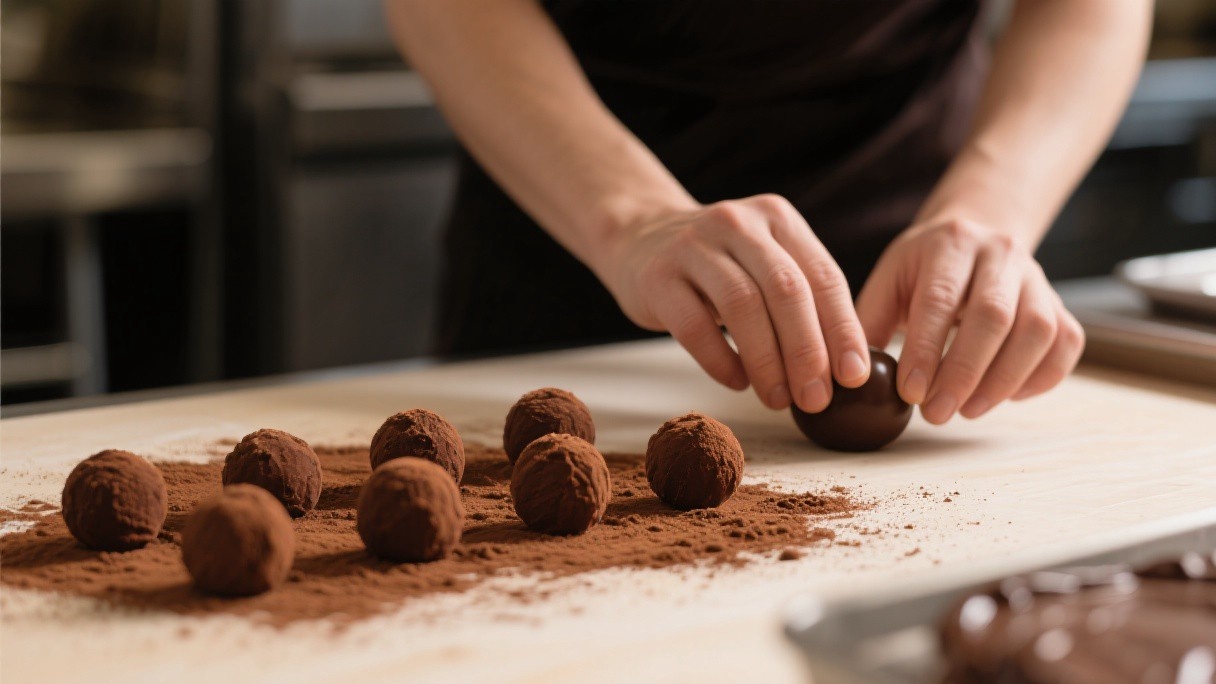
Let ganache set at room temperature for 1-2 hours or refrigerate until firm but scoopable. For uniform truffles, use a melon baller or tablespoon to portion. Roll quickly between palms—the heat from your hands softens ganache, making rolling easier. Work fast and re-chill if ganache becomes too soft.
Coating Techniques
Traditional truffles are coated in cocoa powder, which hides imperfections and provides intense chocolate contrast. For a professional finish, temper chocolate and dip truffles using a fork, letting excess drip off. Alternatively, roll in finely chopped nuts, shredded coconut, or colored cocoa butter decorations.
📷 Dipping truffles in chocolate
Store finished truffles refrigerated in airtight containers, bringing to room temperature before serving. The texture and flavor bloom when tasted slightly warm. Truffles make exceptional gifts—arranged in pretty boxes, they're edible works of art.
Tempering Chocolate for Professional Results
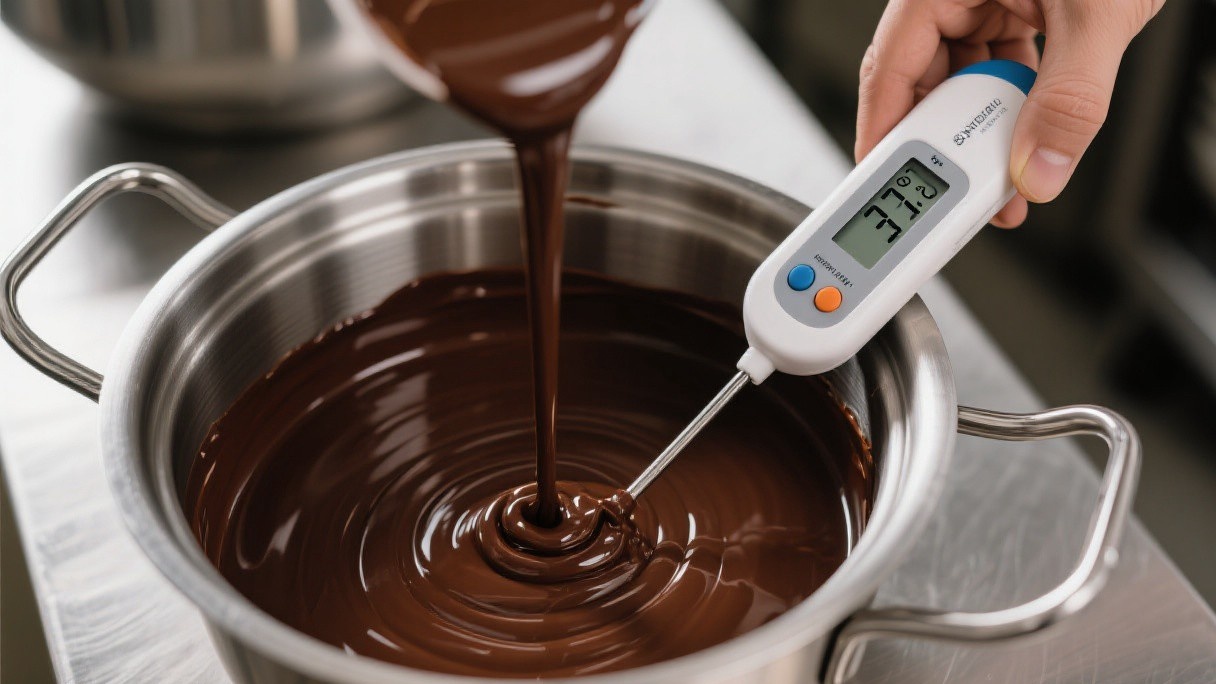
I have spent considerable time mastering the art of tempering chocolate, which has a glossy shine, a satisfying snap when broken, and resists blooming. The seeding method is the most accessible for home cooks. I melt two-thirds of my chocolate to 115 degrees Fahrenheit, then remove from heat and add the remaining one-third of unmelted chocolate.
I stir continuously until the temperature drops to 80 degrees, then briefly rewarm to 86 degrees for dark chocolate or 84 degrees for milk chocolate. This process creates stable beta crystals that give my truffles their professional appearance.
Coating and Finishing Techniques
I have learned that the exterior coating of a truffle is the first impression and deserves careful attention. A thin, even shell of tempered chocolate provides the best snap and mouthfeel. For cocoa-dusted truffles, I roll the centers in high-quality Dutch-process cocoa powder immediately after shaping while the chocolate is still slightly tacky. Chopped toasted nuts, shredded coconut, and freeze-dried fruit powder offer alternative coatings that add texture and visual interest.
For a polished look, I transfer the dipped truffles to a clean area and allow them to set completely at cool room temperature.
Ganache Ratios and Applications
The ratio of chocolate to cream in a ganache determines its final consistency and use. A two-to-one ratio of chocolate to cream produces a firm ganache suitable for truffle centers that can be rolled and coated. A one-to-one ratio creates a softer ganache ideal for filling truffles or spreading as a frosting. A one-to-two ratio produces a thin, pourable ganache perfect for glazing cakes and dipping.
The type of chocolate also matters, with dark chocolate requiring more cream than milk or white chocolate to achieve the same consistency. Understanding these ratios allows home cooks to adapt a single technique to multiple applications.
Truffle Flavor Variations
The basic chocolate truffle serves as a canvas for an enormous range of flavor additions. Spices like cardamom, cinnamon, and chili powder add warmth and complexity. Liqueurs such as Grand Marnier, Chambord, and Amaretto provide complementary flavors that enhance the chocolate. Sea salt, either sprinkled on top or incorporated into the ganache, intensifies the chocolate flavor and adds an appealing textural contrast. Espresso powder deepens the chocolate notes without making the truffle taste like coffee.
Nuts, candied ginger, and dried fruits can be folded into the ganache or used as coatings. Each variation starts with the same fundamental technique, making truffle making an accessible creative outlet.
Storage and Gift Packaging
Proper storage ensures truffles maintain their quality from kitchen to table. Truffles should be stored in a cool, dry place between 60 and 65 degrees Fahrenheit, away from direct sunlight and strong odors. The refrigerator is too humid for truffles, as condensation can cause blooming and affect the texture. For gifting, placing truffles in small paper or foil candy cups inside a decorative tin or box protects them during transport.
Adding a small packet of food-safe silica gel prevents moisture damage. Including a label with the flavor and date of creation adds a professional, thoughtful touch that elevates the gift.
Storage Tips
Most desserts can be stored in an airtight container for several days. Some actually improve in flavor after resting overnight. Always check for specific storage requirements based on ingredients used.
Hand-rolled truffles make an impressive gift, and the process is simpler than most people realize. Start with good quality chocolate, keep your hands cool, and do not worry about imperfect shapes. The taste always outweighs the appearance.