Korean BBQ Short Ribs: Marinade Caramelization and Grill Technique
Meat
|
March 8, 2026
Korean-style short ribs, known as galbi or kalbi, are cut across the bone in a flanken style, which produces thin slices of meat with three to four small bones running through each piece. This cut exposes a large surface area to the marinade and allows the meat to cook quickly over high heat.
I have grilled hundreds of orders of galbi over the years, and the combination of the sweet-savory marinade caramelizing on the grill and the tender, juicy meat beneath is remarkably satisfying things you can cook over fire. The marinade, the cut, and the grilling technique all work together, and each one matters.
Selecting and Preparing the Short Ribs
I ask the butcher for beef short ribs cut flanken-style across the bone, about 1 centimeter thick. If the ribs are thicker than 1.5 centimeters, I pound them lightly with a meat mallet between two sheets of plastic wrap to thin them out. Thinner ribs cook faster and more evenly, and the increased surface area picks up more marinade.
I score the meat on both sides in a crosshatch pattern, cutting about 3 millimeters deep, which helps the marinade penetrate and also prevents the meat from curling on the grill. Before marinating, I soak the ribs in cold water for 30 minutes to draw out excess blood, which can make the meat taste livery. I drain the ribs and pat them thoroughly dry with paper towels before adding the marinade.
The Marinade: Soy, Pear, and Garlic
The classic galbi marinade balances sweet, salty, and umami flavors. For 1 kilogram of short ribs, I combine 120 milliliters of soy sauce, 80 grams of sugar, 60 milliliters of sesame oil, 4 tablespoons of minced garlic, 2 tablespoons of minced ginger, 1 grated Asian pear, and 3 tablespoons of rice wine or mirin.
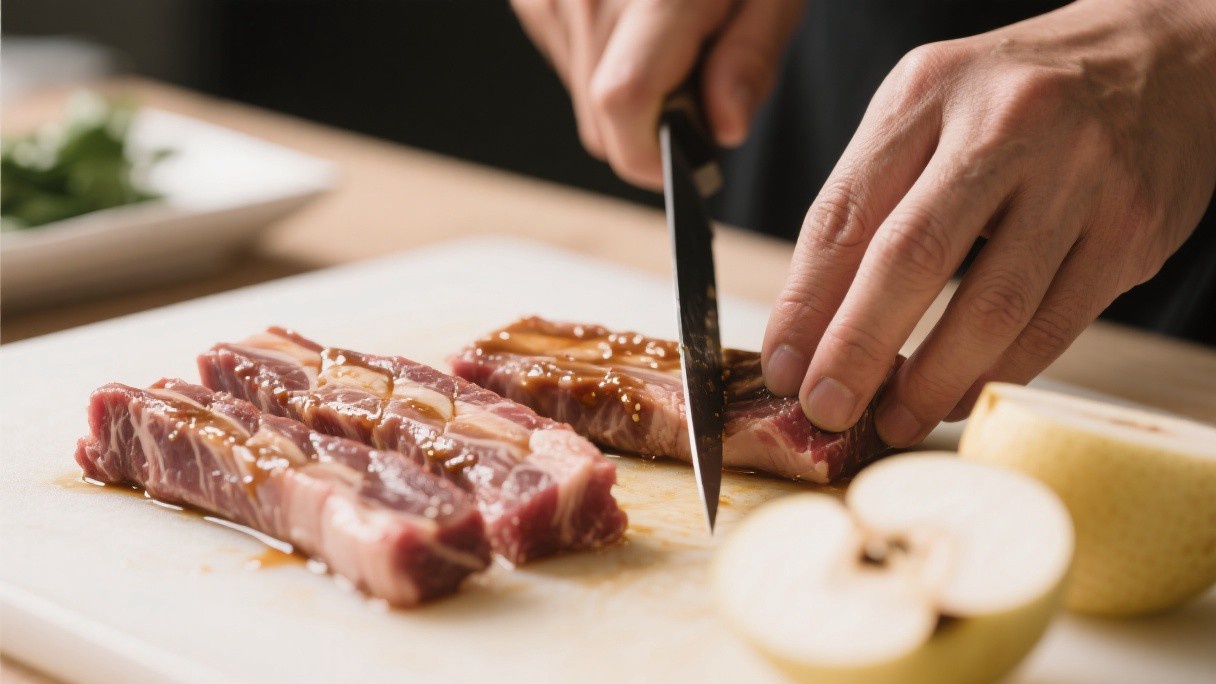
The grated pear is a traditional addition that serves two purposes: its enzymes tenderize the meat, and its natural sweetness rounds out the sharpness of the soy sauce and garlic. I blend the marinade ingredients in a food processor until smooth, then pour it over the ribs in a large, shallow dish. The ribs marinate for at least 4 hours at room temperature or overnight in the refrigerator. I turn them every few hours to ensure even coverage.
Grill Setup and Heat Management
I cook galbi over a charcoal grill using binchotan or hardwood lump charcoal, which burns hot and clean with minimal smoke. The grill grate should be about 10 centimeters above the coals, which produces a high-heat environment that sears the meat quickly. I let the coals burn until they are covered with a layer of white ash, which indicates they are at their peak temperature, about 500 degrees Celsius at the grill surface.
If I am using a gas grill, I set all burners to high and preheat for at least 15 minutes with the lid closed. The grill grates must be clean and lightly oiled before the meat goes on; I oil them by holding a paper towel dipped in neutral oil with tongs and rubbing it across the grates. Any residue from previous cooking will cause the marinated meat to stick and tear.
Cooking Time and Caramelization
Galbi cooks quickly because the meat is thin. I place the ribs on the grill and cook them for 2 to 3 minutes per side without moving them. The sugars in the marinade caramelize rapidly on the hot grill, creating a dark, slightly charred crust that is intensely flavorful. I watch the edges of the meat; when they begin to curl slightly and the surface is deep mahogany with some blackened spots, it is time to flip.
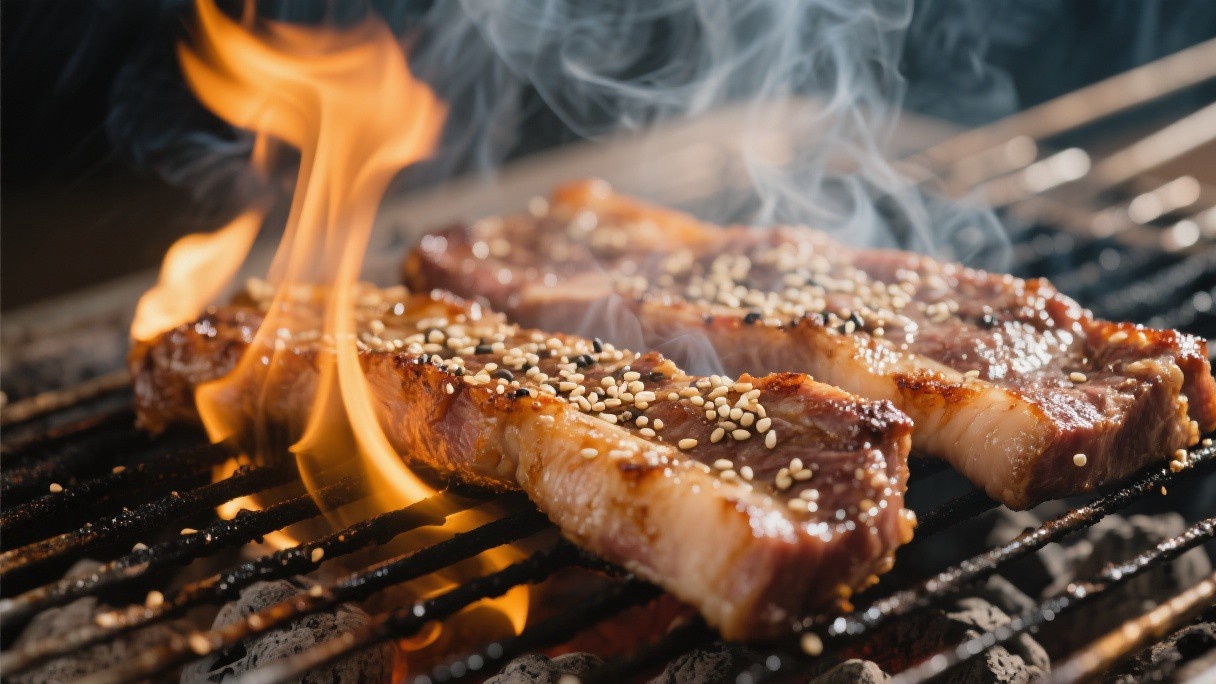
The total cooking time is 4 to 6 minutes, and the meat should be cooked to medium, with a slight pink color in the center. Overcooking makes the ribs tough and dry, because the flanken cut has relatively little fat marbling compared to other rib cuts. I transfer the cooked ribs to a platter and let them rest for 2 minutes before serving.
Serving with Banchan and Lettuce Wraps
Galbi is traditionally served as part of a larger Korean BBQ spread with an array of banchan, or side dishes. I prepare steamed rice, kimchi, pickled radish, seasoned spinach, and a dipping sauce made from 2 tablespoons of sesame oil, 1 tablespoon of coarse salt, and 1 teaspoon of black pepper.
The meat is eaten wrapped in lettuce leaves, typically red leaf or butter lettuce, with a spoonful of rice, a piece of meat, a dab of the dipping sauce, and a sliver of raw garlic or a slice of jalapeno. The lettuce wrap provides a cool, crisp contrast to the hot, caramelized meat and allows each diner to customize the balance of flavors in each bite.
Keep your ingredients fresh and your workspace organized before you begin. Preparation matters more than fancy tools or expensive components. When everything is measured and within reach, the actual cooking becomes enjoyable rather than frantic, and the results show in every bite.