Italian Cannoli: Crispy Shells and Sweet Ricotta Filling
Dessert
|
March 18, 2026
Cannoli are a Sicilian pastry consisting of crisp, tubular shells filled with a sweetened ricotta cream. The contrast between the shatteringly crisp shell and the cool, creamy filling is what makes a great cannoli, and preserving that contrast requires that the shells and filling be kept separate until the moment of serving.
I learned this rule the hard way after making a batch of pre-filled cannoli for a party, only to find that by the time guests arrived, the shells had absorbed moisture from the ricotta and become soft and chewy. Since then, I always fill cannoli immediately before serving, and the difference in quality is dramatic.
Making the Shell Dough with Wine and Vinegar
Cannoli dough is a simple mixture of flour, fat, sugar, and a small amount of acid that tenderizes the gluten. I combine 250 grams of all-purpose flour, 25 grams of sugar, half a teaspoon of salt, and 1 tablespoon of cocoa powder, which gives the shells a subtle color and flavor. I cut in 40 grams of cold, cubed lard or vegetable shortening until the mixture resembles coarse sand.
Then I add 1 egg, 1 tablespoon of white wine, and 1 teaspoon of white vinegar, mixing until a shaggy dough forms. I turn the dough out onto a lightly floured surface and knead it for about 5 minutes until it is smooth and elastic. The dough wraps in plastic and rests in the refrigerator for at least 1 hour, which relaxes the gluten and makes it easier to roll thin.
Rolling and Frying the Shells
I divide the rested dough into 6 pieces and roll each one through a pasta machine, starting at the thickest setting and progressing to the second-thinnest setting. The dough should be about 1.5 millimeters thick; any thicker, and the shells will be tough rather than crisp. I cut each sheet into 10-by-10-centimeter squares and wrap each square around a 10-centimeter metal cannoli tube, sealing the overlap with a dab of egg white.
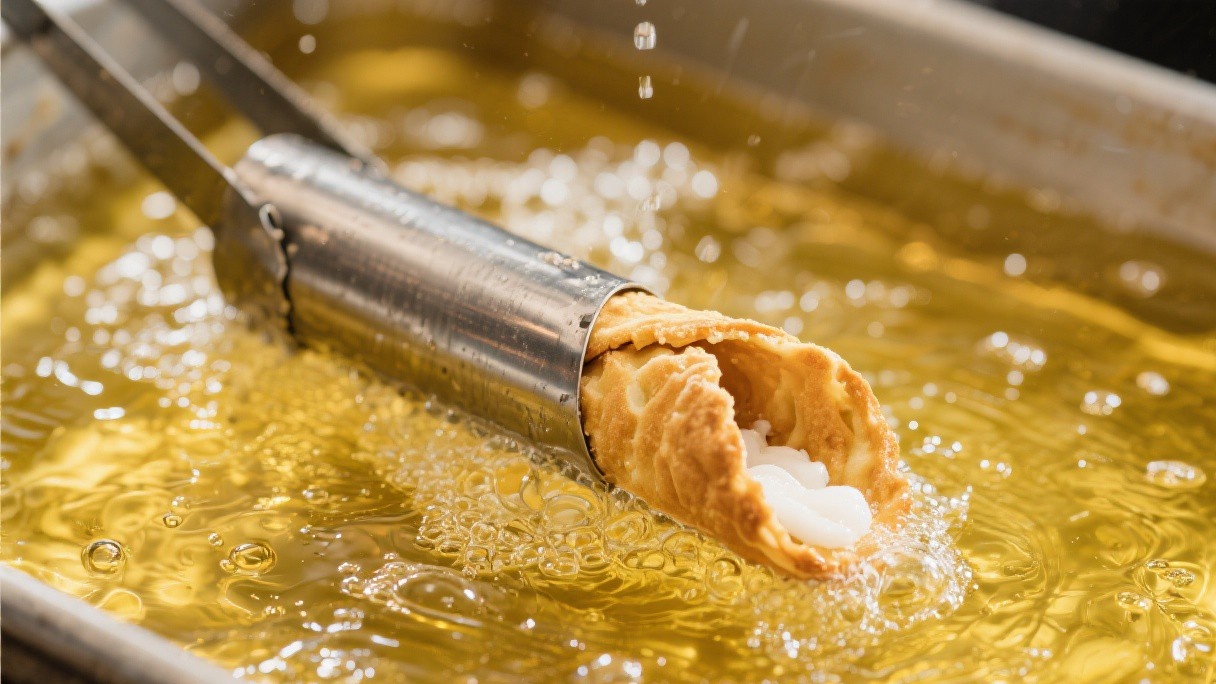
I heat about 8 centimeters of neutral oil to 175 degrees Celsius in a heavy pot. I fry the shells, still on their tubes, two at a time for 2 to 3 minutes, turning them with tongs, until they are deep golden brown and bubbled all over. I drain them on a wire rack and carefully slide them off the tubes while they are still warm.
If I let them cool completely on the tubes, they shrink and become difficult to remove.
Draining and Sweetening the Ricotta
The filling is where many homemade cannoli fall short. Commercial ricotta is too wet and grainy for cannoli filling, so I drain it thoroughly before using. I place 500 grams of whole-milk ricotta in a fine-mesh sieve set over a bowl and refrigerate it for at least 12 hours, preferably overnight. The drained ricotta should be thick enough to hold its shape when scooped.
I then press it through the sieve with the back of a spoon to smooth out any grainy texture. To the smoothed ricotta, I add 150 grams of powdered sugar, half a teaspoon of vanilla extract, and a pinch of cinnamon, folding gently until combined. I fold in 60 grams of mini chocolate chips at the very end, stirring just enough to distribute them evenly without breaking them into the ricotta.
Filling and Garnishing
I fill the shells using a piping bag fitted with a large open-star tip, piping the ricotta filling into both ends of each shell until it is full. The filling should extend slightly beyond the ends of the shell, creating a visible mound at each opening. I garnish the exposed filling by dipping the ends into a plate of chopped pistachios, dried cranberries, or additional mini chocolate chips.
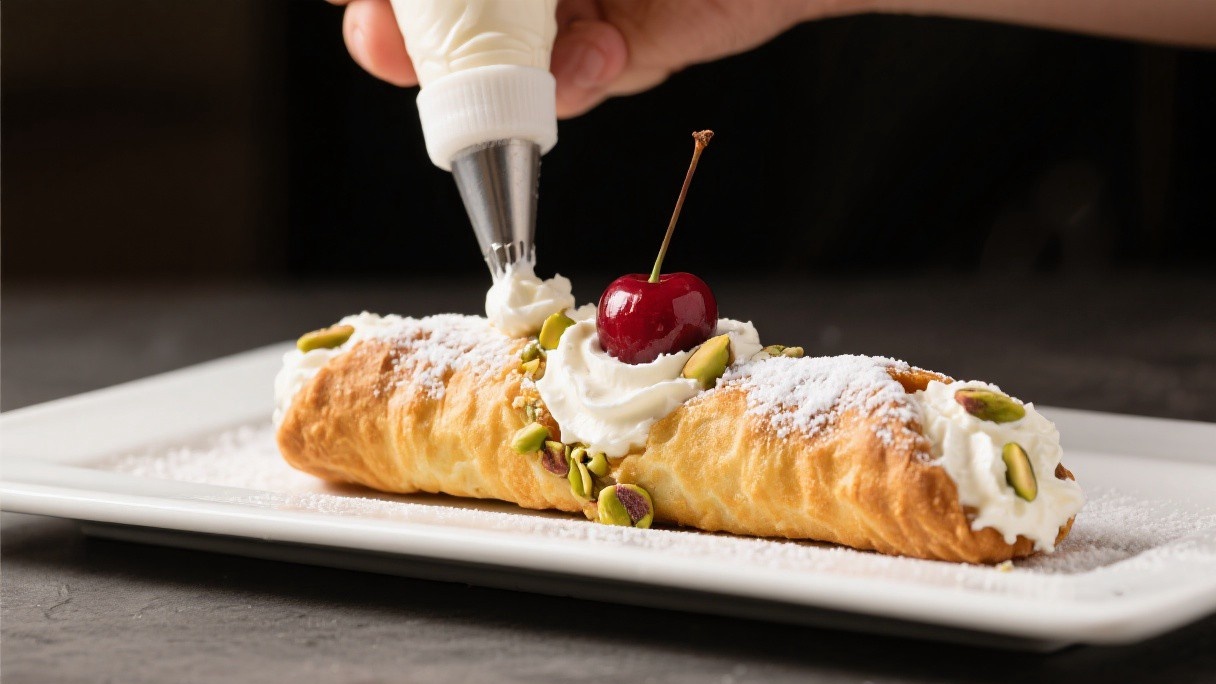
I dust the filled cannoli with powdered sugar just before serving, which adds a subtle sweetness and a decorative snowfall effect. I fill the cannoli no more than 30 minutes before serving; any longer, and the shells begin to soften. If I must prepare them further in advance, I keep the shells and filling separate and fill them at the last possible moment.
Storage and Make-Ahead Strategy
Cannoli shells keep remarkably well when stored properly. I place them in an airtight container at room temperature, where they remain crisp for up to 1 week. I never refrigerate the shells, because the humidity in the refrigerator causes them to soften. The ricotta filling keeps in the refrigerator for up to 3 days, covered with plastic wrap pressed directly against the surface. This separation of components makes cannoli an excellent make-ahead dessert for entertaining.
I prepare the shells and filling a day or two in advance, and then fill and garnish them just before guests arrive. The shells can also be frozen for up to 2 months and thawed at room temperature for 1 hour before filling.
Cannoli are best eaten immediately after filling, when the shell is at its crispiest. If you need to prepare ahead, store the shells unfilled in an airtight container and fill them just before serving. The contrast between the crunchy shell and creamy filling is what makes them special.