The Easiest Plant-Based Meal Prep Guide For Busy Weekdays
Nutrition
|
February 22, 2026
Plant-based meal prep sounds like a weekend project for people with a lot of free time and matching glass containers. It is not.
Done right, it takes about ninety minutes on a Sunday and means every weekday meal is already halfway finished before you even open the fridge.
The Mindset Shift That Makes Meal Prep Actually Work
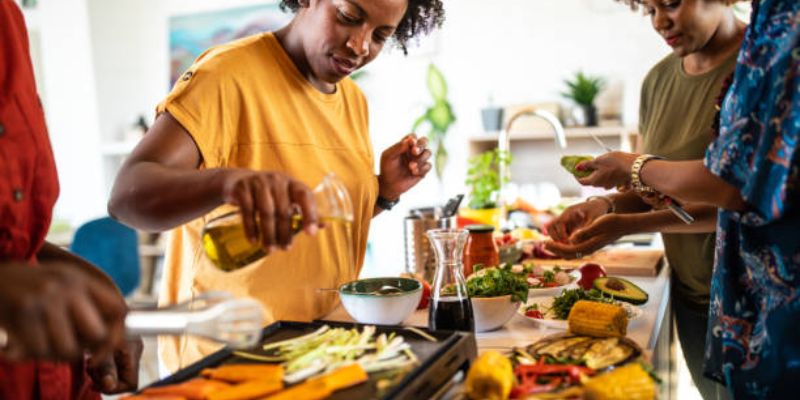
Most people approach plant-based meal prep by trying to cook five complete, separate meals in advance. That approach burns you out fast and leaves you with a fridge full of containers you lose interest in by Wednesday. The better approach is prepping components, not full meals. Cook your grains, roast your vegetables, prepare your proteins, and mix and match them across the week into different combinations.
This strategy keeps things from feeling repetitive and cuts active cooking time on weeknights down to five to ten minutes.
Step 1: Choose Your Grains And Cook Them In Bulk
Grains form the base of almost every plant-based meal prep plan. Brown rice, quinoa, farro, and barley all reheat well and can be stored safely in the fridge for 4 to 5 days. Cook one large batch of two different grains at the start of the week rather than one, giving yourself variety without extra effort.
A rice cooker makes this entirely hands-off. The Zojirushi NS-TSC10, at around $150, is the most reliable option for serious meal preppers. For a budget pick, the Aroma Housewares 8-cup model at $25 to $30 works well enough for most households. Start the grains first, then move on to everything else while they cook.
Step 2: Roast Two Sheet Pans Of Vegetables Simultaneously
Roasting vegetables is the backbone of efficient plant-based meal prep. Two sheet pans in the oven at 425 degrees Fahrenheit for 25 to 30 minutes produce enough roasted vegetables to carry you through the entire week. Choose vegetables with similar roasting times to simplify the process.
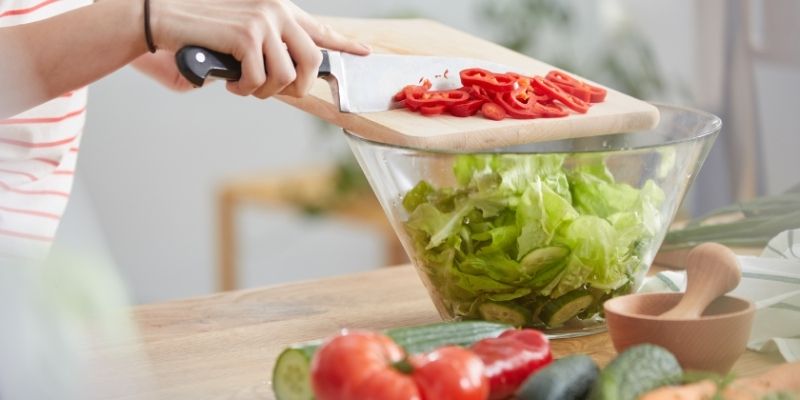
Broccoli, cauliflower, sweet potato, zucchini, bell peppers, and red onion all roast at similar temperatures and for similar times. Cut them into uniform pieces, toss with olive oil, salt, smoked paprika, and garlic powder, and spread them across two lined baking sheets without overcrowding. Overcrowding is the most common mistake; it turns roasting into steaming, producing limp rather than caramelized vegetables.
Step 3: Prepare Two Plant-Based Proteins
Protein variety across the week [1] is what keeps plant-based meal prep from becoming monotonous. Prepare two different proteins on prep day so you don't eat the same thing at every meal.
Baked tofu is one of the most practical options. Press extra-firm tofu, cube it, marinate it in soy sauce, sesame oil, garlic, and rice vinegar for ten minutes, then bake at 400 degrees for 25 minutes. It holds its texture in the fridge for four days and works in stir-fries, grain bowls, wraps, and salads. The second protein can be a batch of cooked lentils or seasoned chickpeas, both of which take under twenty minutes and cost almost nothing per serving.
Step 4: Make One Versatile Sauce
A good sauce transforms plant-based meal prep from functional to genuinely enjoyable. One sauce made on prep day seasons your meals all week without any additional cooking. Rotate among a tahini-lemon dressing, a peanut-ginger sauce, a roasted red pepper romesco, or a simple miso vinaigrette.
The tahini lemon dressing is the most universally useful. Whisk together 3 tablespoons of tahini, the juice of 1 lemon, 1 minced garlic clove, 1 teaspoon of maple syrup, and enough water to reach your desired consistency. It works over grain bowls, as a wrap spread, drizzled over roasted vegetables, and tossed with noodles. One batch lasts the entire week, stored in a jar in the fridge.
Step 5: Prep Your Breakfasts In Under Twenty Minutes
Breakfast is where plant-based meal prep saves the most time on weekday mornings. Overnight oats require about five minutes of active effort per batch and store well for four days. Combine half a cup of rolled oats with one cup of oat milk, a tablespoon of chia seeds, a teaspoon of maple syrup, and whatever toppings you prefer. Prepare four jars at once, cover them, and refrigerate overnight.
Chia seeds [2] contain approximately 10 grams of fiber and 5 grams of protein per two-tablespoon serving, which makes overnight oats with chia a genuinely filling breakfast rather than a light snack. For people who want something warmer, a batch of cooked quinoa dressed with cinnamon, almond butter, and sliced banana reheats in two minutes and provides a complete protein profile to start the day.
How To Build Weekday Meals From Prepped Components
Monday lunch might be a grain bowl with brown rice, roasted sweet potato, baked tofu, and tahini dressing.
Tuesday dinner is a wrap with quinoa, roasted bell peppers, seasoned chickpeas, and hummus.
Wednesday lunch becomes a stir-fry made with whatever roasted vegetables are left, combined with soy sauce and the remaining baked tofu, over fresh rice noodles.
The same prepped components appear in different formats across the week, which prevents the specific kind of meal fatigue that makes people abandon plant-based meal prep after a few weeks. Variety comes from the format and the sauce, not from cooking everything from scratch each day.

A Realistic Sunday Timeline
The entire plant-based meal prep session runs roughly 90 minutes when organized properly.
Start the grains in a rice cooker or pot, which takes the longest. While they cook, press and marinate your tofu, then get it into the oven. While the tofu bakes, prep and roast your two sheet pans of vegetables. While everything is in the oven, cook your lentils or chickpeas on the stovetop and make your sauce. Prepare your overnight oat jars last.
By the time the oven is done, the grains are cooked, the proteins are ready, and breakfast is handled for four days. Total active hands-on time is closer to 45 minutes. The rest is waiting for things to cook.
Scaling Up Without Overcomplicating It
One of the most practical aspects of plant-based meal prep is its easy scalability. Cooking for one person versus four requires almost no change in technique, just larger quantities and more containers. A family of four can realistically prep five days of lunches and dinners on a Sunday for around $60 to $80 in groceries, depending on the region, which works out to $1.50 to $2.00 per meal per person.
Meal prepping plant-based food [3] at this cost level significantly undercuts the expense of daily takeout or packaged convenience foods, which average $10 to $15 per meal in most urban areas.
Starting This Week Without Overwhelming Yourself
The first plant-based meal prep session does not need to cover everything. Start with just the grains and one protein this week. Add the roasted vegetables next Sunday. Add the sauce, prep the week after. Building the system gradually means it actually sticks rather than becoming another well-intentioned habit that lasts two weeks.
References
[1] Harvard T.H. Chan School of Public Health – https://www.hsph.harvard.edu
[2] United States Department of Agriculture – https://www.usda.gov
[3] Academy of Nutrition and Dietetics – https://www.eatright.org