Spanish Churros: Fried Dough Batter and Thick Hot Chocolate
Dessert
|
March 15, 2026
Spanish churros are fundamentally different from the sweet, cinnamon-coated versions found in American amusement parks and Mexican restaurants. In Spain, churros are made from a simple dough of flour, water, and salt, piped directly into hot oil and fried until golden and crisp. They are served plain, without sugar or cinnamon, alongside a cup of thick, pudding-like hot chocolate for dipping.
I ate churros at the Chocolatería San Ginés in Madrid, and the experience of dragging a freshly fried, slightly salty churro through a cup of dense, dark chocolate is remarkably satisfying dessert combinations I have encountered.
The Dough: Flour, Water, and Salt
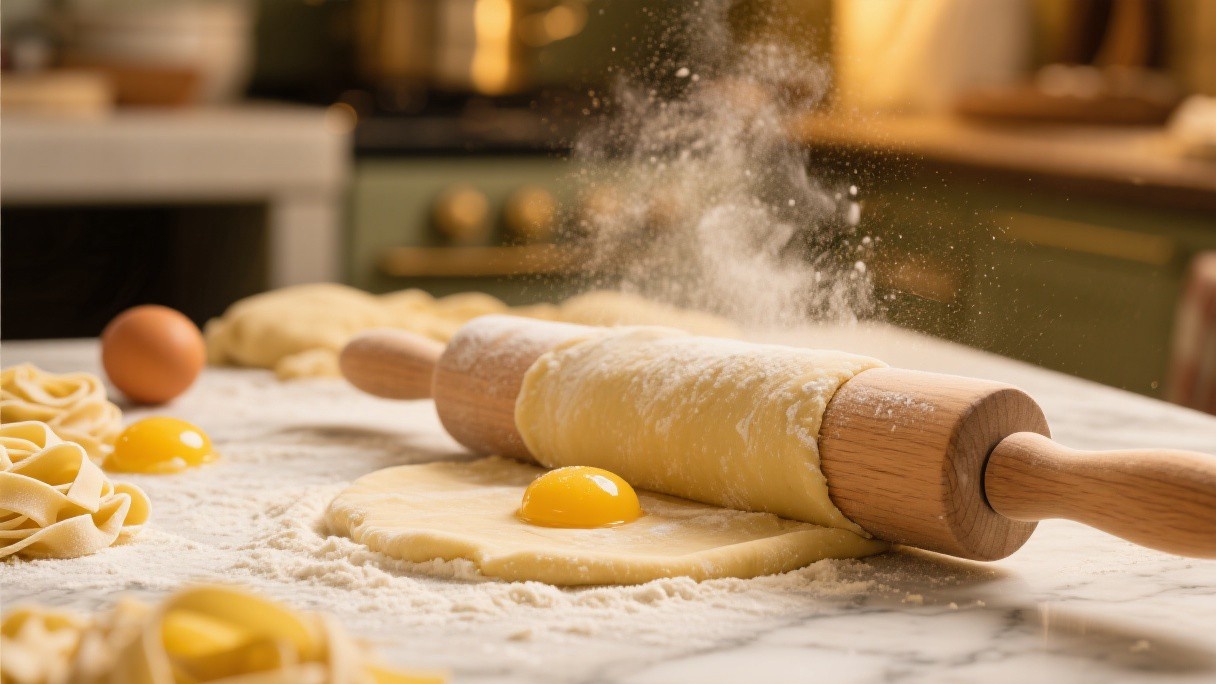
Spanish churro dough contains no butter, no eggs, and no sugar, which is what distinguishes it from the choux pastry used for cream puffs. The simplicity of the dough is what gives the fried churros their crisp, slightly chewy texture. I bring 500 milliliters of water to a boil with 1 teaspoon of salt and 1 tablespoon of olive oil.
Once boiling, I remove the pan from the heat and add 250 grams of all-purpose flour all at once, stirring vigorously with a wooden spoon until the mixture forms a smooth, thick dough that pulls away from the sides of the pan. I return the pan to low heat and cook the dough for 2 minutes, stirring constantly, which cooks out the raw flour taste and develops the gluten slightly.
The dough is then transferred to a piping bag fitted with a large star tip. The star shape is traditional and creates ridges that increase the surface area for crisping during frying.
Frying Temperature and Technique
I heat about 5 centimeters of neutral oil: sunflower or canola, in a wide, heavy pot to 180 degrees Celsius. Maintaining the correct oil temperature is essential; if the oil is too cool, the churros absorb excess oil and become greasy, and if it is too hot, they brown on the outside before the interior cooks through. I pipe 15-centimeter lengths of dough directly into the hot oil, cutting each one with scissors or a knife.
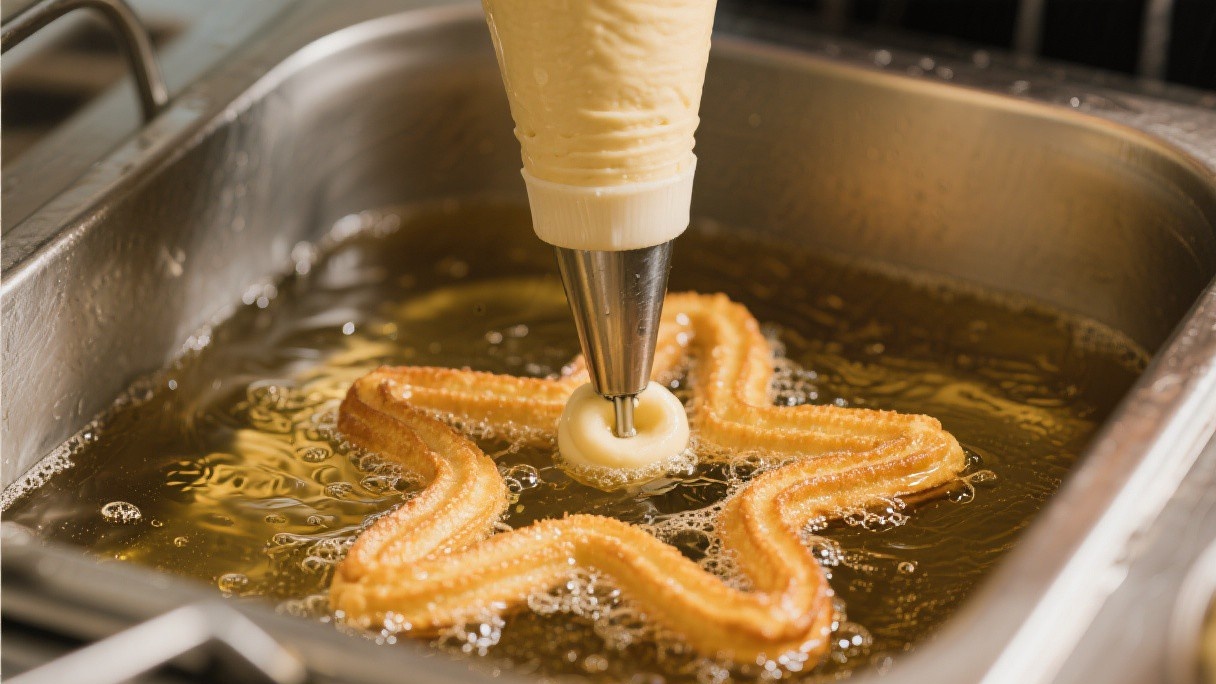
I fry the churros in batches of 4 to 5, which keeps the oil temperature stable. They cook for 3 to 4 minutes per side, turning once with tongs, until they are deep golden brown and crisp all over. I drain them on a wire rack set over a sheet pan and sprinkle them lightly with sugar while they are still hot. The sugar should be applied immediately after frying so it adheres to the residual oil on the surface.
The Thick Hot Chocolate for Dipping
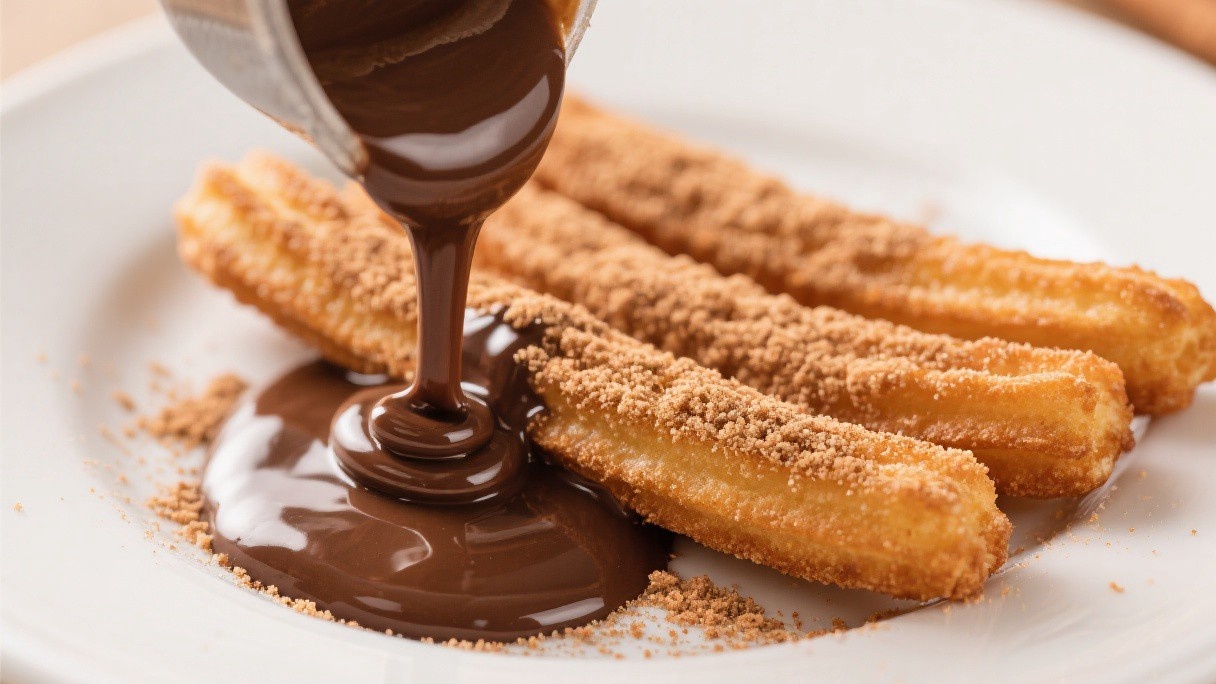
The chocolate served with churros in Spain is not a beverage in the conventional sense; it is thick enough to coat the churro and hold its shape when the churro is lifted. I make it by combining 200 milliliters of whole milk, 50 milliliters of heavy cream, and 1 tablespoon of cornstarch in a saucepan and whisking until smooth. I heat the mixture over medium heat until it thickens, about 3 to 4 minutes, stirring constantly.
Then I remove the pan from the heat and add 100 grams of chopped dark chocolate, 70 percent cacao, stirring until it is completely melted and the mixture is smooth and glossy. I return the pan to low heat for 1 more minute, stirring, to ensure the cornstarch is fully cooked. The finished chocolate should be thick enough that a spoon dragged through it leaves a clean line that holds for several seconds.
I serve it in small cups, about 100 milliliters per serving.
Piping Consistency and Common Problems
The dough must be piped while it is still warm, because it stiffens considerably as it cools and becomes difficult to extrude through the star tip. If the dough has cooled too much, I knead it briefly in the piping bag with my hands to soften it. The dough should be firm enough to hold its shape when piped but soft enough to flow smoothly through the tip.
If it is too stiff, the churros will have uneven thickness and may burst in the oil. If it is too soft, they will spread and lose their ridged shape before setting. I test the consistency by piping a short length onto a piece of parchment paper; it should hold the star shape without spreading.
The most common problem I encounter is oil that is not hot enough, which produces churros that are pale and oily rather than crisp and golden.
Serving and Eating
Churros are best eaten immediately after frying, while they are still hot and at maximum crispness. I arrange them on a plate or in a paper cone and serve the chocolate alongside in small cups. The traditional way to eat them is to hold one end of a churro and dip the other end into the chocolate, biting through the crisp exterior and the soft, slightly doughy interior.
The contrast between the salty, fried dough and the sweet, dense chocolate is the essence of the dish. Churros do not keep well; after about 30 minutes, they begin to soften and lose their appeal. If I need to prepare them in advance, I fry them, let them cool completely, and reheat them in a 200-degree Celsius oven for 5 minutes, which restores most of their original crispness.
Fresh churros, still warm from the oil and dusted with cinnamon sugar, are one of life's simplest pleasures. The batter comes together in minutes, and frying takes only a few minutes more. Keep the oil temperature steady and you will have perfect results every time.