Thai Pad Thai: Balancing Sweet, Sour, Salty, and Umami
Recipe
|
March 20, 2026
Thai Pad Thai is a craft that rewards patience and attention to detail. Whether you are a curious beginner or an experienced cook looking to refine your technique, understanding the fundamentals transforms ordinary ingredients into something remarkable. The journey from raw materials to finished dish involves specific steps that, once mastered, become second nature.
Preparing the Tamarind Sauce Base
The sauce is the foundation of the dish, and I prepare it in advance so that the flavors have time to meld. I start with 3 tablespoons of tamarind paste dissolved in 4 tablespoons of warm water, then strain out the seeds and fibers through a fine-mesh sieve. To the strained tamarind liquid, I add 2 tablespoons of fish sauce, 2 tablespoons of palm sugar, and 1 teaspoon of shrimp paste.
The palm sugar should be shaved or grated so it dissolves evenly. I heat the mixture in a small saucepan over low heat, stirring until the sugar is completely dissolved and the sauce has a glossy, uniform consistency. It should taste noticeably sour at this stage, because the noodles, eggs, and protein will absorb some of that acidity during cooking.
Soaking and Draining Rice Noodles
I use flat rice noodles that are about 6 millimeters wide, often labeled as pad thai noodles. For two servings, I weigh out 200 grams of dried noodles and soak them in room-temperature water for 30 minutes. They should be pliable but still firm and opaque; they will finish cooking in the wok. After soaking, I drain them thoroughly and toss them with a teaspoon of neutral oil to prevent sticking.
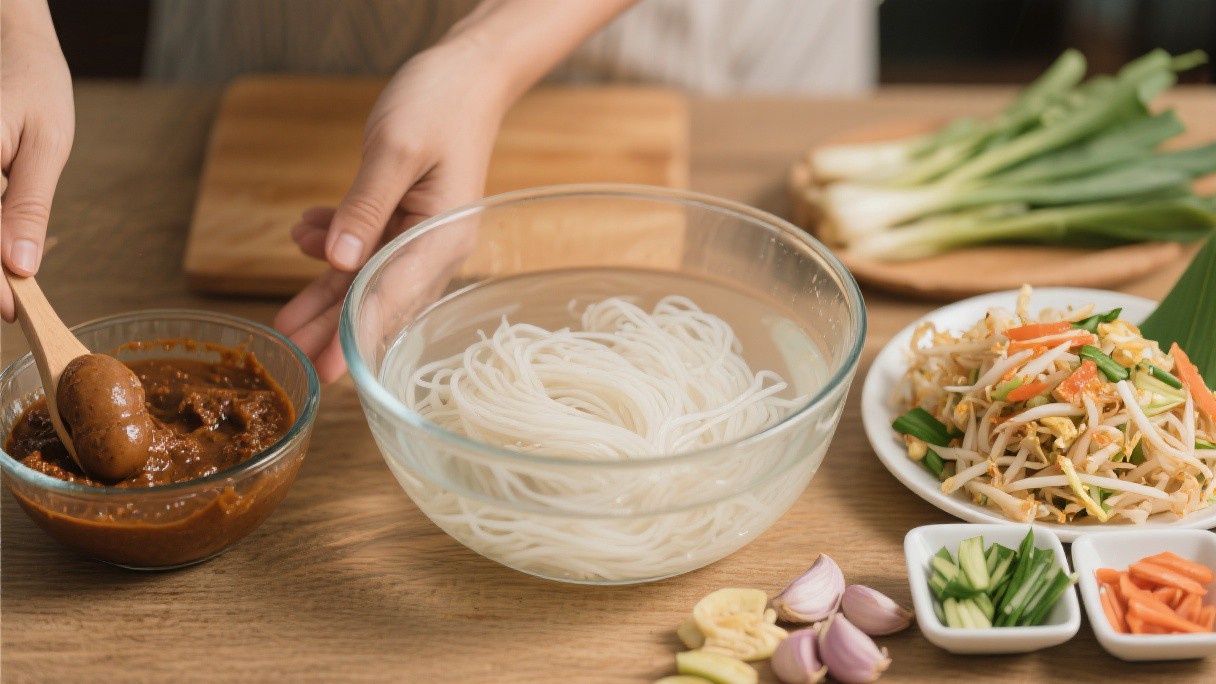
Over-soaking is the most common mistake I see; if the noodles become soft before they hit the wok, they will turn to mush during stir-frying. The noodles should bend easily without snapping but still offer resistance when you bite into them at this stage.
The Wok Technique and Ingredient Timing
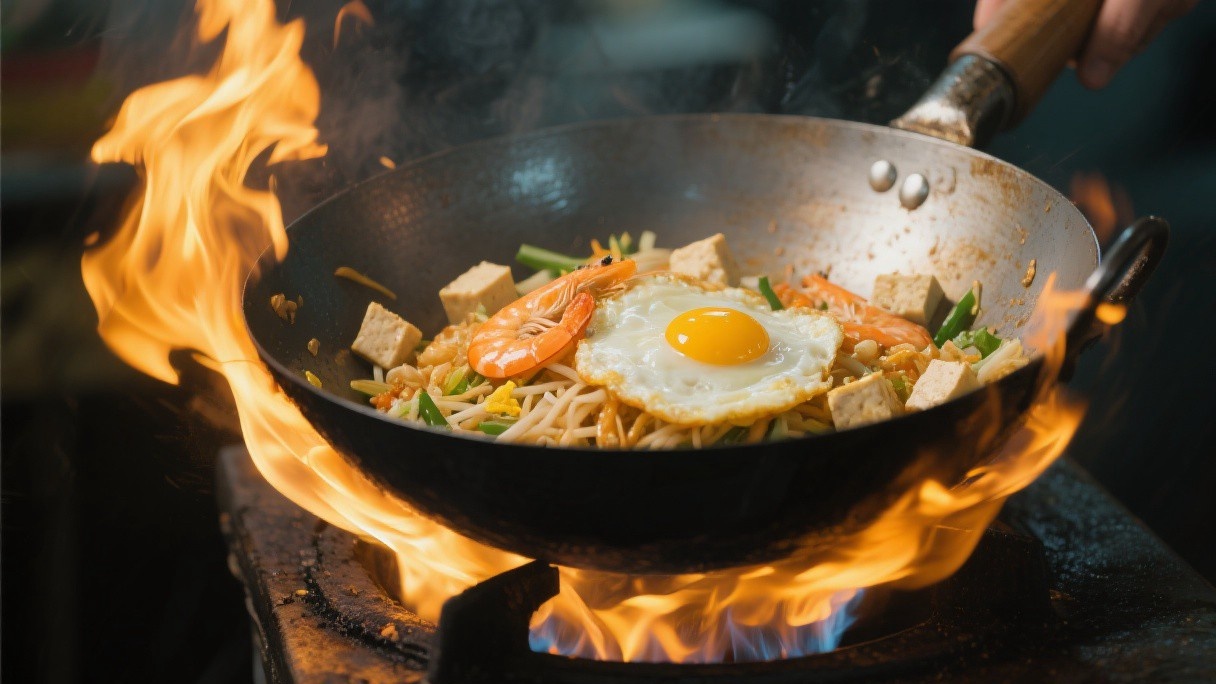
Cooking Pad Thai happens in stages, and the entire process from the first ingredient to the plated dish takes about 5 minutes. I heat a wok over high heat until it begins to smoke, then add 2 tablespoons of peanut oil. I cook 150 grams of peeled shrimp for 90 seconds until they are pink on the outside, then push them to one side.
Into the center of the wok, I crack 2 eggs and scramble them roughly for 30 seconds. Then I add the drained noodles and the tamarind sauce simultaneously, tossing everything together with tongs for about 2 minutes. The noodles absorb the sauce and finish cooking through direct contact with the hot metal of the wok.
I add 100 grams of bean sprouts and 2 chopped garlic chives in the last 30 seconds, tossing just long enough to wilt the chives slightly while keeping the sprouts crisp.
Garnishes That Complete the Dish
Pad Thai is served with a constellation of garnishes that each diner adds according to personal preference. I prepare a small plate with crushed roasted peanuts, lime wedges, additional bean sprouts, sliced banana chili, and a pinch of chili flakes. A tablespoon of finely dried shrimp powder is traditional but optional.
The lime wedge is perhaps the most important garnish; a generous squeeze of lime juice over the plated noodles brightens the entire dish and brings the sour component into sharper focus. I crush the peanuts coarsely rather than grinding them to a powder, because the larger pieces provide textural contrast against the soft noodles.
Common Mistakes and How to Avoid Them
The most frequent error in home Pad Thai is overcrowding the wok, which drops the temperature and causes the noodles to steam rather than fry. I cook no more than two portions at a time, even if I am feeding a larger group. Another common problem is using substitute ingredients like ketchup or rice vinegar in place of tamarind.
While these substitutions produce something edible, the flavor profile shifts dramatically and the result tastes more like a sweet-and-sour noodle stir-fry than Pad Thai. Finally, I always use a carbon steel wok rather than a non-stick pan, because the high heat retention and natural seasoning of the steel create the slight char on the noodles that is characteristic of the dish.
Ingredient Sourcing and Substitutions
Sourcing authentic ingredients for Pad Thai makes a noticeable difference in the final dish. Tamarind paste should be the block form made from the fruit pulp, not the concentrate sold in jars, which often contains added sugar and preservatives. Palm sugar is available at Asian grocery stores and has a caramel-like complexity that white sugar cannot replicate. If palm sugar is unavailable, I use a combination of light brown sugar and a small amount of honey, which approximates the flavor.
Dried shrimp, about 1 tablespoon added to the wok along with the noodles, provide an additional layer of umami that is traditional but optional. Rice vinegar should not be substituted with white vinegar or cider vinegar; its mild acidity is specifically suited to the balance of the dish. Fish sauce quality varies widely, and I use a Thai brand with a clean, salty flavor rather than a Vietnamese brand, which tends to be sweeter.
Once you have made this a few times, the process becomes meditative rather than stressful. You will start noticing small details, adjusting intuitively, and developing your own signature touches. That is when cooking stops being a chore and becomes something you actually look forward to.