Chinese Char Siu: Cantonese Roast Pork with Maltose Glaze
Meat
|
March 17, 2026
Char siu, the Cantonese roasted pork that hangs in the windows of barbecue shops across Hong Kong and Guangzhou, is characterized by its glossy, lacquered exterior and its sweet-savory flavor profile. The traditional method involves marinating strips of pork in a mixture of soy sauce, hoisin, sugar, and fermented bean curd, then roasting them at high heat while basting with a maltose glaze.
I have spent considerable time refining my char siu technique, and the two elements that make the biggest difference are the cut of meat and the application of the maltose glaze during the final minutes of roasting.
Choosing the Right Cut of Pork
The best cut for char siu is pork shoulder, specifically the portion known as pork butt or Boston butt, cut into long strips about 5 centimeters wide and 2 centimeters thick. The shoulder has enough fat to stay moist during the high-heat roasting process and enough connective tissue to develop a tender, slightly chewy texture. I trim the exterior fat to about 5 millimeters, which is enough to baste the meat from within during cooking without making it greasy.
Some recipes call for pork belly, which produces a richer result, but I find that the high fat content of belly can make the char siu overly heavy. Pork loin is too lean and dries out easily. I ask the butcher to cut the shoulder into strips along the grain, which makes it easier to handle during marinating and roasting.
The Marinade: Fermented Bean Curd and Five Spice
For 1 kilogram of pork strips, I prepare a marinade of 3 tablespoons of light soy sauce, 2 tablespoons of dark soy sauce, 3 tablespoons of hoisin sauce, 2 tablespoons of oyster sauce, 1 tablespoon of fermented red bean curd, mashed to a paste, 1 tablespoon of sugar, 1 teaspoon of five-spice powder, 4 cloves of minced garlic, and 2 tablespoons of Shaoxing wine.
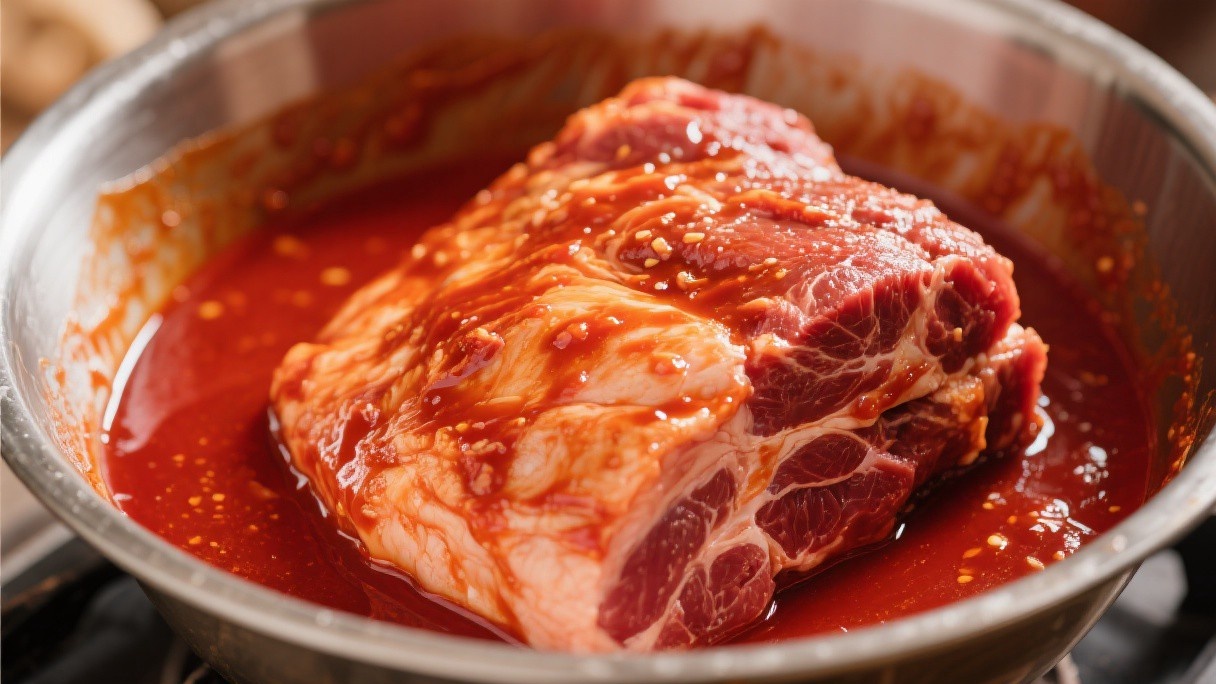
The fermented bean curd, also called nam yue, is the ingredient that gives char siu its distinctive depth and complexity. I combine all the marinade ingredients in a bowl and whisk until smooth, then coat the pork strips thoroughly, massaging the marinade into the meat with my hands. The pork marinates in the refrigerator for at least 12 hours, and up to 24 hours, covered with plastic wrap.
High-Heat Roasting Technique
I preheat my oven to 230 degrees Celsius with a roasting pan filled with 1 centimeter of water on the bottom rack. The water pan creates steam that prevents the pork from drying out during the initial phase of roasting. I place the marinated pork strips on a wire rack set over a foil-lined sheet pan and roast on the upper rack for 15 minutes.
Then I reduce the temperature to 200 degrees Celsius, flip the pork strips, and continue roasting for another 15 minutes. I flip the pork one more time and roast for a final 10 minutes. The total roasting time is about 40 minutes, and the pork should be caramelized and slightly charred at the edges. I check the internal temperature with a meat thermometer; it should read 71 degrees Celsius for a tender but safe result.
The Maltose Glaze Application
Maltose, also called malt syrup, is the ingredient that gives char siu its characteristic glossy, lacquered appearance. Maltose is extremely thick and sticky at room temperature, so I soften it by placing the jar in warm water for 10 minutes before using. I mix 3 tablespoons of maltose with 1 tablespoon of warm water to thin it to a brushable consistency.
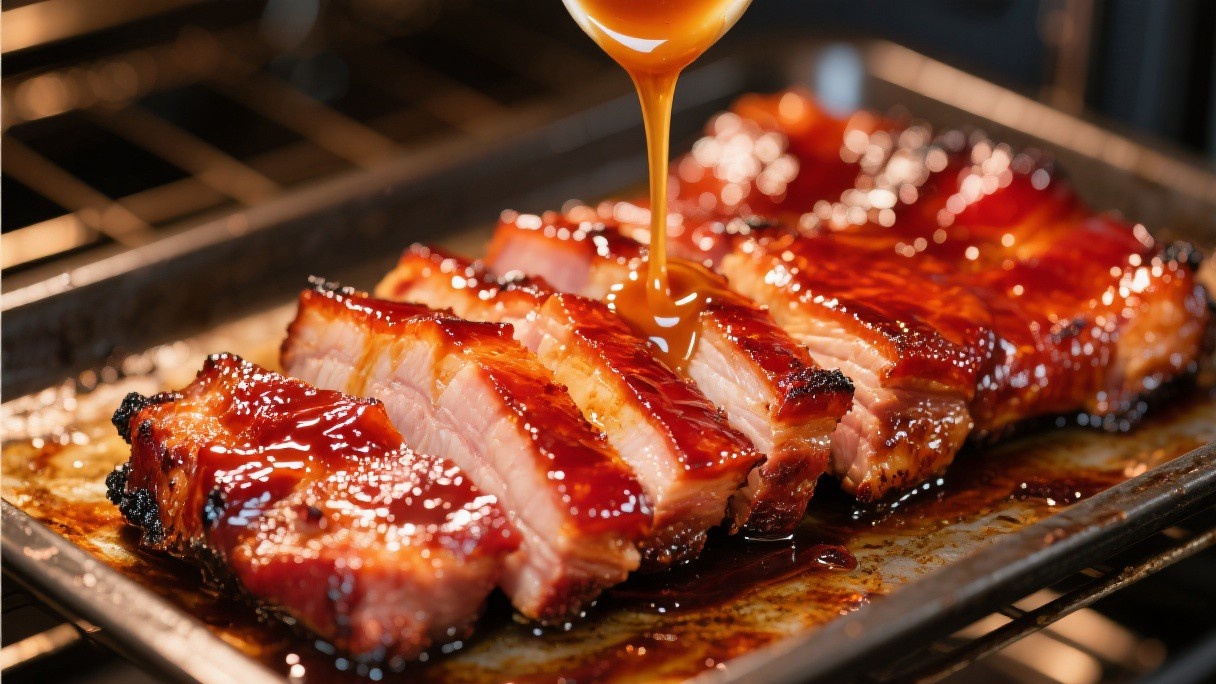
In the last 3 minutes of roasting, I remove the pork from the oven, brush it generously with the maltose glaze on all sides, and return it to the oven. I repeat this process once more after 2 minutes. The maltose caramelizes rapidly under the high heat, forming a shiny, amber-colored glaze that is both visually striking and deliciously sticky. I watch the pork closely during this final stage, because the high sugar content of the maltose can burn quickly.
Slicing and Serving
After removing the pork from the oven, I let it rest for 10 minutes before slicing. I cut it into 5-millimeter-thick slices across the grain, which produces pieces that are tender and easy to chew. The slices should show a clear contrast between the caramelized exterior and the pinkish, juicy interior. I serve char siu over steamed rice with a drizzle of the pan juices, alongside stir-fried choy sum and a bowl of congee.
Leftover char siu keeps in the refrigerator for up to 4 days and reheats well in a steamer for 5 minutes, which restores moisture without toughening the exterior glaze. It also makes an excellent filling for char siu bao, steamed buns, when diced and mixed with additional hoisin sauce.
Homemade char siu freezes well for up to three months, making it practical to prepare in large batches. Slice it thinly for fried rice, chop it for noodle soups, or serve it whole as a centerpiece. The maltose glaze gives it that distinctive glossy finish that is nearly impossible to achieve with regular sugar alone.
The oven does most of the work once the pork is glazed and roasting. Focus on getting the marinade and char siu sauce right, and the results will speak for themselves. Serve it over steamed rice with a simple vegetable side, and you have a restaurant-quality meal that comes together with minimal effort.