Japanese Miso Soup: Dashi Fundamentals and Fermented Soybean Paste
Recipe
|
March 8, 2026
The world of Japanese Miso Soup is richer and more varied than most people realize. From ingredient selection to final presentation, every decision affects the outcome. By learning the foundational techniques covered here, you will gain the skills and confidence to experiment while still producing reliable, delicious results every time.
Making Dashi from Kombu and Katsuobushi
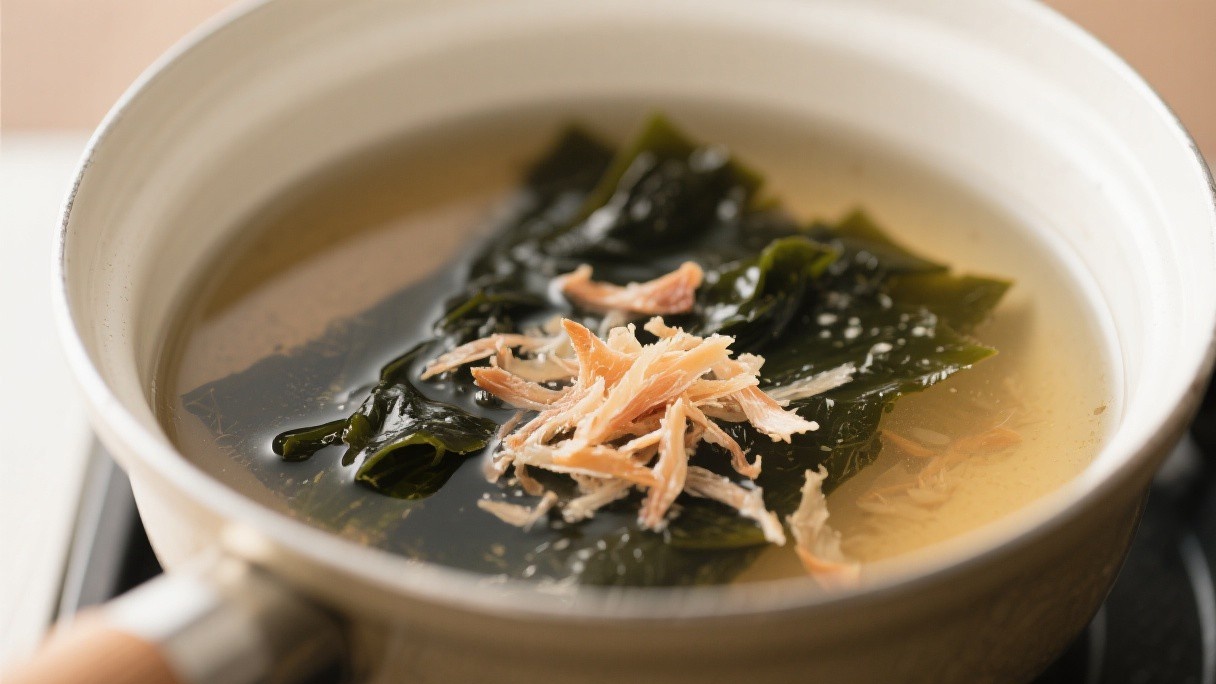
Dashi is the foundational stock of Japanese cooking, and its two primary ingredients are kombu, a thick kelp, and katsuobushi, dried bonito flakes. For a basic dashi, I place a 10-by-10-centimeter piece of kombu in 1 liter of cold water and let it steep for 30 minutes. Then I bring the water to a gentle simmer over medium-low heat, removing the kombu just before the water reaches a full boil.
Boiling kombu releases compounds that make the dashi bitter and slimy. Once the kombu is removed, I bring the water to a boil, add 20 grams of katsuobushi, and immediately remove the pot from the heat. The bonito flakes steep for 3 minutes, then I strain the liquid through a fine-mesh sieve lined with a paper towel. The resulting dashi should be pale gold, clear, and aromatic with a pronounced umami character.
Understanding Miso Varieties
Miso paste comes in several varieties, and the choice determines the character of the soup. Shiro miso, or white miso, is fermented for a shorter time and has a mild, slightly sweet flavor with a lower salt content. Aka miso, or red miso, is fermented longer and has a deeper, more intense flavor with pronounced saltiness. Awase miso is a blend of white and red miso that offers a balanced profile suitable for everyday use.
I keep all three in my refrigerator and choose based on what I am serving the soup alongside. For a light breakfast, I use shiro miso. For a dinner with grilled fish, I reach for aka miso. The general ratio is 3 tablespoons of miso paste per 1 liter of dashi, though this can be adjusted to taste.
Dissolving Miso Without Boiling
The most important rule in miso soup preparation is never to boil the miso. High heat destroys the aromatic compounds and the live cultures in the fermented paste. I bring the dashi back to a simmer, then reduce the heat to low. I place the miso paste in a ladle and lower it partially into the hot dashi, using chopsticks to gradually dissolve the paste into the liquid. This technique prevents lumps from forming and ensures even distribution.
Once the miso is fully dissolved, I remove the pot from the heat immediately. The soup should be served right away; letting it sit for extended periods causes the flavor to deteriorate.
Adding Tofu, Wakame, and Scallions
The most common additions to miso soup are silken tofu, wakame seaweed, and scallions. I cut 150 grams of silken tofu into 1-centimeter cubes and add them to the dashi before the miso, giving them about 2 minutes to warm through. Wakame needs only a brief soak; I add about 5 grams of dried wakame to the pot 1 minute before the miso goes in, and it expands to several times its dry volume.
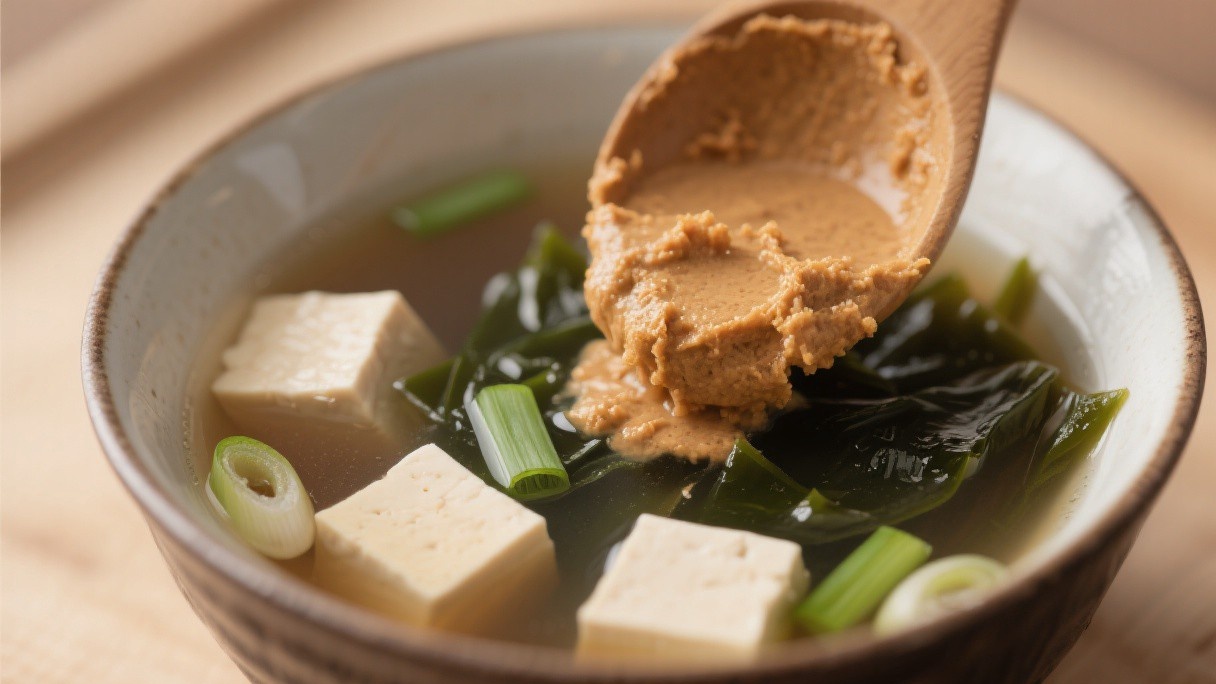
Thinly sliced scallions go on top as a garnish just before serving. Other common additions include sliced mushrooms, thinly sliced daikon radish, clams, or small cubes of potato. Each addition should be cooked in the dashi before the miso is added, so that the miso itself never experiences high heat.
Seasonal Variations and Serving
Miso soup changes with the seasons in Japan. In spring, I add clams and trefoil or mitsuba. In summer, a chilled version with cucumber and tofu is refreshing. Autumn brings matsutake mushrooms and sliced sweet potato. Winter calls for heartier additions like pork and daikon. Regardless of the variation, I always serve miso soup in lacquered bowls with lids, which trap the aroma and keep the soup hot.
The bowl should not be filled to the brim; about three-quarters full allows the drinker to hold the bowl comfortably. Miso soup is meant to be sipped directly from the bowl, with the solid ingredients eaten with chopsticks between sips.
Dashi Variations Beyond the Basic Recipe
While the kombu and katsuobushi dashi is the standard for miso soup, there are several variations that produce different flavor profiles. Iriko dashi, made from small dried sardines, has a deeper, fishier character that works well with red miso. To make it, I soak 15 grams of iriko in water overnight, then simmer them for 10 minutes and strain.
Awase dashi combines kombu and katsuobushi in equal proportions and is the most versatile version, suitable for clear soups, noodle broths, and simmered dishes. Shiitake dashi, made from dried shiitake mushrooms soaked in water, has an earthy, vegetarian-friendly umami that pairs well with white miso. I sometimes use a combination of shiitake and kombu dashi for a vegetarian miso soup that still has substantial depth.
Each dashi variation produces a noticeably different soup, and I choose based on the miso variety and the other ingredients I plan to include.
Start with the simplest version and refine from there. Each attempt builds muscle memory and deepens your understanding of how the ingredients interact. Within a few sessions, you will develop an intuitive sense for timing and technique that no recipe alone can teach.