Taiwanese Bubble Tea: Tapioca Pearl Cooking and Milk Tea Base
Beverage
|
March 13, 2026
Taiwanese bubble tea combines chewy tapioca pearls with creamy milk tea to create one of the most popular drinks in the world. The pearls, made from cassava starch, require precise cooking and resting to achieve their signature bounce. The milk tea base, typically a strong black tea paired with creamer or milk, balances sweetness and depth.
Cooking Tapioca Pearls to the Right Texture
I use large black tapioca pearls, about 8 millimeters in diameter, which are made from tapioca starch and caramelized brown sugar. For one serving, I measure 40 grams of dried pearls. The cooking water must be at a rolling boil, at least 2 liters, before the pearls go in. A large volume of water prevents the pearls from sticking together and ensures even cooking.
I stir the pearls gently for the first 2 minutes to prevent them from settling on the bottom of the pot, then cover the pot, reduce the heat to medium, and cook for 15 minutes. After 15 minutes, I turn off the heat and let the pearls steep in the hot water for an additional 15 minutes, covered. This two-stage cooking process ensures that the pearls are cooked through to the center without becoming mushy on the outside.
The Sugar Coating That Prevents Sticking
After cooking, I drain the pearls in a sieve and immediately rinse them under cold running water for 10 seconds. The cold water halts the cooking and firms the exterior of the pearls. Then I transfer them to a bowl and toss them with 2 tablespoons of brown sugar or honey. The sugar coating serves two purposes: it prevents the pearls from clumping together as they cool, and it adds a layer of sweetness that complements the milk tea.
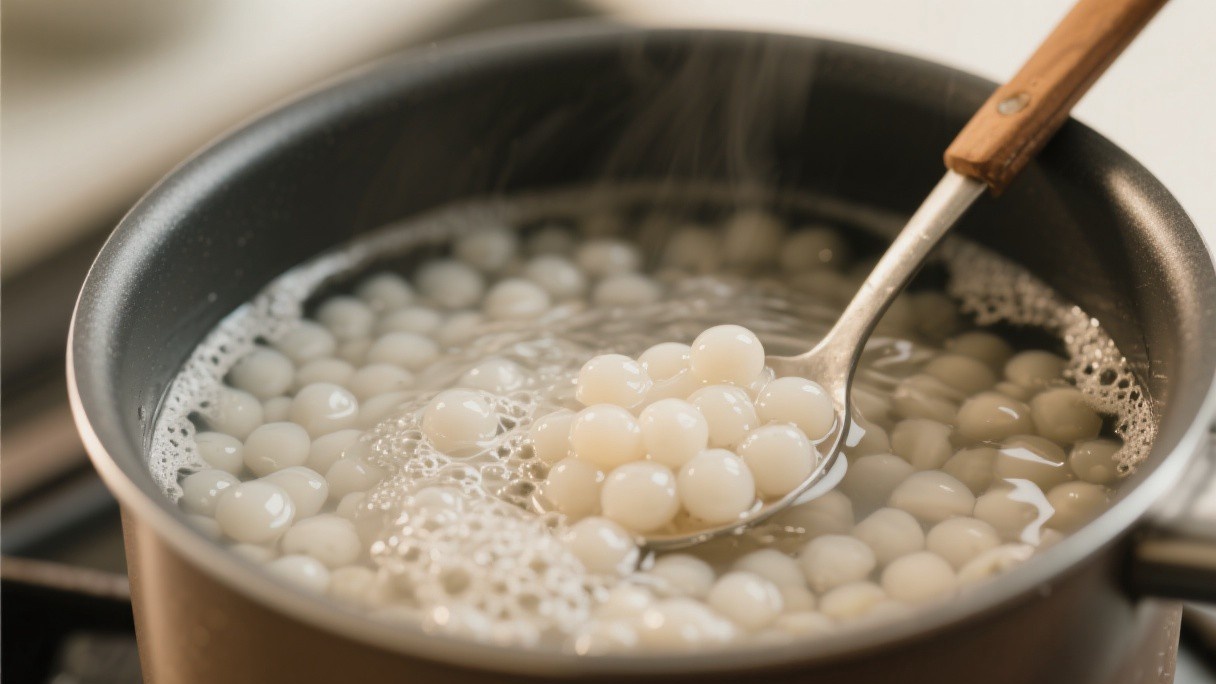
I let the pearls sit in the sugar for at least 5 minutes before using them. Cooked tapioca pearls are best used within 3 to 4 hours; after that, they begin to stiffen and lose their chewy texture. If I need to store them longer, I keep them in their sugar syrup in the refrigerator and reheat them briefly in hot water before serving.
Brewing the Tea Base
The tea base for bubble tea is typically a blend of black teas. I use a combination of Assam and Ceylon, which provides a robust, malty flavor with enough body to stand up to the milk and sugar. For a batch that makes 4 servings, I steep 15 grams of loose-leaf tea in 500 milliliters of water heated to 95 degrees Celsius for 5 minutes. I strain the tea and let it cool to room temperature.
Some recipes call for a longer steep or a stronger concentration, but I find that over-steeping produces a tea that is too astringent and clashes with the sweetness of the pearls and syrup. The tea should be strong enough to be recognizable through the milk but not so strong that it tastes bitter.
Assembling the Milk Tea
For each serving, I place 2 tablespoons of cooked tapioca pearls at the bottom of a 500-milliliter cup. I add 3 tablespoons of the brewed tea, 60 milliliters of whole milk, and 2 tablespoons of simple syrup. The ratio of tea to milk is roughly 1:1, which produces a drink that is creamy but still clearly tea-flavored. I stir vigorously to combine, then add ice to fill the cup.
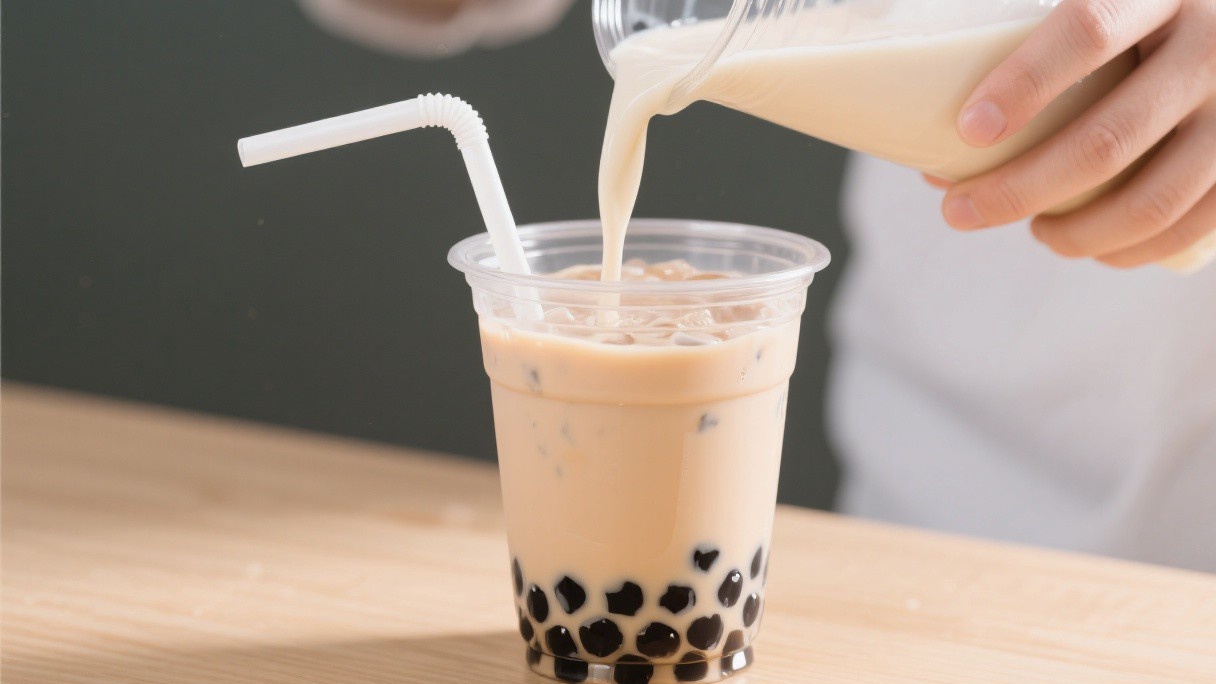
The drink is served with a wide-bore straw, which is wide enough to draw the pearls through. I adjust the sweetness by varying the amount of simple syrup; 2 tablespoons is my standard, but some people prefer up to 4 tablespoons. I always taste the assembled drink before serving and adjust the syrup incrementally.
Variations and Customization
The bubble tea template supports dozens of variations. I replace the milk with coconut milk for a dairy-free version that pairs particularly well with the brown sugar pearls. A taro version, made with taro powder stirred into the milk tea base, has a nutty, slightly sweet flavor and a distinctive purple color. Fruit tea versions omit the milk entirely and use a lighter green or oolong tea base with fruit purees like passion fruit, mango, or strawberry.
Brown sugar bubble tea, which has become popular in recent years, features pearls that are cooked in a concentrated brown sugar syrup and served with fresh milk rather than tea. The brown sugar syrup coats the inside of the cup, creating a tiger-stripe pattern that is visually striking and adds a deep caramel sweetness.
Temperature, timing, and ingredient quality are the three pillars that hold everything together. Master those, and variations become easy. Try different combinations, adjust seasonings to your preference, and make the recipe your own. That is how personal cooking traditions are born.
The quality of your tea leaves directly affects the final drink. Use a robust black tea like Assam or Ceylon rather than delicate green teas, which can get lost under the milk and sugar. Brew the tea strong, then sweeten while still hot so the sugar dissolves completely. Let the base cool before assembling the final drink over ice.
Bubble tea is as much about texture as flavor, and getting the pearls right makes all the difference. Cook them fresh whenever possible, and never skip the sugar rinse that gives them their signature sweetness. Once you find your preferred tea-to-milk ratio and boba consistency, you will wonder why you ever paid for the store-bought version.