Austrian Sachertorte: The Original Chocolate Apricot Layer Cake
Dessert
|
March 11, 2026
The Sachertorte was created in 1832 by Franz Sacher, a 16-year-old apprentice chef, and it has since become remarkably iconic desserts in European pastry. I first tasted a proper Sachertorte at the Hotel Sacher in Vienna, and the experience was instructive: the cake was denser and less sweet than I expected, with a thin layer of apricot jam that provided a sharp, fruity contrast to the dark chocolate glaze.
Reproducing it at home requires precision in the cake batter, which relies on beaten egg yolks for lift rather than chemical leavening, and a glaze that must be poured at the correct temperature to achieve a smooth, mirror-like finish.
The Sponge: Egg Yolk Foam and Melted Chocolate
The Sachertorte sponge is a type of Viennese sponge cake that uses separated eggs. I beat 6 egg yolks with 100 grams of granulated sugar on high speed for about 8 minutes until the mixture is pale, thick, and has tripled in volume. Separately, I melt 130 grams of dark chocolate, 60 to 65 percent cacao, over a water bath and let it cool to about 35 degrees Celsius.
I fold the melted chocolate into the yolk mixture along with 1 teaspoon of vanilla extract, using about 15 gentle folds to combine. Then I sift 130 grams of cake flour over the top and fold it in with another 10 to 12 folds. In a clean bowl, I whip 6 egg whites with a pinch of salt to stiff peaks and fold them into the batter in two additions, using about 15 folds total.
The batter goes into a 23-centimeter springform pan that has been buttered and lined with parchment paper.
Baking Temperature and the Center Crack
I bake the Sachertorte at 170 degrees Celsius for 55 to 60 minutes. The cake will develop a characteristic crack down the center, which is normal and expected; the dense batter rises quickly and then settles as the structure sets, creating a natural split. I test for doneness by inserting a wooden skewer into the center; it should come out with a few moist crumbs but no wet batter.
The cake cools in the pan for 10 minutes, then I run a knife around the edge and release the springform ring. I invert the cake onto a wire rack, remove the parchment, and let it cool completely. The baked cake is dense, slightly dry, and firm, which is the correct texture; the apricot glaze and chocolate coating will add moisture later.
The Apricot Jam Glaze Layer
Once the cake is completely cool, I level the top with a serrated knife to create a flat surface, then slice the cake horizontally into two even layers. I warm 200 grams of apricot jam in a small saucepan over low heat, stirring until it is smooth and pourable. If the jam has large fruit pieces, I strain it through a sieve.
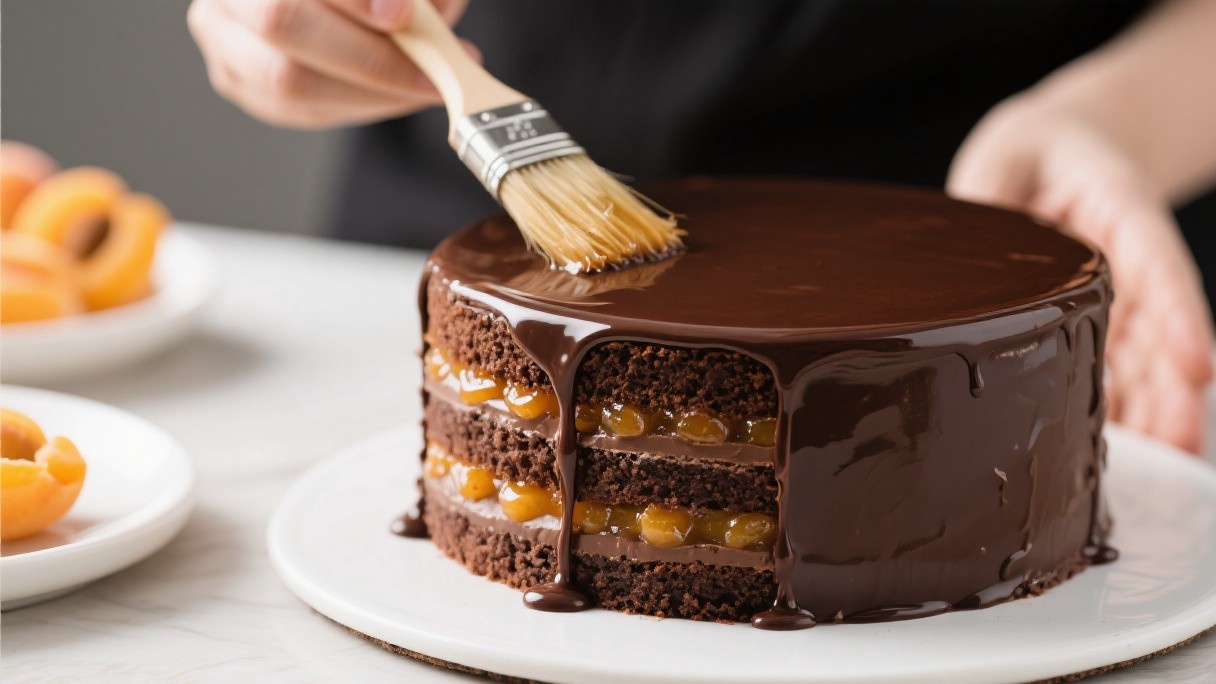
I brush the cut surface of both cake layers generously with the warm apricot jam, then reassemble the cake with the jam layer in the middle. Then I brush the entire exterior of the cake, top and sides, with a thin coat of the remaining apricot jam.
This jam layer serves as both a flavor element and a primer for the chocolate glaze, filling any imperfections in the cake surface and providing a smooth base for the chocolate to adhere to.
The Chocolate Glaze and Pouring Technique
The glaze is made from 200 grams of dark chocolate, 70 percent cacao, and 100 milliliters of water. I chop the chocolate finely and combine it with the water in a heatproof bowl set over simmering water, stirring until the mixture is completely smooth and glossy.
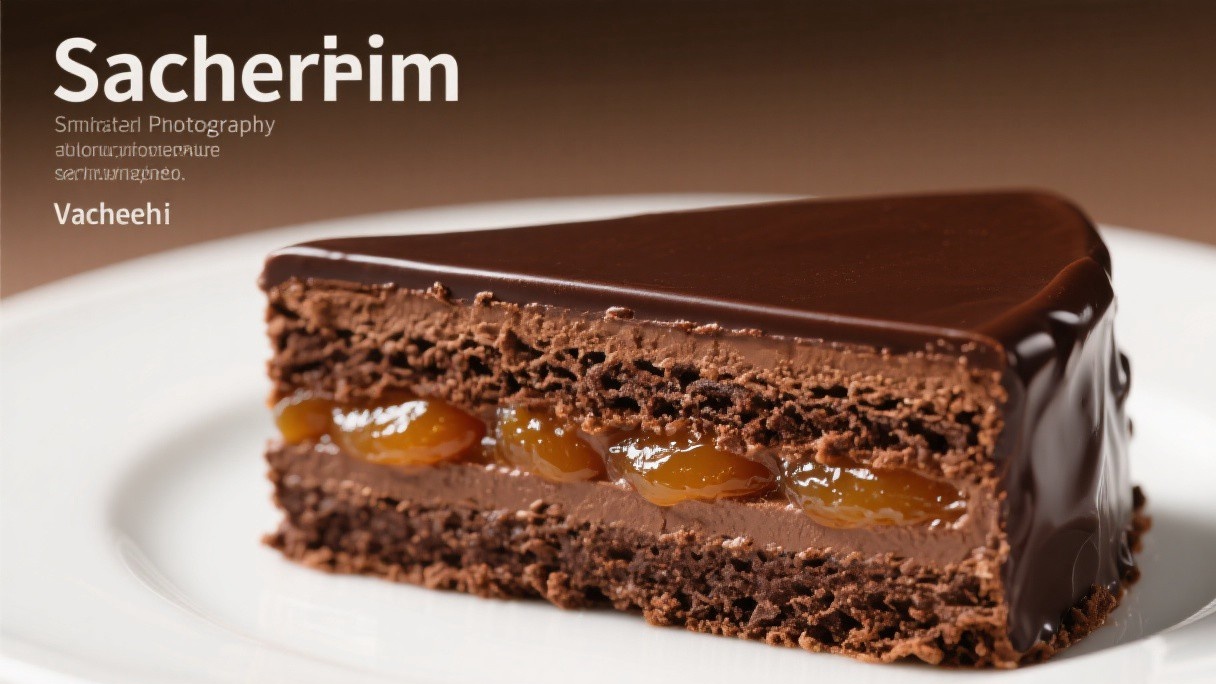
The glaze must be at exactly 35 to 38 degrees Celsius when poured; if it is too hot, it will be too thin and run off the cake, and if it is too cool, it will be too thick and will not spread evenly. I place the cake on a wire rack set over a sheet pan and pour the glaze over the top in a single, quick motion, letting it flow down the sides.
I use a palette knife to smooth the top and guide the glaze over any bare spots on the sides. The glaze sets at room temperature in about 30 minutes, forming a smooth, shiny shell.
Serving Traditions and Storage
A Sachertorte is traditionally served at room temperature with a dollop of unsweetened whipped cream on the side. The whipped cream provides a neutral, creamy contrast to the dense, chocolatey cake and the sharp apricot layer. I do not refrigerate the cake, because cold alters the texture of the chocolate glaze and makes the sponge firm and stodgy.
Stored at room temperature, wrapped in plastic wrap, the cake keeps for up to 5 days and actually improves on the second and third days as the apricot jam softens the crumb. I cut it with a sharp knife dipped in hot water and wiped clean between slices, which produces clean edges through the chocolate glaze.
The Sachertorte is a testament to the power of simple ingredients executed perfectly. Take your time with each layer, and do not skip the apricot glaze. It is the detail that elevates this cake from good to authentic.