Ethiopian Coffee Ceremony: Traditional Roasting and Brewing Methods
Beverage
|
March 7, 2026
Learning to make Ethiopian Coffee Ceremony at home is one of the most satisfying culinary projects you can undertake. The process connects you to centuries of tradition while giving you room to develop your own style. Each attempt teaches you something new about ingredients, timing, and technique, building confidence with every batch.
Roasting Green Beans Over Charcoal
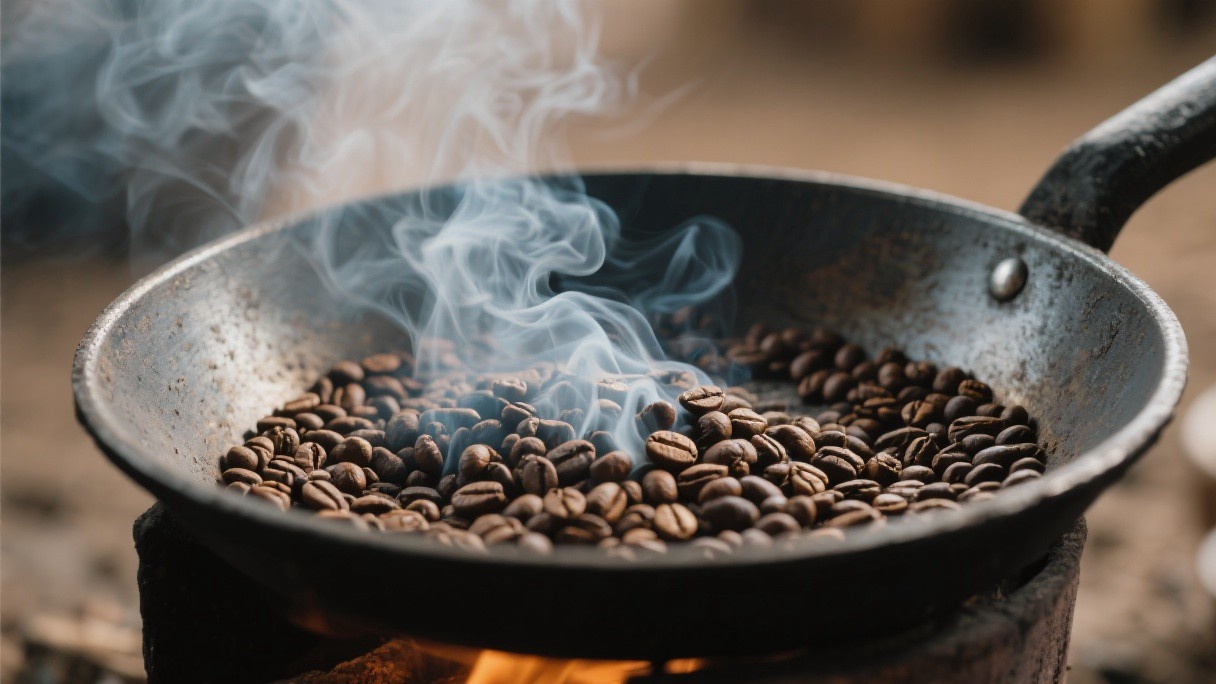
The ceremony begins with raw, green coffee beans that are washed and sorted by hand to remove any debris or defective beans. I watched as roughly 200 grams of green beans were placed in a long-handled, flat-bottomed pan called a menkeshkesh and held over a charcoal brazier. The roasting is done by shaking the pan continuously in a circular motion, which keeps the beans moving and promotes even coloring.
The process takes about 12 to 15 minutes, and the progression is remarkable: the beans turn from pale green to yellow, then to light brown, and finally to a deep, oily brown. The aroma fills the room gradually, starting with grassy and vegetal notes and building into a rich, caramel-like sweetness. The beans are roasted to what would be considered a medium-dark level in specialty coffee terms, just past the second crack.
Grinding by Hand with a Mortar and Pestle
Once roasted, the beans are transferred immediately to a wooden mortar and ground with a heavy pestle. The grinding is rhythmic and deliberate, producing a coarse to medium grind that is less uniform than what a modern burr grinder would produce. I noticed that the resulting grind had a range of particle sizes, from fine powder to larger chunks, which is actually traditional for this brewing method.
The uneven extraction that results from variable particle size contributes to the complex, layered flavor of the finished coffee. The entire grinding process takes about 5 minutes and is done while the beans are still warm, which preserves the volatile aromatic compounds that begin to dissipate as the beans cool.
Brewing in the Jebena Clay Pot
The ground coffee goes into a jebena, a traditional black clay pot with a round bottom, narrow neck, and a straw lid. Water is added directly to the grounds in the pot, about 1 liter for the 200 grams of coffee, and the jebena is placed on the charcoal brazier to boil. The coffee boils and rises in the narrow neck of the pot, at which point it is removed from the heat to settle.
This process is repeated two or three times, with the pot being returned to the heat and removed again each time the coffee begins to rise. The repeated boiling extracts a significant amount of bitterness and body from the grounds, producing a brew that is much stronger and more intense than filtered coffee. Sugar is sometimes added during brewing, though purists drink it without.
The Three Rounds of Serving
The coffee is poured from the jebena into small handleless cups called finjal, held in a tray called a rekebot. The pour is done from a height of about 30 centimeters, which aerates the coffee and produces a thin layer of foam on the surface. The ceremony involves three rounds of coffee: the first is called abol, the second tona, and the third baraka.
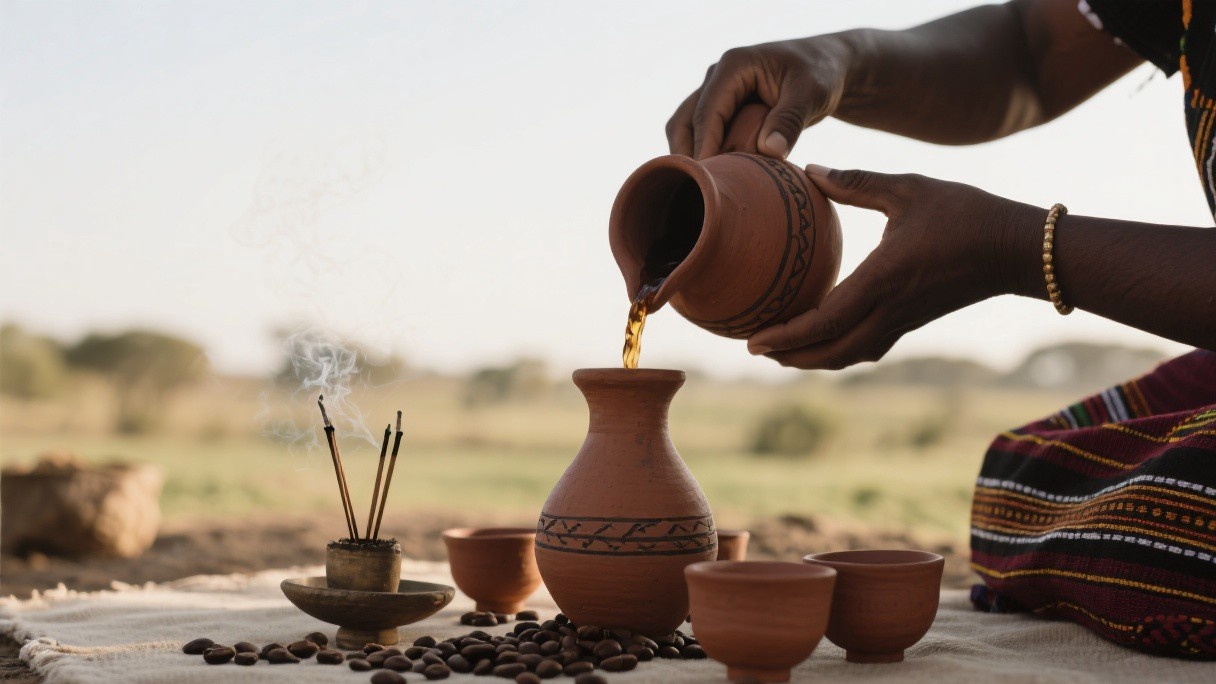
Each round uses the same grounds with additional water added, so the coffee becomes progressively lighter with each serving. The first round is the strongest and most flavorful, while the third is the mildest. It is considered rude to leave before all three rounds have been served. I found the first round to be intensely earthy and bold, with notes of dark chocolate and dried fruit, while the third round was lighter and more tea-like.
Accompaniments and Social Context
The coffee is served with traditional snacks that complement its intensity. Popcorn is the most common accompaniment, often mixed with a pinch of salt or sugar. Some regions serve bread called ambasha or injera alongside the coffee. Burning frankincense is part of the ceremony as well; the smoke is believed to carry away evil spirits and purify the space. The entire ritual is a social event that invites conversation and connection.
I sat with my hosts for nearly two hours, drinking the three rounds of coffee and discussing everything from family to politics. The ceremony is performed daily in many Ethiopian households, typically in the afternoon, and serves as a daily anchor for community and hospitality.
Equipment and Home Adaptation
Recreating the Ethiopian coffee ceremony at home does not require specialized equipment, though a few substitutions make the process easier. I use a heavy cast-iron skillet instead of a traditional clay pan for roasting, and a standard blade grinder instead of a wooden mortar and pestle. For the jebena, I use a small stoneware teapot with a narrow neck that approximates the shape of the traditional clay vessel.
The most important element to replicate is the charcoal heat source, which provides a gentle, even heat that is difficult to achieve with a gas flame. I use a chimney starter filled with natural lump charcoal, which burns cleaner and hotter than briquettes. If charcoal is not practical, I roast the beans in a dry skillet over medium-low heat, stirring constantly, which produces a reasonable approximation of the traditional method.
The Ethiopian coffee ceremony is about slowing down and appreciating each step of the process. You do not need traditional tools to recreate the spirit at home. Simply roast fresh beans, grind by hand, and share the resulting brew with people you care about.