Jamaican Jerk Chicken: Scotch Bonnet Marinade and Slow Smoking
Meat
|
March 12, 2026
Jerk chicken is remarkably intensely flavored grilled meats in any cuisine, and its signature heat comes from the scotch bonnet pepper, one of the hottest chili peppers in regular culinary use. I first ate jerk chicken at a roadside stand in Montego Bay, where it was cooked over a modified oil drum filled with pimento wood, and the combination of the fiery marinade, the smoky wood, and the crisp skin was unlike anything I had tasted before.
Recreating that experience at home requires a wet marinade made from scratch, a long marinating time, and a cooking method that combines indirect heat with wood smoke.
The Jerk Marinade: Scotch Bonnet and Allspice
The marinade, or jerk paste, is built on a foundation of scotch bonnet peppers and allspice berries, also called pimento in Jamaica.
For 2 kilograms of chicken pieces, I blend 8 to 10 scotch bonnet peppers, seeded if I want moderate heat or left whole for maximum intensity, with 2 tablespoons of whole allspice berries, 1 tablespoon of black peppercorns, 4 cloves of garlic, 1 tablespoon of grated fresh
ginger, 3 scallions chopped, 2 tablespoons of thyme leaves, 1 tablespoon of dark brown sugar, 2 tablespoons of soy sauce, 2 tablespoons of lime juice, 1 tablespoon of vegetable oil, and 1 teaspoon of ground cinnamon.
I blend all the ingredients in a food processor until a coarse paste forms. The paste should be thick enough to coat the chicken without running off. I score the chicken pieces deeply, cutting through to the bone in several places, which allows the marinade to penetrate the meat fully.
Marinating Time and Coverage
I coat the chicken pieces generously with the jerk paste, working it into the scored cuts and under the skin wherever possible. The chicken goes into a large zip-top bag or a covered container and marinates in the refrigerator for at least 12 hours, though 24 to 48 hours produces the most deeply flavored result. I turn the bag or stir the container every 6 to 8 hours to redistribute the marinade.
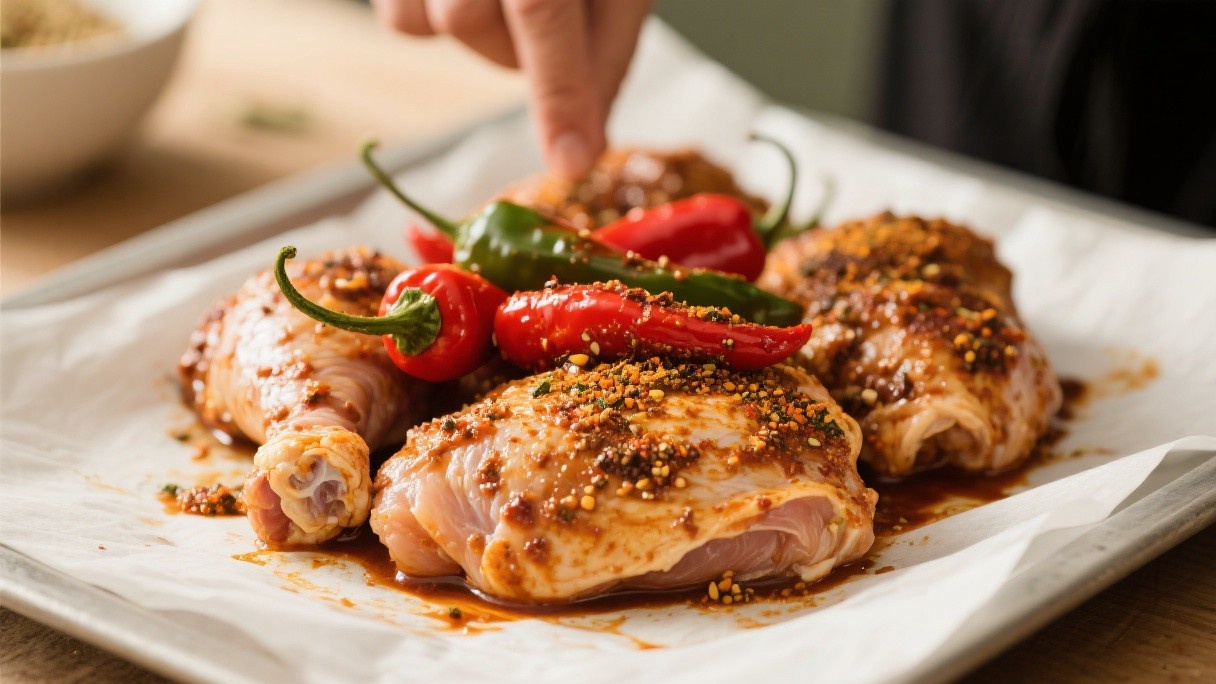
The scotch bonnet peppers continue to release their capsaicin over time, so longer marination produces progressively hotter chicken. I remove the chicken from the refrigerator 45 minutes before cooking to bring it to room temperature, which promotes more even cooking. I do not wipe off the marinade before cooking; the paste that clings to the surface forms a flavorful crust during grilling.
Setting Up the Smoker with Pimento Wood
Traditional jerk chicken is cooked over pimento wood, which is native to Jamaica and has a flavor that falls somewhere between hickory and oak with a distinct clove-like note from the allspice tree. If pimento wood is unavailable, I use a combination of apple wood and hickory, adding whole allspice berries to the coals to approximate the pimento flavor.
I set up my smoker or grill for indirect cooking, with the coals banked to one side and a water pan on the other. I soak a handful of wood chips in water for 30 minutes and scatter them over the hot coals. The cooking temperature should be maintained between 120 and 150 degrees Celsius, which is low enough to allow the chicken to absorb smoke flavor without burning the sugar in the marinade.
Slow Smoking and Finishing Over Direct Heat
I place the chicken pieces on the grill grate skin-side up, on the side opposite the coals, and close the lid. I add fresh wood chips every 45 minutes to maintain a steady stream of smoke. The chicken smokes for 2 to 2.5 hours, or until the internal temperature reaches 74 degrees Celsius when measured in the thickest part of the thigh.
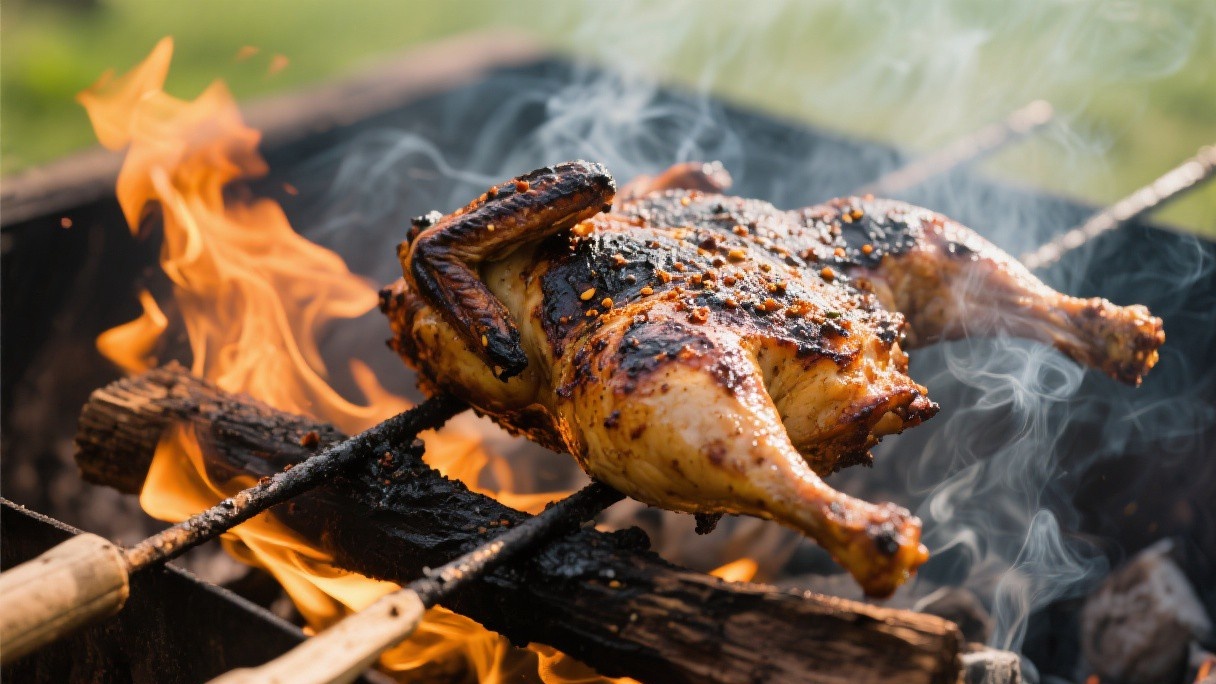
During the last 10 minutes, I move the chicken directly over the coals, skin-side down, to crisp the skin and caramelize the marinade. I watch carefully during this final stage, because the sugar in the jerk paste can burn quickly. The chicken is done when the skin is charred and crispy and the meat is tender enough to pull away from the bone easily.
Serving with Rice and Peas
Jerk chicken is traditionally served with rice and peas, which in Jamaica means rice cooked with kidney beans or pigeon peas in coconut milk. I make it by sauteing 1 diced onion and 2 cloves of garlic in 1 tablespoon of oil, then adding 1 can of kidney beans, drained, 400 milliliters of coconut milk, and 250 grams of rice.
I bring it to a boil, reduce to a simmer, cover, and cook for 20 minutes until the rice is tender and has absorbed the coconut milk. I serve the jerk chicken alongside the rice with additional lime wedges for squeezing. The cool, creamy rice provides essential relief from the heat of the jerk marinade, and the coconut milk rounds out the spicy, smoky flavors of the chicken.
The most important step is the first one. Gather your ingredients, set aside uninterrupted time, and commit to following the process through. Even imperfect results will taste better than anything mass-produced, and the skills you build here carry over to countless other recipes.