Plant-Based For Seniors: How To Get Enough Protein Without Eating All Day
Nutrition
|
February 6, 2026
Protein needs increase with age, not decrease. Most seniors on a plant-based diet are not meeting their targets, and reduced appetite makes the challenge even harder.
The solution is not eating more meals or larger portions. It is choosing smarter, denser sources and structuring each meal to carry more protein per bite.
The Numbers First: What Seniors Actually Need
The standard recommendation of 0.8 grams of protein per kilogram of body weight per day was established for younger adults and is widely considered insufficient for seniors. Most current nutrition research supports 1.0 to 1.2 grams per kilogram at a minimum for adults over 65, rising to 1.5 to 1.6 grams for those who are physically active or managing muscle loss.
Protein requirements for older adults [1] have been revised upward in clinical guidelines specifically because of sarcopenia, the age-related loss of muscle mass that accelerates significantly after 65 and increases fall risk, reduces metabolic function, and diminishes overall independence.
For a 150-pound senior, the practical daily target sits between 68 and 109 grams depending on activity level. That number needs to be met without relying on large-volume eating, which is where the strategy becomes specific.
1.Anchor Every Meal Around a High-Density Protein Source
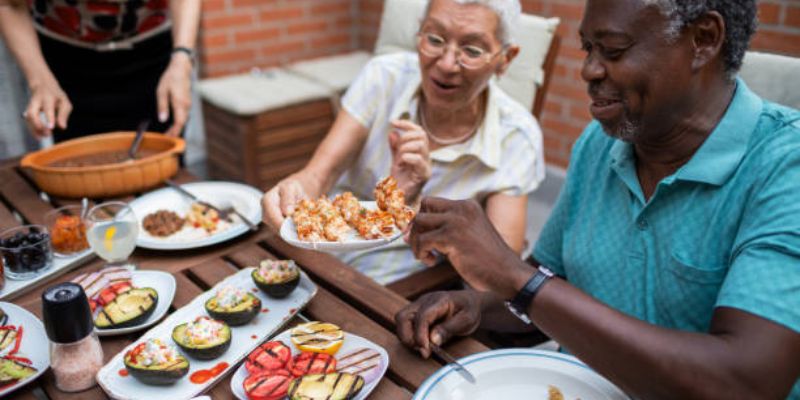
The most direct way to hit protein targets without constantly eating is to treat protein as the structural center of every meal rather than a side consideration. This means planning the meal backward from the protein source rather than adding protein to whatever else sounds good.
Tempeh, at 31 grams of protein per cup, is the highest-density whole food plant protein available and should be in regular rotation for any senior on a plant-based diet. It is also fermented, which improves digestibility, a practical advantage for older adults whose digestive enzyme production has declined with age.
Firm tofu at 20 grams per cup, edamame at 18 grams per cup, and cooked lentils at 18 grams per cup all provide substantial protein per moderate serving. Building meals around these ingredients rather than using them as supporting players changes the entire protein math of a day without requiring larger portion sizes.
2.Use Protein-Dense Foods That Require No Cooking
Appetite in older adults is not always predictable. Some days, cooking a full meal feels too demanding. Having high-protein options that require zero preparation removes the barrier between feeling like eating and actually consuming enough protein.
Edamame from the freezer microwaves in two minutes and delivers 18 grams of protein per cup. Canned chickpeas rinsed with olive oil, lemon, and salt are ready in 90 seconds and provide 15 grams per cup. Hemp seeds, with 10 grams of protein per three-tablespoon serving, can be stirred into yogurt, oatmeal, or soup without any preparation at all.
These no-cook options are not fallbacks. They are legitimate protein sources that belong in regular meal planning for seniors, specifically because they remove friction on low-energy days, which occur more frequently with age and should be planned for rather than treated as exceptions.
3.Add Protein To Existing Favorite Meals Without Changing Them Substantially
Seniors who have eaten certain foods for decades are not always enthusiastic about replacing favorite meals with entirely new dishes, even nutritionally superior ones. The more sustainable approach is adding protein to what is already being eaten rather than restructuring the entire diet.
A bowl of vegetable soup that is already enjoyed can have a half cup of silken tofu blended directly into the broth, adding 10 grams of protein invisibly. A bowl of oatmeal can have three tablespoons of hemp seeds stirred in, adding 10 grams without altering the flavor. A slice of whole-grain toast with peanut butter delivers 8 grams of protein, a breakfast most seniors already eat without needing any encouragement.
These additions compound across the day. Adding hemp seeds to breakfast, white beans to lunch, and tofu to dinner can add 25 to 35 grams of protein to a day's intake without changing a single meal's basic character.
4.Use Plant-Based Protein Supplements On Low-Appetite Days
There will be days when a senior on a plant-based diet does not feel like eating much. Illness, medication side effects, grief, and social isolation all reduce appetite in older adults, and those are exactly the days when protein intake is most likely to fall short.
Pea protein supplementation [2] has been studied specifically in older adults. It has been shown to effectively support muscle mass maintenance when combined with adequate overall nutrition and some form of resistance activity.
A 30-gram serving of unflavored pea protein powder blended into a small smoothie, stirred into warm oat milk, or mixed into a bowl of soup adds 25 to 27 grams of protein in a format that requires almost no effort to consume.
Brands like Naked Pea, Orgain, and Garden of Life Sport offer clean formulas without excessive additives. Monthly costs range from from $30 to $55, depending on the brand. For seniors who resist the idea of supplements, framing pea protein as a functional food ingredient rather than a supplement, blending it into food, and avoiding its own strong taste tend to reduce resistance to using it.
5.Distribute Protein Across Three Meals Rather Than Loading It At Dinner
Many older adults eat lightly through the day and consume most of their protein at dinner, which is both culturally common and nutritionally suboptimal.
Research consistently shows that muscle protein synthesis is better stimulated when protein intake is evenly distributed across meals, with each meal containing 25-30 grams of protein, specifically in older adults.
This means rethinking breakfast. A piece of toast with jam and a cup of tea provides almost no protein. A tofu scramble with nutritional yeast and black beans provides 28 to 32 grams of protein and takes ten minutes to prepare. A smoothie with pea protein powder, almond butter, and soy milk provides 30-35 grams and takes 3 minutes.
Reframing breakfast as the meal that sets up the rest of the day's protein target, rather than a light start before the main eating begins later, is one of the most impactful single changes a plant-based senior can make to their protein intake without changing overall food volume.

6.Prioritize Easily Digestible Protein Sources
Digestibility matters more for seniors than for younger adults. Reduced stomach acid secretion, slower gut motility, and lower digestive enzyme output all affect the efficiency of protein absorption from food. Eating a high-protein meal that is difficult to digest does not produce the same muscle protein synthesis outcome as eating the same protein from a source the body can process efficiently.
Fermented soy products, particularly tempeh and miso, are significantly more digestible than unfermented versions. Cooked lentils are more digestible than raw or partially cooked legumes. Silken tofu is easier to digest than extra-firm tofu because its softer texture requires less mechanical digestion.
Soaking dried beans overnight and discarding the soaking water before cooking removes a significant portion of the oligosaccharides that cause gas and digestive discomfort, which is a practical step worth building into weekly meal prep.
7.Address The Micronutrients That Protein Depends On
Protein alone does not maintain or rebuild muscle in older adults. Vitamin D, calcium, and the essential amino acid leucine all work alongside dietary protein to stimulate muscle protein synthesis. Without adequate vitamin D, the anabolic response to protein intake is blunted regardless of how much protein is consumed.
Vitamin D deficiency [3] is common in older adults for multiple reasons, including reduced sun exposure, decreased skin synthesis efficiency with age, and lower dietary intake. Supplementing 1,000 to 2,000 IU of vitamin D3 daily is generally recommended for seniors regardless of diet, but it is particularly relevant for plant-based seniors who have fewer dietary sources.
Leucine specifically triggers muscle protein synthesis more effectively than other amino acids and is found in the highest concentrations in edamame, soy, lentils, and pea protein. Building meals that include leucine-rich plant proteins, particularly around physical activity when the muscle-building signal is strongest, optimizes the impact of plant-based protein intake at any age but especially after 65.
8.Keep a Simple Weekly Protein Audit
Seniors who successfully hit their plant-based protein targets consistently are not necessarily tracking every gram every day. They have enough familiarity with the protein content of their regular foods to know when a day is on track and when it needs adjustment.
A simple approach is reviewing three recent days of eating once per week against a rough protein target. Most seniors who do this honestly find one specific meal, usually breakfast, that consistently underdelivers and one specific food they rarely use that would close the gap efficiently. Making one targeted change per week based on that audit produces gradual but consistent improvement in protein intake without requiring the sustained effort of daily tracking.
Start this week by writing down what you ate yesterday and estimating the protein in each meal using basic values: tofu is 20 grams per cup, lentils are 18, chickpeas are 15, and peanut butter is 8 per two tablespoons. Add the numbers and compare to your target. The gap almost always reveals itself in the first meal of the day, and it is almost always closable with a single change that takes under ten minutes to prepare.
References
[1] National Institutes of Health – https://www.nih.gov
[2] Harvard T.H. Chan School of Public Health – https://www.hsph.harvard.edu
[3] National Institutes of Health – https://www.nih.gov