American Meatloaf: The Binder-to-Meat Ratio for Perfect Sliceability
Meat
|
March 6, 2026
Meatloaf is a dish that seems simple but is surprisingly easy to get wrong. The most common problems are a loaf that crumbles when sliced, one that is dense and rubbery, or one that shrinks dramatically during baking. After years of testing different ratios and techniques, I have found that the binder-to-meat ratio is the single most important variable in determining the texture of the finished loaf.
The right amount of binder holds the meat together without making it gummy, while the wrong amount either produces a crumbly mess or a dense, bread-like texture that no longer tastes like meat.
The Meat Blend: Beef, Pork, and Veal
I use a blend of three ground meats for meatloaf: 500 grams of ground beef, 250 grams of ground pork, and 250 grams of ground veal. The beef provides the dominant beefy flavor, the pork adds fat and moisture, and the veal contributes a delicate, tender texture. The beef should have a fat content of about 20 percent, which is standard for ground chuck.
Leaner beef, 10 percent fat or less, produces a dry meatloaf unless compensated with additional binders or moisture. I combine the three meats in a large bowl and break them up gently with my hands, mixing just until they are evenly distributed. Over-mixing at this stage develops the myosin proteins in the meat and can produce a tough, sausage-like texture.
The Binder: Bread, Milk, and Eggs
The binder is what gives meatloaf its characteristic sliceable texture. I use 150 grams of fresh white bread, crusts removed, torn into small pieces and soaked in 180 milliliters of whole milk for 10 minutes. This panade, a paste of bread and milk, is the most effective binder I have found; it releases starch and protein into the mixture during baking, which helps hold the loaf together while keeping it moist.
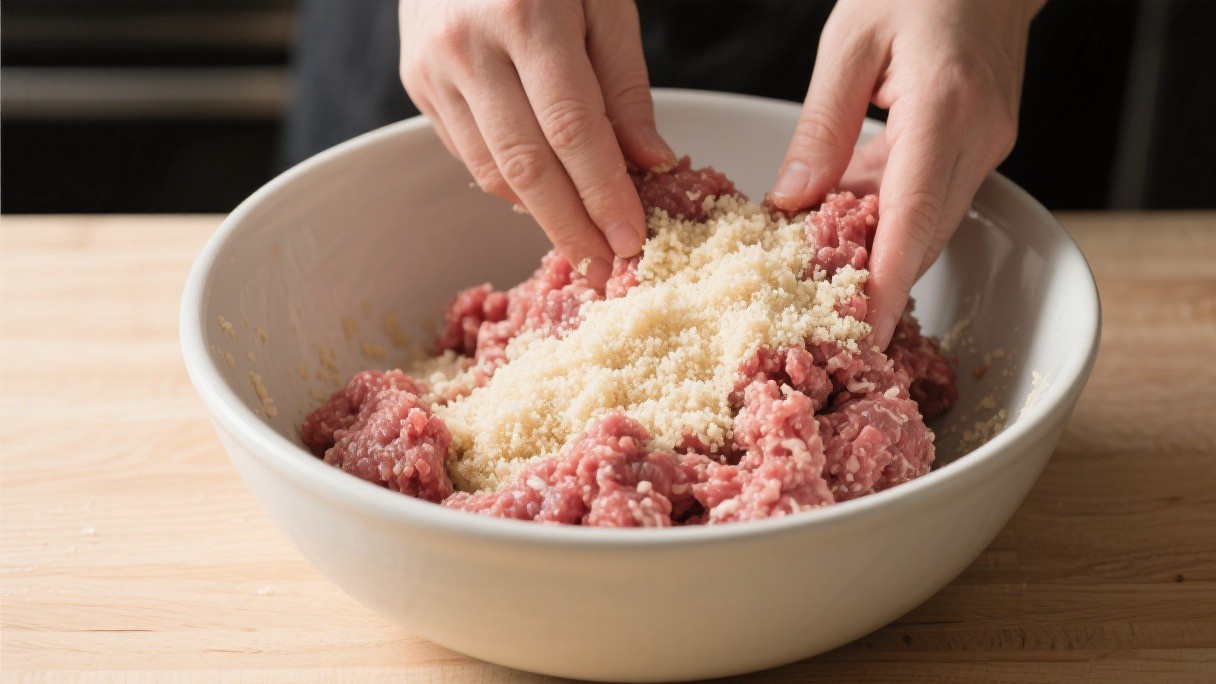
To the soaked bread, I add 2 large eggs, which provide additional binding power and structure. I mash the bread and milk together with a fork until a smooth paste forms, then add it to the meat mixture along with the eggs. The ratio of binder to meat in this formula is roughly 1 part binder to 5 parts meat by weight, which I have found produces a loaf that slices cleanly without being gummy.
Flavor Builders and Seasoning
I add 1 medium onion, finely diced and sauteed in 1 tablespoon of butter until softened and lightly browned, about 5 minutes. Raw onion releases moisture during baking and can make the meatloaf soggy; sauteing it first evaporates the water and develops its sweetness. I also add 3 cloves of minced garlic, 2 tablespoons of Worcestershire sauce, 1 tablespoon of tomato paste, 1 teaspoon of dried thyme, 1 teaspoon of salt, and half a teaspoon of black pepper.
I mix everything together with my hands, folding gently rather than squeezing, for about 30 seconds until the ingredients are evenly distributed. I test the seasoning by cooking a small patty in a skillet and adjusting the salt and pepper if needed before shaping the loaf.
Shaping and the Glaze
I transfer the meat mixture to a rimmed sheet pan lined with parchment paper and shape it into a 20-by-12-centimeter free-form loaf. Cooking meatloaf free-form on a sheet pan rather than in a loaf pan allows the heat to circulate on all sides, which promotes better browning and prevents the bottom from boiling in its own juices. For the glaze, I combine 60 milliliters of ketchup, 2 tablespoons of brown sugar, and 1 tablespoon of Dijon mustard.
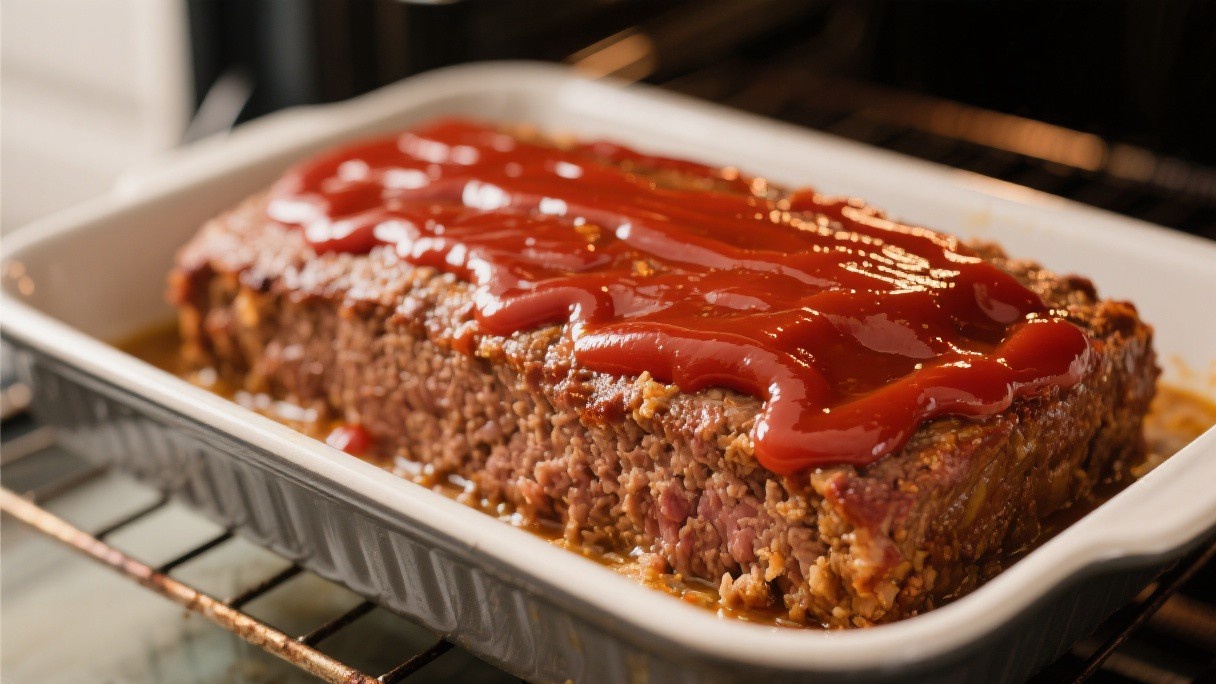
I spread the glaze evenly over the top and sides of the loaf before baking. I bake at 190 degrees Celsius for 55 to 65 minutes, or until the internal temperature reaches 70 degrees Celsius when measured in the center with an instant-read thermometer.
Resting and Slicing
Resting is critical for meatloaf. I let the loaf rest on the sheet pan for 15 minutes before slicing, which allows the internal temperature to equalize and the juices to redistribute throughout the meat. If I cut into the loaf immediately, the juices run out and the slices are dry. After resting, I use a sharp, serrated knife to cut 1.5-centimeter-thick slices, using a gentle sawing motion.
The loaf should hold together cleanly, with each slice showing an even distribution of meat, binder, and seasonings. I serve the slices with mashed potatoes and a green vegetable, and I always make extra for sandwiches the next day. Cold meatloaf on white bread with mayonnaise and lettuce is exceptionally good sandwiches in the American culinary tradition.
Yakitori Without Binchotan: Gas and Charcoal Alternatives
While binchotan produces the best results, acceptable yakitori can be made with more accessible equipment. I use a standard kettle grill with natural lump charcoal when binchotan is unavailable. Lump charcoal burns hotter and cleaner than briquettes and provides a reasonable approximation of the binchotan experience. For an indoor alternative, I use a cast-iron grill pan over the highest heat setting on my gas stove.
The grill pan develops good char marks but does not produce the same smoky flavor as charcoal. To compensate, I add a small amount of liquid smoke to the tare, which provides a hint of smokiness. The skewering and tare application techniques remain the same regardless of the heat source.
I have found that the quality of the chicken and the precision of the tare application matter more than the specific type of charcoal, and a well-made yakitori over gas heat is still superior to a poorly made one over binchotan.
Do not let the length of these instructions intimidate you. Break the process into stages, tackle one at a time, and soon the entire workflow will feel natural. The investment of time and attention pays dividends every single time you serve the finished dish.
A good meatloaf comes down to the right ratio of binder, moisture, and seasoning. Do not skip the rest time after baking. Letting the meatloaf rest for fifteen minutes before slicing ensures that every piece holds together beautifully.