Italian Ossobuco: Braised Veal Shanks with Gremolata
Meat
|
March 22, 2026
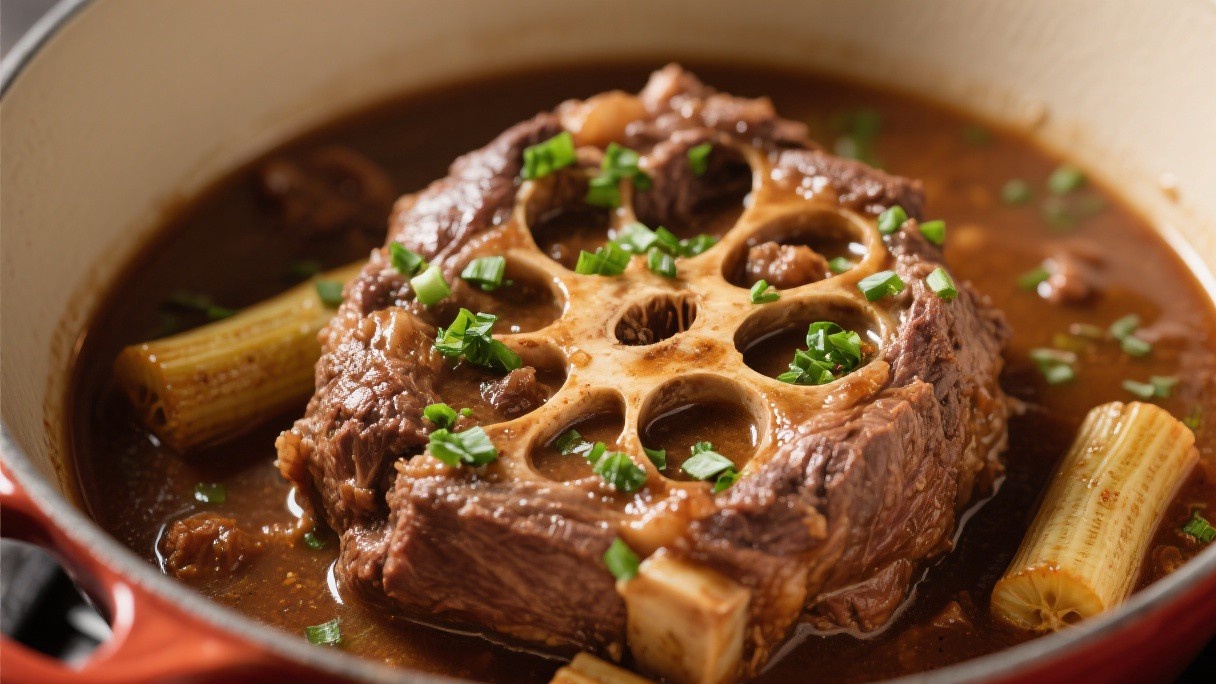
Ossobuco is a Milanese specialty consisting of cross-cut veal shanks braised in a white wine, broth, and tomato sauce until the meat is fall-off-the-bone tender and the collagen has dissolved into a rich, silky sauce. The name translates to bone-with-a-hole, referring to the marrow-filled bone at the center of each shank. I have braised dozens of ossobuco over the years, and the technique rewards patience above all else.
The shanks must be browned thoroughly before braising, and the braising liquid must be maintained at a bare simmer for the entire cooking time. Rushing any step produces tough, stringy meat rather than the meltingly tender result that makes this dish extraordinary.
Selecting and Preparing the Veal Shanks
I ask the butcher for center-cut veal shanks from the hind leg, about 3 to 4 centimeters thick and weighing 350 to 400 grams each. The shanks should have a generous circle of meat surrounding the central bone, with the marrow visible at both ends. I tie each shank with kitchen twine around the circumference to hold the meat in place during braising; without the twine, the meat shrinks away from the bone and the presentation suffers.
I season the shanks generously on both sides with salt and pepper about 45 minutes before cooking, which allows the salt to penetrate the surface. I pat the shanks dry with paper towels just before browning, because any moisture on the surface will prevent a proper sear.
Browning and Building the Braising Liquid
I heat 2 tablespoons of neutral oil and 1 tablespoon of butter in a heavy-bottomed Dutch oven over medium-high heat until the butter is foaming. I brown the shanks, two at a time to avoid crowding, for 4 to 5 minutes per side until they develop a deep, golden-brown crust. I remove the shanks and set them aside.
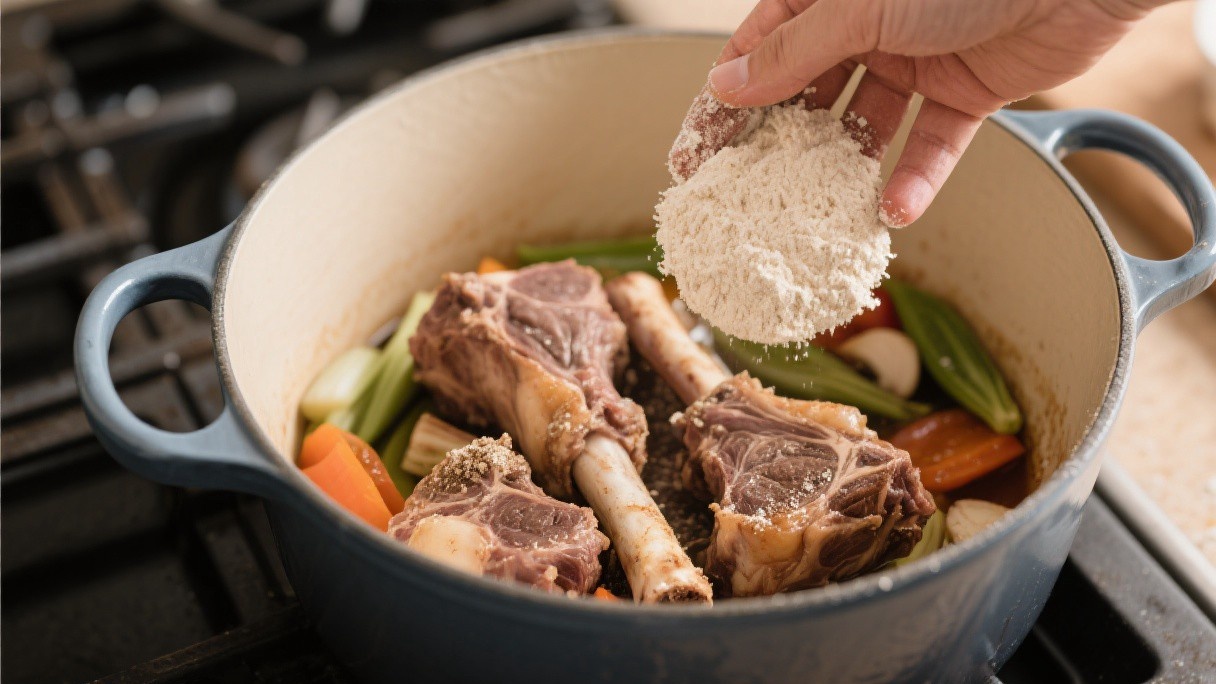
In the same pot, I add 1 diced onion, 1 diced carrot, and 2 diced celery stalks, cooking over medium heat for 6 to 8 minutes until the vegetables are softened and lightly browned. I add 2 tablespoons of tomato paste and cook for 2 minutes, stirring, until the paste darkens. Then I deglaze the pot with 300 milliliters of dry white wine, scraping up the browned bits from the bottom, and let the wine reduce by half.
I add 400 milliliters of veal or chicken stock and 400 grams of crushed canned tomatoes, stirring to combine.
Braising Time and Temperature
I return the veal shanks to the pot, standing them upright with the marrow bone facing up. The liquid should come about two-thirds of the way up the sides of the shanks. I bring the liquid to a gentle simmer on the stovetop, then cover the pot and transfer it to an oven preheated to 160 degrees Celsius.
I braise the shanks for 2 to 2.5 hours, checking once at the halfway mark to ensure the liquid is still at a bare simmer and not boiling. Boiling toughens the meat fibers rather than breaking them down. The shanks are done when a fork inserted into the meat meets no resistance and the meat begins to pull away from the bone.
I remove the pot from the oven and let the shanks rest in the braising liquid for 15 minutes.
Preparing the Gremolata
Gremolata is the traditional garnish for ossobuco, and its bright, sharp flavors cut through the richness of the braised meat and sauce. I make it by combining 2 tablespoons of finely chopped flat-leaf parsley, 1 teaspoon of finely grated lemon zest, and 1 small clove of garlic, minced as finely as possible.
The three ingredients are mixed together just before serving; if the gremolata sits for too long, the garlic oxidizes and becomes harsh, and the lemon zest loses its aromatic brightness. A small amount of gremolata, about half a teaspoon per serving, is sprinkled over the top of each shank just before the dish goes to the table. The combination of herbaceous parsley, citrusy lemon, and pungent garlic provides a concentrated burst of freshness that transforms the dish.
Serving with Risotto alla Milanese
Ossobuco is traditionally served with risotto alla Milanese, a saffron-infused risotto that is colored a distinctive golden yellow. I prepare the risotto separately while the shanks are braising, using 300 grams of Arborio rice, 1 liter of warm chicken stock, half a gram of saffron threads steeped in 2 tablespoons of warm stock, 30 grams of Parmigiano-Reggiano, and 20 grams of butter. The risotto should be loose and creamy, not stiff.
I spoon a bed of risotto onto each plate and place a veal shank on top, then ladle some of the braising sauce over both the meat and the risotto. The marrow from the center of the bone is considered a delicacy, and I provide a small spoon or fork specifically for extracting it. I sprinkle the gremolata over the top as the final touch.
The most important step is the first one. Gather your ingredients, set aside uninterrupted time, and commit to following the process through. Even imperfect results will taste better than anything mass-produced, and the skills you build here carry over to countless other recipes.