Moroccan Mint Tea: The Pouring Technique and Green Tea Base
Beverage
|
March 15, 2026
Moroccan mint tea is far more than a simple beverage. It is a centuries-old ritual built around Chinese gunpowder green tea, fresh spearmint, and generous sugar. The traditional pouring technique, held high to create a foamy head, transforms an everyday drink into a ceremony that signals hospitality and friendship.
Choosing the Right Green Tea Base
Traditional Moroccan mint tea uses Chinese gunpowder green tea, which is rolled into small pellets that slowly unfurl during steeping. The pellets are tightly rolled and have a smoky, slightly astringent character that balances the sweetness of the sugar and the brightness of the mint. I use about 2 tablespoons of gunpowder tea per liter of water.
The tea should be rinsed first: I add a small amount of boiling water to the pellets, swirl for 5 seconds, and discard the water. This rinse removes any dust from the tea and softens the initial astringency. Some Moroccan families also briefly toast the rinsed pellets in the teapot over low heat for about 30 seconds, which develops a slightly nuttier flavor.
The Sugar and Mint Ratio
Moroccan mint tea is notably sweet, and the sugar is not optional or adjustable in the traditional preparation. For a liter of tea, I use between 80 and 120 grams of sugar, depending on the preference of the guests. The sugar is added as cone sugar, or loaf sugar, which dissolves more slowly than granulated sugar and contributes a slightly caramelized flavor. If cone sugar is unavailable, I use granulated sugar added at the same ratio.
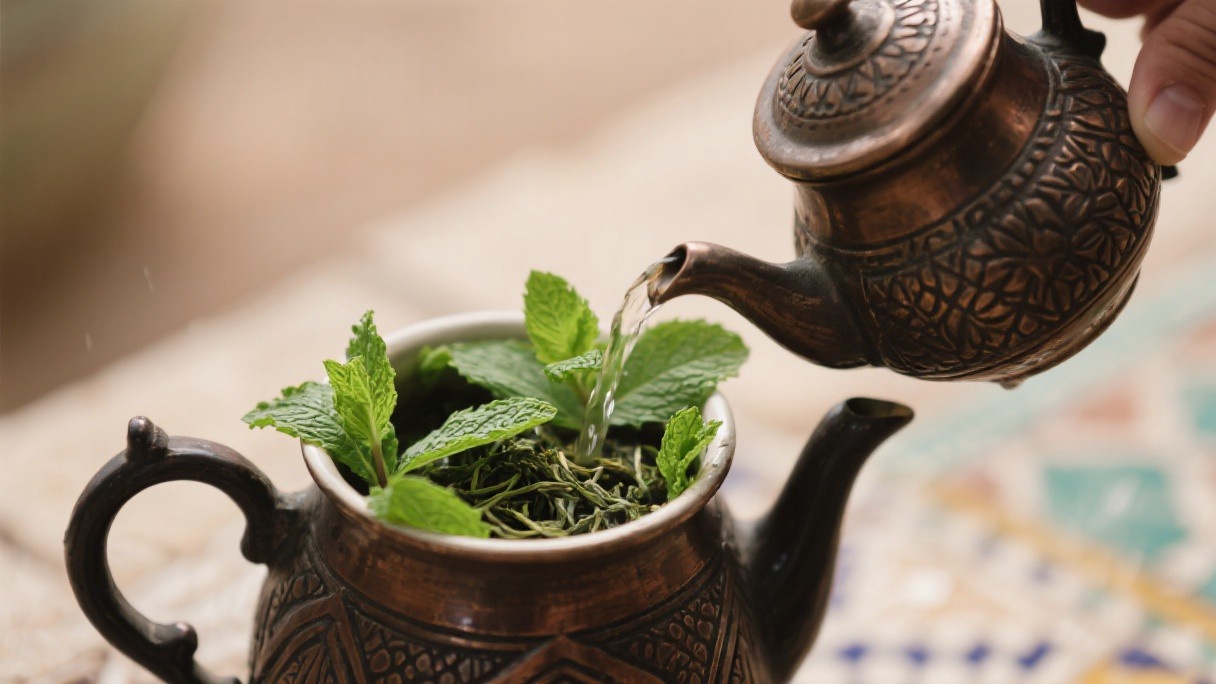
For the mint, I use a large handful of fresh spearmint, about 15 to 20 sprigs, with the stems included. The stems contain volatile oils that contribute to the aroma. I gently bruise the mint by pressing it between my palms before adding it to the teapot, which releases the oils without crushing the leaves to the point of bitterness.
Brewing and Steeping Time
I bring 1 liter of water to a rolling boil and pour it directly into the teapot over the rinsed tea, sugar, and mint. The teapot goes onto a low flame or a heat diffuser and simmers gently for 2 to 3 minutes. This brief simmering is different from the steeping method used for most green teas, which are typically brewed with water well below boiling to avoid bitterness.
The gunpowder tea used in Moroccan mint tea is robust enough to withstand boiling water, and the sugar and mint buffer the astringency. After simmering, I let the tea steep off the heat for an additional 3 minutes. The liquid should be a deep amber color with a strong, sweet-mint aroma.
The High Pour and Foam Creation
Pouring is the defining element of Moroccan mint tea service. I pour the tea from the teapot into a glass from a height of about 30 to 40 centimeters, then pour the tea from that glass back into the teapot, and repeat this process two or three times to ensure the sugar, tea, and mint are thoroughly blended.
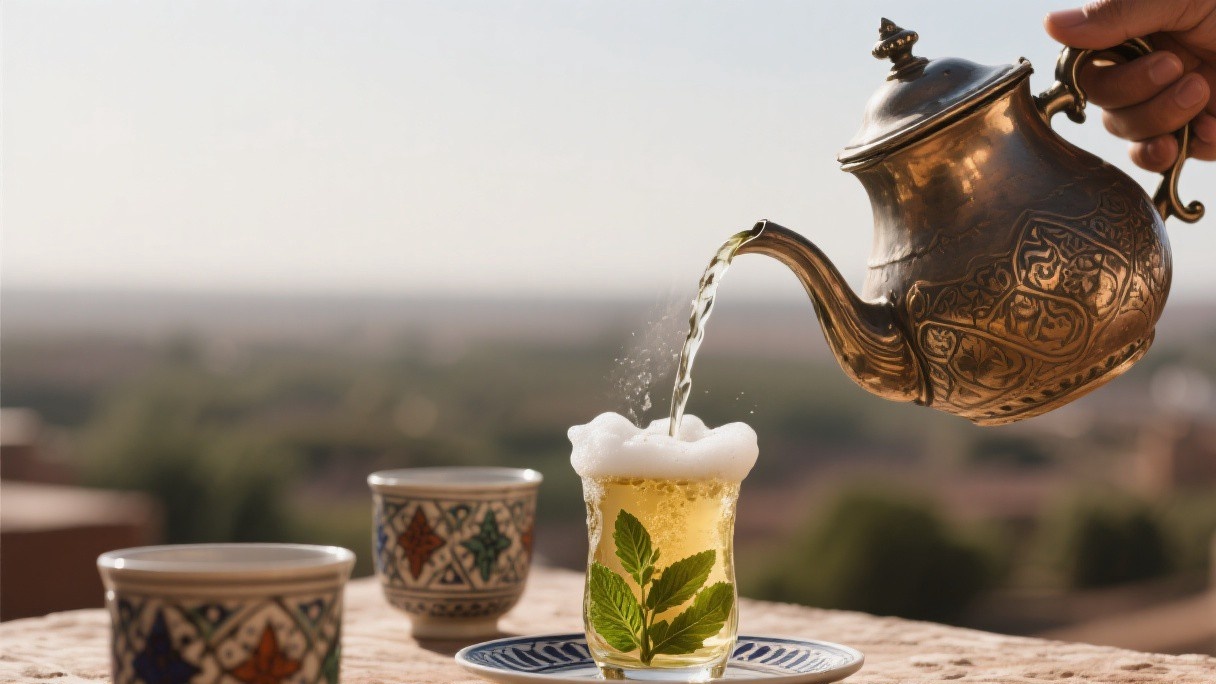
Then I pour the tea into serving glasses, again from a height, holding the teapot steady and aiming for the center of each glass. The stream of tea should be thin and continuous, which aerates the liquid and creates a layer of foam on the surface. The foam, called the crown, is considered a sign of a well-made tea.
If the foam does not form, I dip a spoon into the tea and pour it back from the spoon to generate bubbles.
The Three Rounds and Their Meaning
Moroccan tea service traditionally involves three rounds, each with a distinct character. The first round is described as gentle, like life, and is the lightest in flavor. The second is strong, like love, with more intense tea and mint notes. The third is bitter, like death, with the most astringent and concentrated flavors as the tea has steeped longest. I prepare all three rounds from the same pot, simply pouring additional cups over time.
The sugar and mint diminish with each round, allowing the character of the gunpowder tea to become more prominent. The tea is served in small, slender glasses that show the color and foam clearly. It is offered to guests as a gesture of hospitality and is considered impolite to refuse.
Seasonal Fruit Variations by Region
In different regions of Brazil, the caipirinha adapts to local fruits. In the Amazon, where cacao is abundant, a cupuacu caipirinha uses the pulp of this tropical fruit, which has a tangy, citrus-like flavor. In the northeast, a caipirinha de maracuja uses passion fruit, with the seeds and pulp muddled directly in the glass for added texture.
In Minas Gerais, a strawberry caipirinha is popular during the summer months, using locally grown strawberries that are smaller and more intensely flavored than the varieties found in supermarkets. I have tried all of these regional variations and found that the method remains constant regardless of the fruit: muddle gently, add cachaça and ice, and stir briefly. The template is so robust that almost any fruit with sufficient acidity and sweetness can be adapted into a caipirinha with reliable results.
The most important step is the first one. Gather your ingredients, set aside uninterrupted time, and commit to following the process through. Even imperfect results will taste better than anything mass-produced, and the skills you build here carry over to countless other recipes.