Greek Spanakopita: Flaky Phyllo with Spinach and Feta Filling
Recipe
|
March 13, 2026
Learning to make Greek Spanakopita at home is one of the most satisfying culinary projects you can undertake. The process connects you to centuries of tradition while giving you room to develop your own style. Each attempt teaches you something new about ingredients, timing, and technique, building confidence with every batch.
Preparing the Spinach and Herb Filling
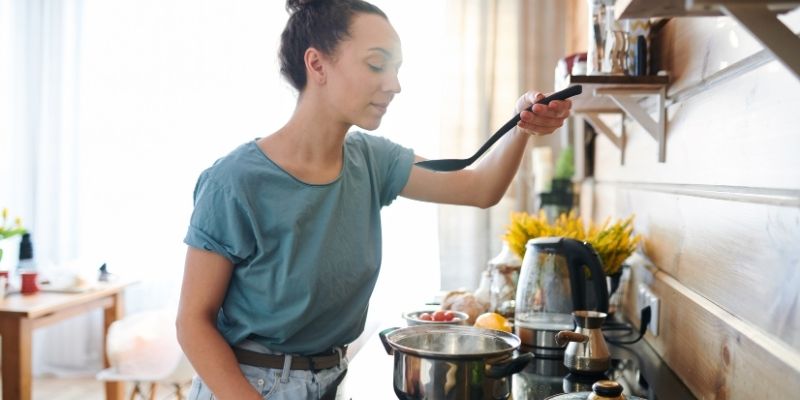
I use 1 kilogram of fresh spinach that has been washed, stemmed, and chopped coarsely. The spinach goes into a large pot over medium-high heat with just the water clinging to its leaves from washing. I cook it for 3 to 4 minutes, turning frequently, until it has completely wilted. Then I transfer it to a colander and press firmly with the back of a spoon to extract every possible drop of liquid.
Excess moisture is the enemy of spanakopita; it makes the bottom layers of phyllo soggy and prevents the filling from setting properly. Once the spinach is cool enough to handle, I squeeze it in handfuls to remove any remaining water.
To the drained spinach, I add 300 grams of crumbled feta cheese, 200 grams of ricotta, 3 lightly beaten eggs, 1 finely diced onion that has been sauteed in olive oil until translucent, 2 tablespoons of chopped fresh dill, and 2 tablespoons of chopped fresh parsley.
Handling Phyllo Dough Without Drying
Phyllo dough comes in rolls of paper-thin sheets that dry out within seconds of exposure to air. I keep the unused sheets covered with a damp kitchen towel at all times while working. I also cover my work surface with a dry towel and place a sheet of plastic wrap over that, which provides a slightly non-stick surface. I unroll the phyllo and trim it to fit my baking pan, which is a 23-by-33-centimeter rectangular dish.
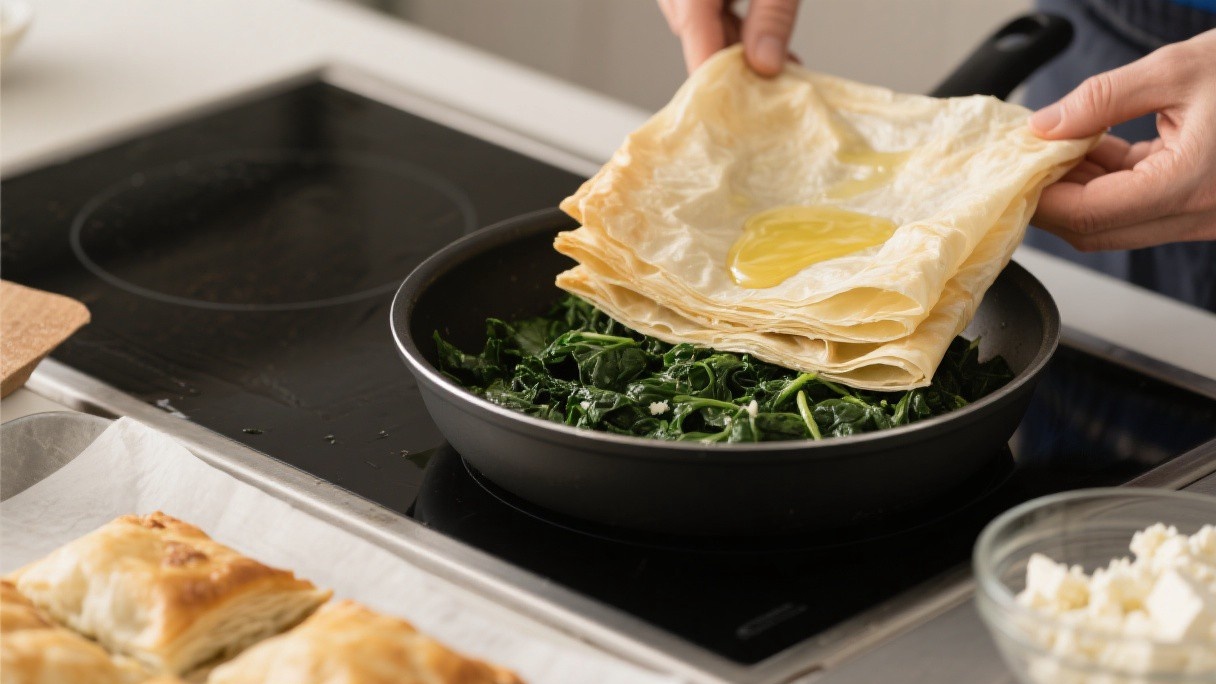
Each sheet is brushed individually with a mixture of 100 milliliters of olive oil and 50 milliliters of melted butter. The fat must reach every corner and edge of each sheet; any dry spot will remain hard and brittle after baking rather than becoming flaky.
Layering the Base and Adding the Filling
I lay 8 sheets of phyllo in the bottom of the pan, brushing each one with the oil-butter mixture and rotating each successive sheet slightly so the edges drape over different sides of the pan. This overlapping creates a more even base. Once the bottom layers are in place, I spread the spinach filling evenly across the surface, pressing it gently into a flat layer without compacting it. The filling should be about 3 centimeters thick.
Then I fold the overhanging phyllo edges over the filling and begin layering the top sheets. I place 6 more sheets on top, brushing each one with oil and butter and tucking the edges inside the pan. With a sharp knife, I score the top layers into 12 rectangles before baking, which makes it easier to cut clean portions after the pie comes out of the oven.
Baking Temperature and Timing
I bake spanakopita at 190 degrees Celsius for 40 to 45 minutes. The pie is done when the top phyllo is deeply golden brown and the edges are visibly crisp. I rotate the pan once at the 20-minute mark to ensure even browning. During the last 5 minutes of baking, I increase the temperature to 210 degrees to reinforce the crispness of the top layers.
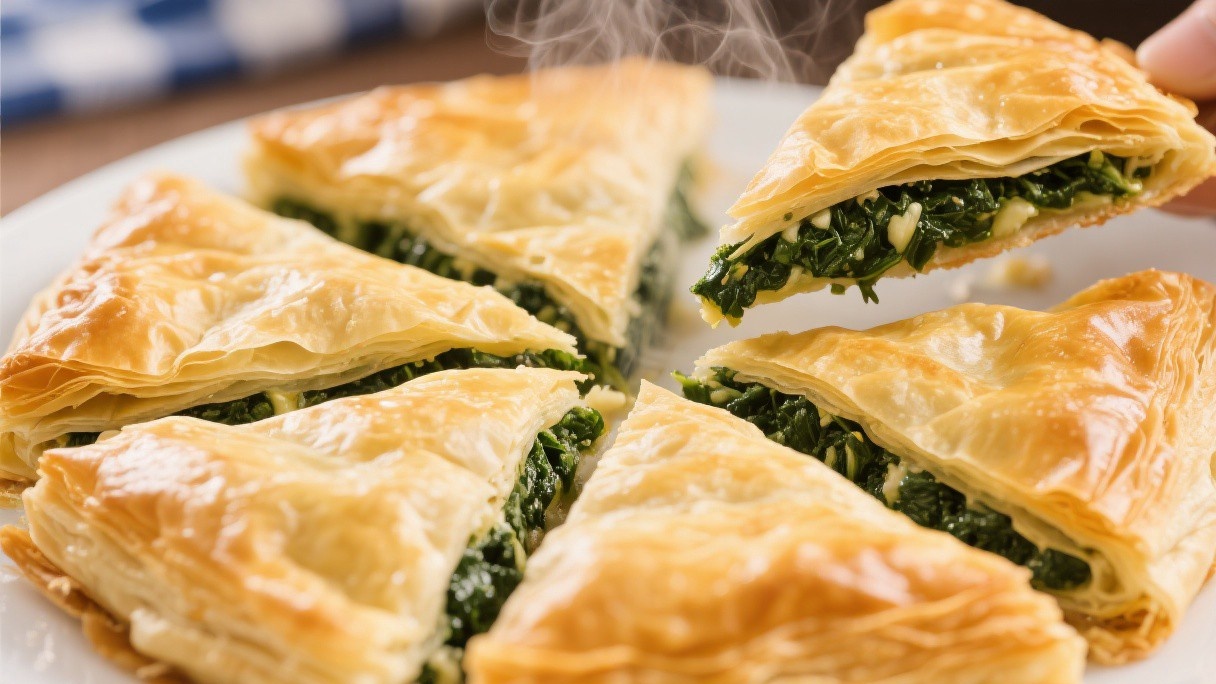
After removing the pie from the oven, I let it rest for at least 15 minutes before cutting. This rest period allows the filling to set and the layers of phyllo to stabilize. Cutting into the pie while it is still very hot causes the filling to spill out and the layers to collapse.
Serving and Reheating
Spanakopita can be served warm or at room temperature, and I actually prefer it at room temperature because the flavors of the herbs and cheese are more pronounced when the pie is not hot. It keeps well in the refrigerator for up to 3 days, covered loosely with foil. To reheat, I place individual portions in a 180-degree Celsius oven for 10 minutes, which restores the crispness of the phyllo.
The microwave is not suitable for reheating spanakopita because it makes the phyllo chewy and soft. I serve it alongside a simple salad of sliced tomatoes and cucumbers dressed with olive oil and red wine vinegar, which provides a cool, acidic contrast to the rich, savory filling.
Working with Phyllo in Humid Conditions
Humidity is the biggest challenge when working with phyllo dough. On days when the humidity is above 60 percent, the sheets absorb moisture from the air and become sticky and fragile, tearing easily and refusing to separate cleanly. I combat this by working in an air-conditioned room when possible, or by running a dehumidifier in the kitchen for 30 minutes before I begin.
I also increase the number of damp towel layers I use to cover the unused sheets, which creates a more humid microclimate that actually helps the phyllo stay pliable. If the sheets do stick together, I place the stack in the refrigerator for 10 minutes, which firms them up and makes them easier to separate. I never try to peel apart stuck sheets by force; the phyllo will tear and the resulting patchwork will be visible in the finished pie.
Spanakopita keeps well in the refrigerator for three days and reheats crisply in a warm oven. Making it a day ahead actually improves the flavor, as the herbs and cheese have time to meld. Serve it as a centerpiece for a vegetarian meal or cut into small squares for an impressive appetizer.
Spanakopita rewards attention to detail at every stage, from squeezing the spinach dry to brushing each phyllo layer with the right amount of butter. The first time you achieve that shatteringly crisp crust and savory, herb-scented filling, you will understand why this dish has been a Greek staple for generations.
Working with phyllo dough takes patience, but the resulting flaky, golden layers are worth every careful brush of butter. Make spanakopita for your next gathering and watch it disappear faster than any other dish on the table.