French Baguette: Achieving the Perfect Crust and Open Crumb Structure
Recipe
|
March 5, 2026
Understanding French Baguette opens up a world of culinary possibilities that most home cooks never explore. The difference between average results and exceptional ones comes down to a handful of key techniques, the right ingredients, and a willingness to practice. This guide covers everything you need to know to get started and improve with each attempt.
Formulating the Dough with Proper Hydration
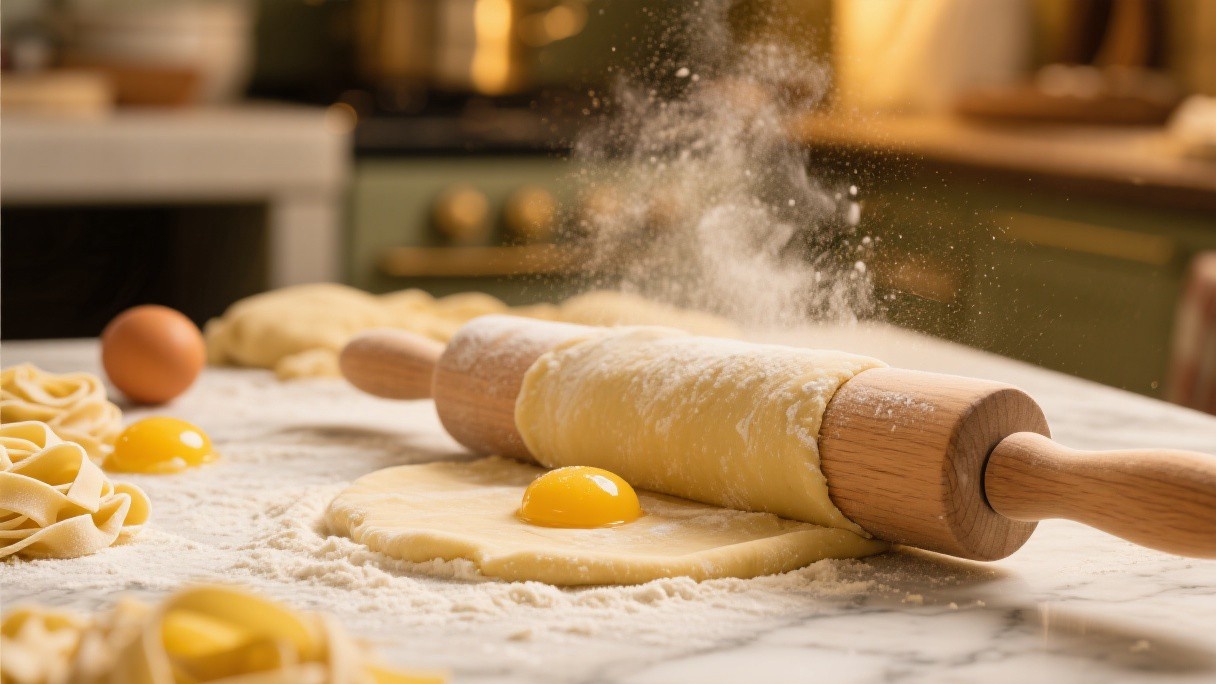
My standard baguette formula uses 500 grams of bread flour with a protein content between 11.5 and 12.5 percent, 350 grams of water, 10 grams of salt, and 2 grams of instant yeast. That gives a hydration of 70 percent, which is manageable for home bakers while still producing an open crumb.
I mix the flour and water together first and let them rest for 30 minutes in a process called autolyse, which allows the gluten network to begin developing without the inhibiting effect of salt. After the rest, I add the salt and yeast and mix by hand for about 4 minutes until the dough comes together into a shaggy mass. It does not need to be smooth at this stage.
Bulk Fermentation with Folds
The dough ferments at room temperature, ideally around 24 degrees Celsius, for a total of 3 hours. During the first 2 hours, I perform a set of stretch-and-folds every 30 minutes, for a total of four sets. Each fold involves lifting one side of the dough, stretching it upward until it resists, and folding it over itself. I rotate the bowl 90 degrees and repeat on all four sides.
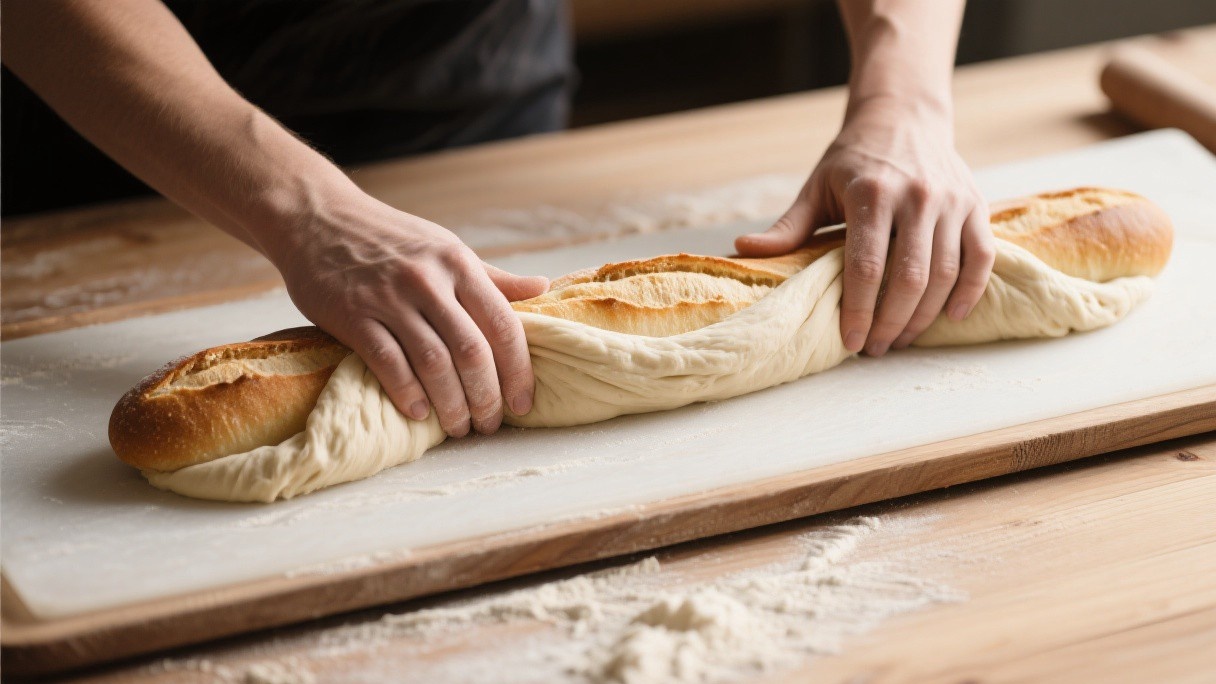
These folds strengthen the gluten structure and redistribute the yeast and food supply. After the final fold, the dough rests undisturbed for the remaining hour. By the end of bulk fermentation, the dough should have increased in volume by about 75 percent and feel airy and extensible.
Shaping for Maximum Oven Spring
I divide the dough into three equal pieces of roughly 280 grams each and preshape them into loose rounds. They rest on a lightly floured surface for 20 minutes, covered with a cloth. Then I shape each piece into a baguette by pressing it gently into a rectangle, folding the top third down to the center, and folding the bottom third up over that.
I seal the seam with the heel of my hand, then roll the cylinder forward with both hands, applying gentle pressure to elongate it to about 35 centimeters. The shaped baguettes go seam-side up in a floured couche, or linen cloth, and I fold the fabric between them to support their shape. They proof at room temperature for 45 to 60 minutes.
Scoring and Baking with Steam
Scoring is what controls where the bread expands in the oven. I transfer the proofed baguettes to a peel or inverted baking sheet seam-side down and make five diagonal cuts across the surface at a shallow angle, about 10 to 15 degrees from horizontal. Each cut overlaps the previous one by about one-third of its length. I bake at 250 degrees Celsius in a preheated oven with a baking stone.
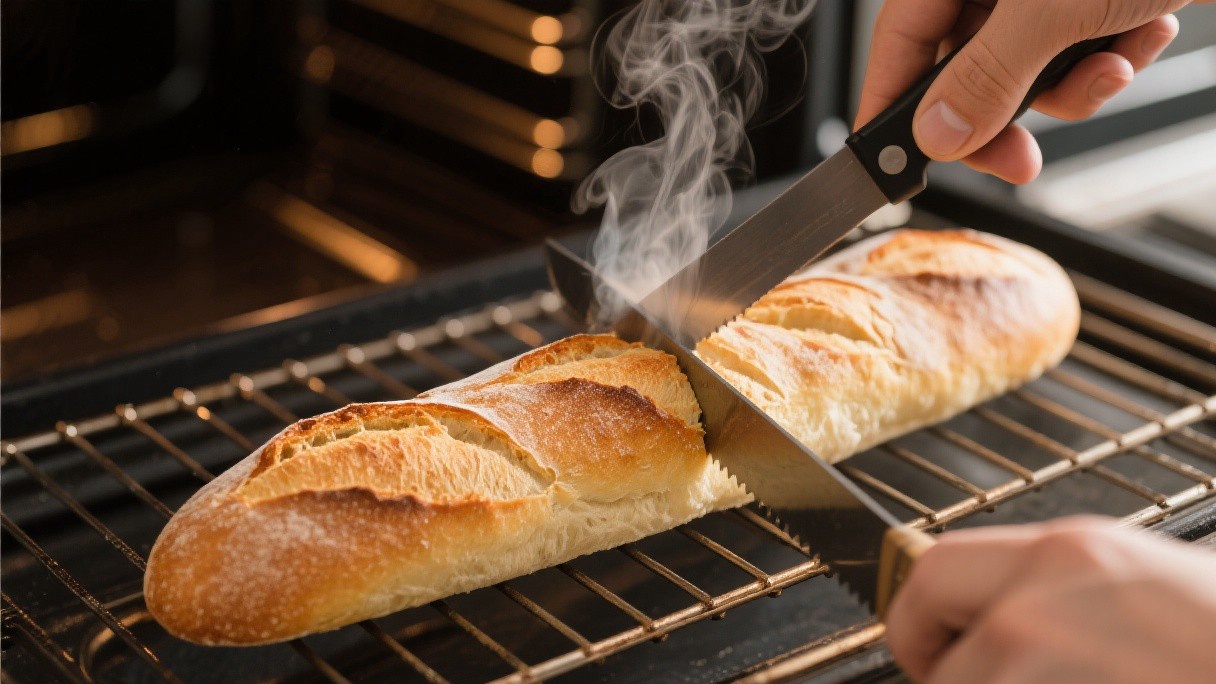
For steam, I pour 200 milliliters of boiling water into a preheated cast-iron pan on the bottom shelf and immediately close the door. The steam interacts with the cold surface of the dough to keep it extensible during the first 10 minutes of baking, allowing maximum oven spring. After 10 minutes, I remove the steam pan, reduce the temperature to 230 degrees, and continue baking for another 15 minutes until the crust is deeply browned.
Cooling and Evaluating the Result
The baguettes must cool on a wire rack for at least 30 minutes before cutting. During this time, the internal temperature continues to drop and the crumb structure sets. Cutting too early releases steam that is still trapped inside and makes the interior gummy. A well-baked baguette should sound hollow when tapped on the bottom. The crust should crackle audibly as it cools, which is the sound of the starch gel hardening.
I evaluate the crumb by cutting the baguette crosswise; the ideal interior shows a mix of large, irregular holes and smaller ones, with thin, translucent membranes between them. The flavor should be complex and slightly tangy, with a clean finish.
Scaling the Recipe and Scheduling
The baguette formula scales linearly, which means I can double or triple the batch without adjusting any ratios. When I bake for a larger group, I make three times the recipe, producing nine baguettes. The only adjustment I make is to divide the dough into a larger number of pieces and to use multiple sheet pans or a longer couche. Timing is important when scaling up, because the shaping and proofing stages overlap.
I stagger the shaping by about 15 minutes between batches, which gives me enough time to shape each group before the previous group finishes proofing. I have found that baking no more than three baguettes at a time produces the best results, because overcrowding the oven reduces the steam effectiveness and the oven spring suffers.
The most important step is the first one. Gather your ingredients, set aside uninterrupted time, and commit to following the process through. Even imperfect results will taste better than anything mass-produced, and the skills you build here carry over to countless other recipes.