Spanish Paella: The Socarrat and Saffron Rice Technique
Recipe
|
March 19, 2026
Spanish Paella has been perfected over generations, with each culture adding its own signature techniques and flavors. Learning these methods at home gives you control over every variable, from ingredient quality to cooking time. The process may seem intimidating at first, but breaking it into clear steps makes it accessible to anyone willing to try.
Selecting the Right Rice and Saffron
Bomba rice is the traditional choice for paella, and its ability to absorb liquid without becoming mushy makes it worth seeking out. Unlike Arborio or other short-grain risotto rices, Bomba expands in width rather than length as it cooks, and it can absorb up to three times its volume in liquid while maintaining a firm, separate grain. For a paella that serves 4, I use 400 grams of Bomba rice.
Saffron is the defining spice, and I use about 0.5 grams, which is roughly 15 to 20 threads. I toast the threads briefly in a dry skillet for 30 seconds, then crumble them and steep them in 2 tablespoons of warm water for 10 minutes. This blooming process extracts maximum color and flavor from the saffron.
Building the Sofrito and Browning the Protein
The sofrito is the flavor base, and I make it directly in the paella pan. Over medium heat with 4 tablespoons of olive oil, I cook 1 finely diced onion for 5 minutes until softened, then add 4 cloves of minced garlic and 1 grated tomato, cooking for another 5 minutes until the tomato has darkened and the moisture has evaporated.
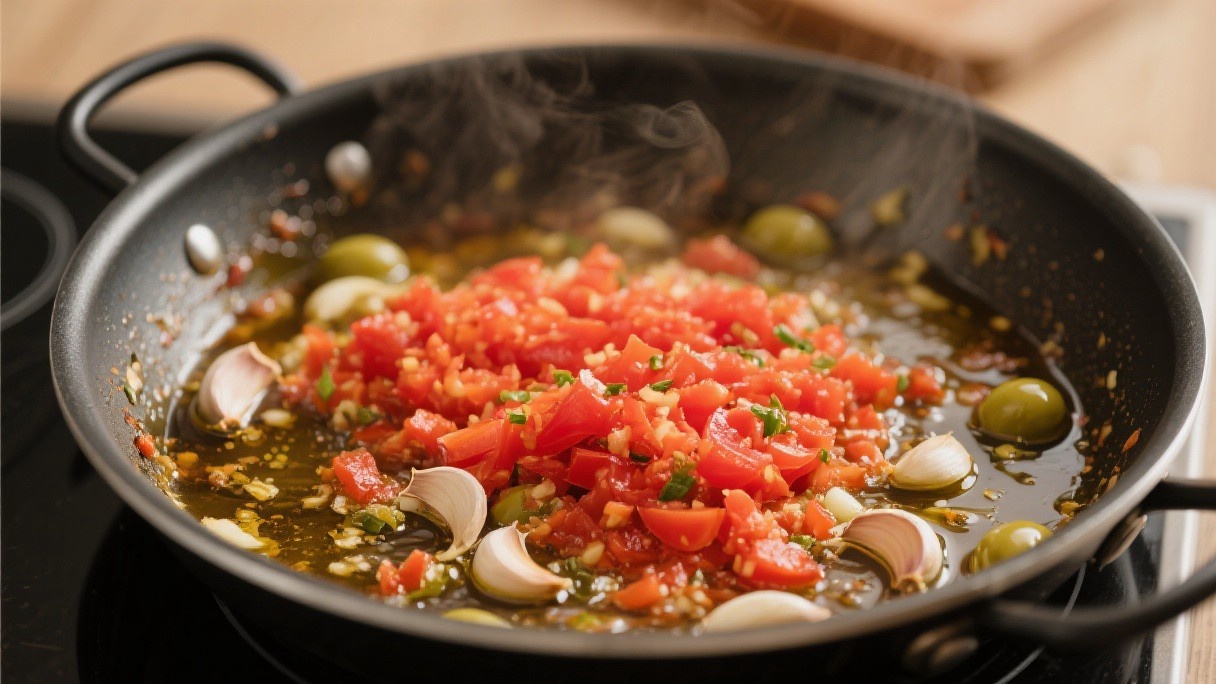
For a mixed paella, I push the sofrito to the edges and brown 300 grams of rabbit pieces and 200 grams of chicken thighs in the center of the pan, seasoning them with salt and smoked paprika. Each piece needs contact with the hot metal to develop a brown crust, which takes about 3 minutes per side. The browned protein stays in the pan throughout the cooking process, contributing its juices to the rice.
The Liquid Ratio and Cooking Without Stirring
Once the sofrito and protein are in place, I pour in 1.2 liters of warm chicken stock or water and bring it to a rolling boil. I add the saffron liquid, 1 teaspoon of sweet paprika, and salt to taste. Then I distribute the rice evenly across the entire surface of the pan, submerging it in the liquid. From this point forward, I do not stir the rice. Stirring releases starch and prevents the socarrat from forming.
I maintain a vigorous boil for the first 8 minutes, then reduce the heat to medium-low for the remaining 10 minutes. The total cooking time for Bomba rice is approximately 18 minutes. I rotate the pan occasionally to ensure even heat distribution, but the rice itself remains undisturbed.
Achieving the Socarrat
In the final 2 minutes of cooking, I increase the heat to high. This is the moment when the socarrat forms. I listen for a crackling sound, which indicates that the remaining liquid at the bottom of the pan is caramelizing. The crackling should be audible but not alarming; if it sounds like the rice is burning, I remove the pan from the heat immediately.
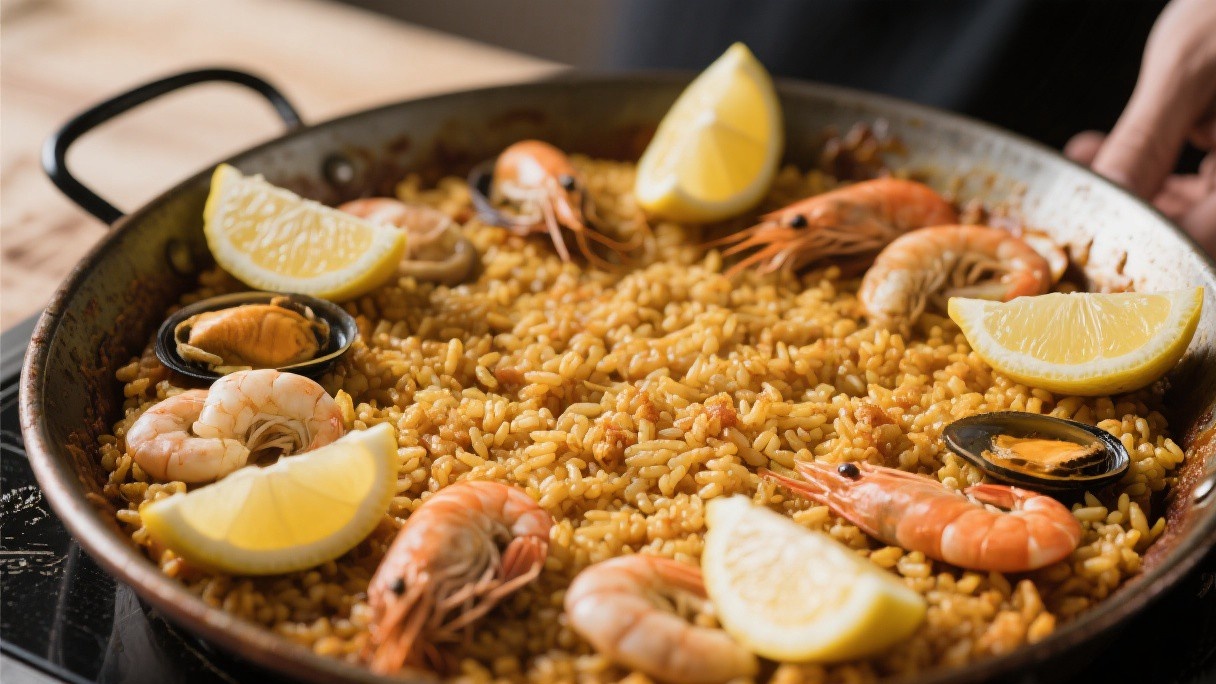
A proper socarrat is a thin, dark golden layer of toasted rice, not a blackened crust. When the socarrat is achieved, I remove the pan from the heat, cover it with a clean towel, and let it rest for 5 minutes. The resting period allows the rice to finish absorbing the last of the liquid and the grains to firm up slightly.
Serving Directly from the Pan
Paella is served family-style directly from the pan, with each diner eating from their section. I garnish the top with lemon wedges and sprigs of fresh rosemary. The rice should be loose and separate, with each grain clearly defined, and the bottom should lift away from the pan in crispy, caramelized patches. A good paella has no liquid remaining; all the stock should be absorbed, and the rice should be dry rather than soupy.
Leftover paella reheats well in a skillet with a splash of water, and the socarrat softens slightly but retains much of its texture.
Equipment and Pan Selection
The pan is as important as the ingredients in paella. A traditional carbon steel paella pan is thin and conducts heat rapidly, which is essential for creating the socarrat. The thin metal responds quickly to changes in heat, allowing precise control over the cooking process. I use a 40-centimeter pan for 4 servings and a 50-centimeter pan for 6 to 8 servings.
The pan should be wide and shallow; the rice layer should be no more than 1.5 centimeters thick for optimal results. A thick-bottomed Dutch oven or cast-iron skillet does not work well for paella because the heat retention is too high and the sides are too deep, which prevents the liquid from evaporating at the correct rate.
I season my carbon steel pan by heating it with a thin layer of oil until it forms a natural non-stick patina, similar to seasoning a wok.
Temperature, timing, and ingredient quality are the three pillars that hold everything together. Master those, and variations become easy. Try different combinations, adjust seasonings to your preference, and make the recipe your own. That is how personal cooking traditions are born.