Brazilian Caipirinha: Cachaça, Lime, and Sugar in Perfect Balance
Beverage
|
March 9, 2026
Brazilian Caipirinha is a craft that rewards patience and attention to detail. Whether you are a curious beginner or an experienced cook looking to refine your technique, understanding the fundamentals transforms ordinary ingredients into something remarkable. The journey from raw materials to finished dish involves specific steps that, once mastered, become second nature.
Choosing Between Cachaça Types
Cachaça is a distilled spirit made from fermented sugarcane juice, and it is fundamentally different from rum, which is typically made from molasses. There are two main categories: unaged cachaça branca, which is clear and bottled shortly after distillation, and aged cachaça amarela, which spends time in barrels of Brazilian wood such as amburana, jequitibá, or balsamo. For a classic caipirinha, I prefer an unaged cachaça because its raw, grassy character provides the most contrast with the sweet lime juice.
Aged cachaças work well in variations where the barrel-influenced flavors of vanilla, cinnamon, and toasted wood add complexity. I look for cachaças that are bottled at 38 to 48 percent ABV, and I keep the bottle in the freezer so it is ice-cold when mixed.
Lime Preparation: Halves, Not Wedges
The traditional method for preparing the lime in a caipirinha is to cut a whole lime into six wedges, remove the white pith from the center of each wedge, and muddle the wedges in the glass. But I have found that cutting the lime into halves and then slicing each half into three segments produces a better result. remove the pith and any seeds, because the pith contributes excessive bitterness that throws off the balance.
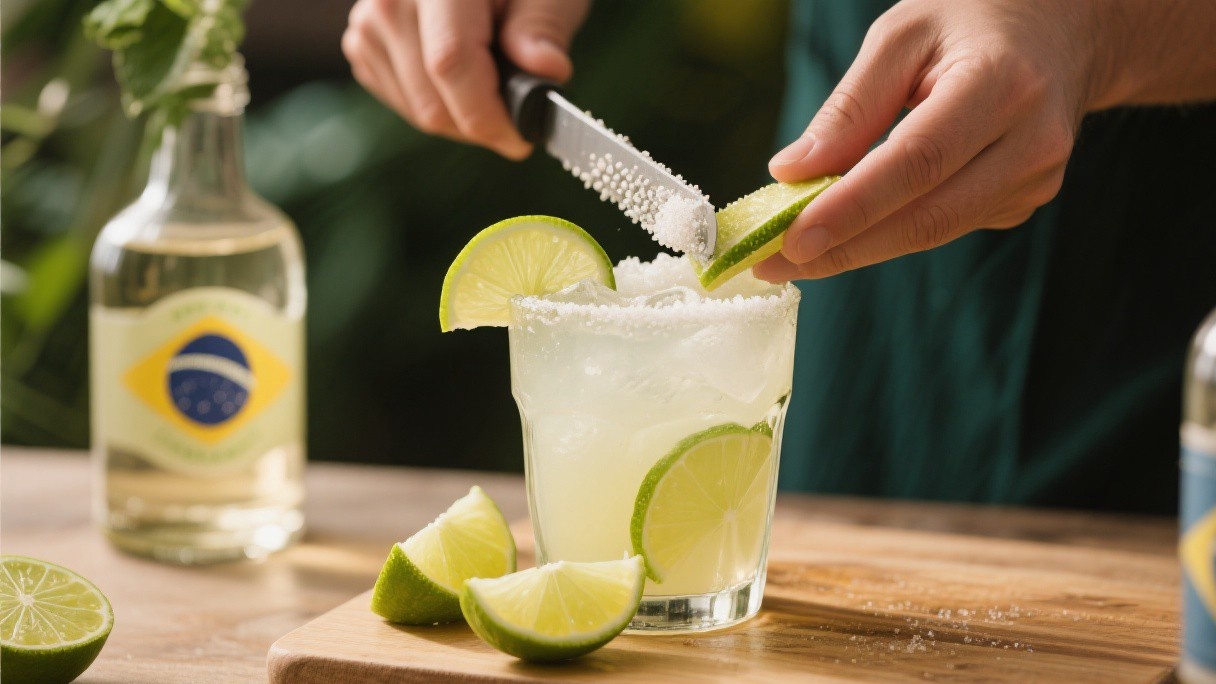
I place the lime segments in a heavy rocks glass and add 2 teaspoons of granulated white sugar. Using a wooden muddler, I press the lime segments firmly but briefly, about 4 to 5 presses, just enough to release the juice and the oils from the skin. Over-muddling releases the bitter compounds from the pith and albedo, which makes the drink harsh.
Sugar Choice and Dissolution
The type of sugar matters more than most people realize. In Brazil, the traditional choice is refined white sugar, which dissolves quickly and provides clean sweetness without additional flavor. This matters because I use regular granulated sugar rather than superfine, because the slightly larger crystals provide a bit of abrasion during muddling that helps release the lime oils.
Some recipes call for simple syrup, but I find that it produces a drink that is too uniformly sweet and lacks the textural interest of sugar crystals dissolving gradually as you sip. Two teaspoons per drink is my standard, which works well with a lime of average acidity. If the lime is particularly tart, I add a third teaspoon.
Building and Serving the Drink
After muddling the lime and sugar, I fill the glass with crushed ice. The ice should be packed firmly but not compressed, filling the glass to about 2 centimeters below the rim. Then I pour 60 milliliters of cachaça over the ice and stir briefly with a bar spoon, about 5 to 6 rotations, just enough to mix the ingredients and begin dissolving the sugar.
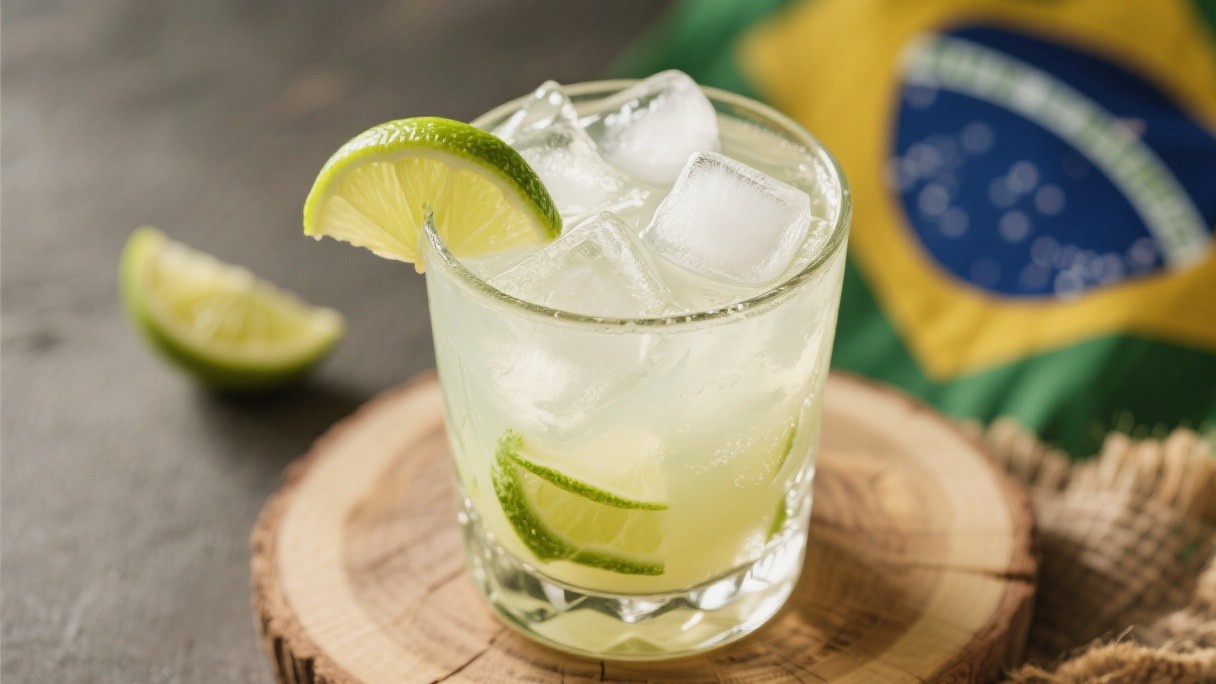
I do not shake the caipirinha; shaking over-dilutes the drink and makes it frothy in an unappealing way. The finished drink should have a pale green color from the lime oil on the surface of the ice, and the sugar should still be slightly visible at the bottom of the glass, continuing to dissolve as the drink is consumed.
Variations and Seasonal Adaptations
The caipirinha template is flexible enough to support numerous variations. A caipiroska substitutes vodka for cachaça and is popular throughout South America. A caipifruta replaces the lime with other fruits: strawberries, passion fruit, kiwi, and pineapple all work well. For a strawberry version, I hull and quarter 4 large strawberries, muddle them with 2 teaspoons of sugar, and proceed with the same method.
Passion fruit caipirinha is particularly popular in Brazil; I use the pulp of one passion fruit, which provides both juice and seeds that add a pleasant textural crunch. Regardless of the variation, the fundamental principle remains the same: muddle gently, use crushed ice, and stir briefly.
Alternative Spirits and Flavor Variations
While Japanese blended whiskey is the standard for a Japanese highball, I have experimented with other spirits that work within the same framework. A gin highball, made with a London dry gin, produces a drink that is more aromatic and botanical, with the juniper and citrus notes of the gin complementing the carbonation. A rum highball, made with a light Cuban-style rum, has a subtle sweetness that works without any added sugar.
I have even made highballs with shochu, which produces a lighter, lower-alcohol version that is popular in izakayas in Japan. Regardless of the spirit, the technique remains the same: cold ingredients, quality ice, two-pour method, and minimal stirring. The highball template is remarkably versatile, and the principle of using carbonation and dilution to showcase a spirit applies across categories.
Start with the simplest version and refine from there. Each attempt builds muscle memory and deepens your understanding of how the ingredients interact. Within a few sessions, you will develop an intuitive sense for timing and technique that no recipe alone can teach.