Japanese Mochi: Glutinous Rice Pounding and Sweet Fillings
Dessert
|
March 16, 2026
Mochi is made from glutinous rice, also called sweet rice or mochigome, that has been soaked, steamed, and pounded into a smooth, sticky dough. The traditional method uses a large wooden mortar and mallet, but I make mochi at home using a stand mixer or a food processor, which produces a very similar result with considerably less physical effort.
The finished mochi dough can be shaped, filled, or colored, and it serves as the base for dozens of Japanese sweets, from simple plain mochi to elaborate filled confections called daifuku.
Soaking and Steaming Glutinous Rice
I use 500 grams of short-grain glutinous rice, which is different from regular Japanese sushi rice. Glutinous rice contains almost no amylose and is composed almost entirely of amylopectin, which gives it its characteristic stickiness. I wash the rice in three changes of cold water until the runoff is clear, then soak it in fresh water for at least 8 hours or overnight in the refrigerator.
After soaking, I drain the rice and spread it evenly in a steamer basket lined with cheesecloth. I steam it over high heat for 35 to 40 minutes, checking at the 30-minute mark to see if the grains are fully translucent and tender. Under-steamed rice produces grainy mochi that does not achieve the smooth, elastic texture that is essential.
Pounding with a Stand Mixer
While the rice is still hot, I transfer it to the bowl of a stand mixer fitted with the dough hook. I begin mixing on the lowest speed, and the paddle breaks down the individual rice grains into a sticky mass over the course of 5 to 7 minutes. I stop the mixer every 2 minutes to scrape down the sides and push the dough back toward the center.
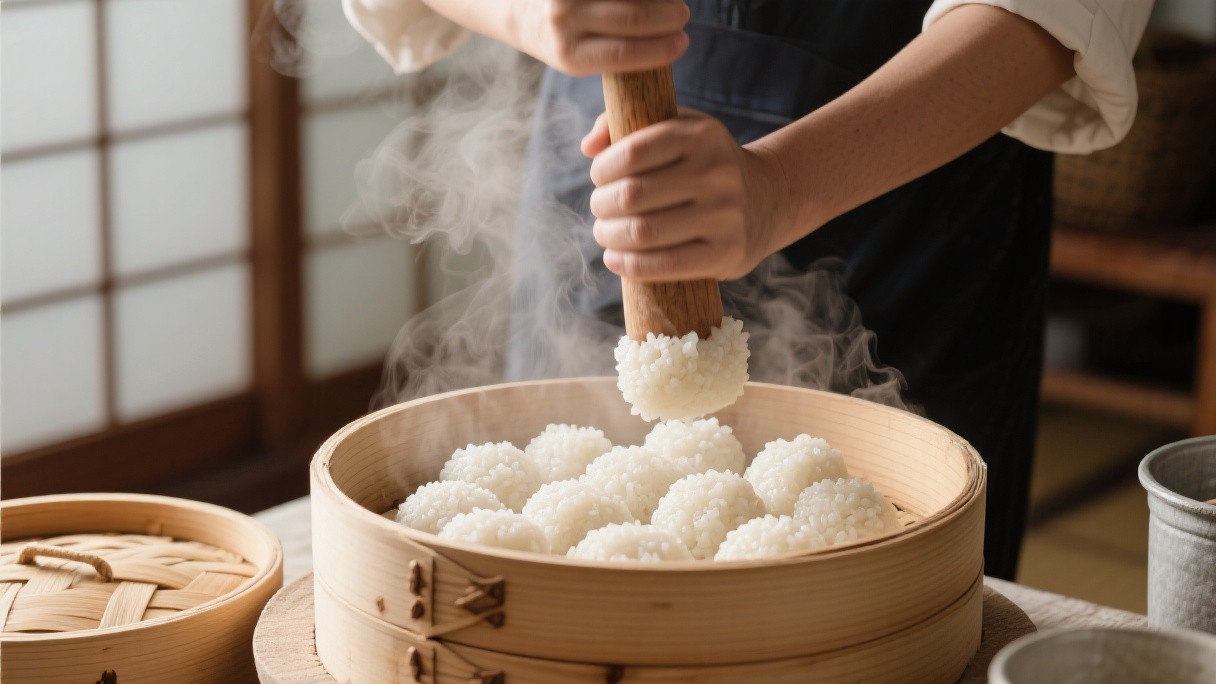
Once the rice has formed a rough, cohesive mass, I increase the speed to medium and continue mixing for another 5 minutes. The mochi is ready when it is completely smooth, glossy, and extremely stretchy. I dust my work surface generously with potato starch, which prevents sticking without adding flavor the way cornstarch can. The mochi is turned out onto the starched surface and kneaded briefly by hand to form a smooth ball.
Preparing Sweet Red Bean Paste
The most common filling for mochi is sweet red bean paste, or anko. I make anko from 200 grams of dried adzuki beans that have been soaked overnight in plenty of water. I drain the beans, cover them with fresh water in a pot, bring to a boil, and simmer for 45 to 60 minutes until the beans are completely tender and can be crushed easily between my fingers.
I drain the beans, add them back to the pot with 150 grams of sugar and a pinch of salt, and cook over medium heat, stirring constantly, for 10 to 15 minutes until the mixture thickens and pulls away from the sides of the pot. I let the anko cool completely, then portion it into 12 balls of about 25 grams each.
The anko should be thick enough to hold its shape when rolled into a ball but still moist enough to be pleasant to eat.
Shaping Daifuku: Filled Mochi
To make daifuku, I divide the mochi dough into 12 equal pieces of about 40 grams each. I flatten each piece into a round disc about 8 centimeters in diameter, keeping the edges thinner than the center. I place a ball of anko in the center of each disc, then gather the edges of the mochi around the filling and pinch them together at the top.
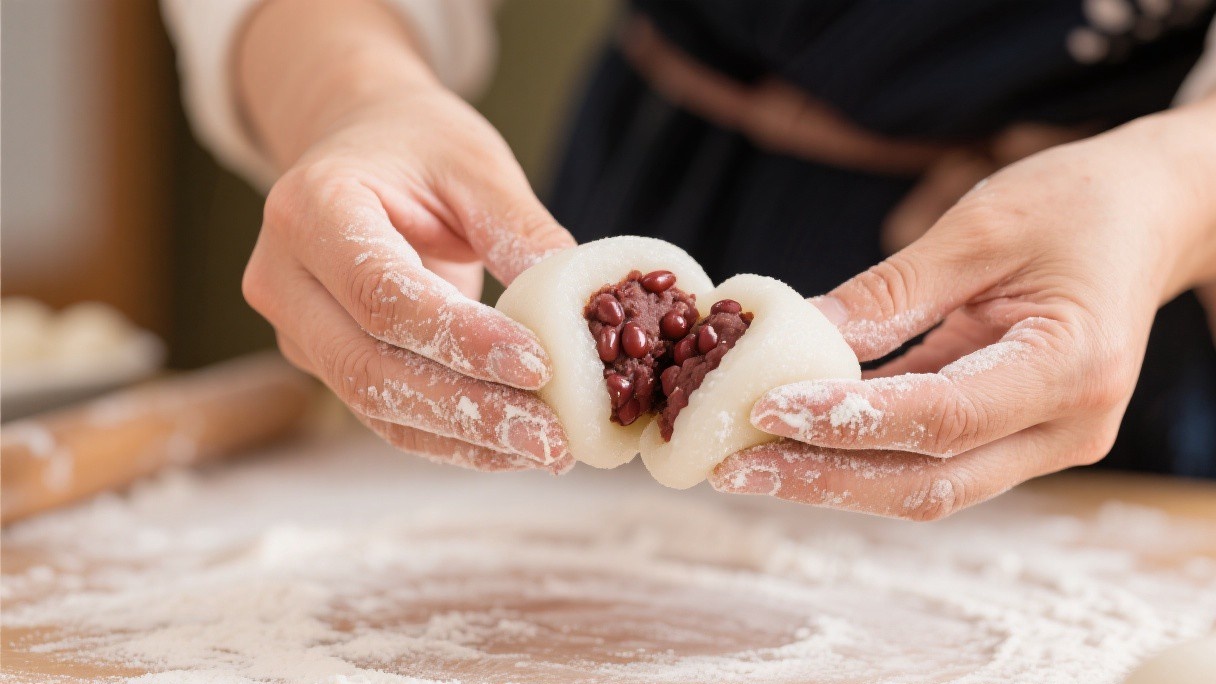
I flip the mochi seam-side down and gently roll it between my palms to form a smooth, round ball. The mochi should completely enclose the filling with no visible seams. I keep my hands and the work surface well-dusted with potato starch throughout this process, because mochi is extraordinarily sticky and will adhere to any dry surface. The finished daifuku should be soft, slightly tacky on the outside, and yield gently when pressed.
Storage and Serving Freshness
Fresh mochi is best consumed within a few hours of making, because it begins to harden and develop a stale texture as the starch retrogrades. I store any uneaten daifuku in an airtight container at room temperature for up to 1 day, or in the refrigerator for up to 2 days. Before serving refrigerated mochi, I let it come to room temperature for 30 minutes, which softens it slightly.
Mochi can also be frozen for up to 1 month; I wrap each piece individually in plastic wrap and thaw them at room temperature for 2 hours before serving. I serve daifuku with green tea, which provides a bitter contrast to the sweet filling and helps cleanse the palate between bites.
Mochi-making rewards patience more than any other quality. The first few attempts may produce uneven shapes or tears in the dough, but the flavor will still be wonderful. Work in small batches, keep your hands and tools well-dusted with potato starch, and focus on developing a feel for the right consistency. The results improve dramatically with practice.