Italian Panna Cotta: Cream Gelatin Setting and Berry Compote
Dessert
|
March 14, 2026
Panna cotta, which translates to cooked cream, is one of the simplest yet most elegant desserts in the Italian repertoire. Its appeal lies in its purity of flavor and its silky, trembling texture, which should be firm enough to hold its shape when unmolded but soft enough to collapse gently on the spoon.
I have found that the most common mistake in panna cotta preparation is using too much gelatin, which produces a rubbery, gummy texture that is closer to Jell-O than to the delicate Italian original. Getting the gelatin ratio right is the most important technical consideration in the entire recipe.
The Gelatin-to-Cream Ratio
I use 2.5 grams of powdered gelatin per 100 milliliters of liquid, which produces a soft set that trembles when the mold is shaken. For a standard batch that fills four 150-milliliter ramekins, I use 500 milliliters of heavy cream, 100 milliliters of whole milk, 50 grams of sugar, and 1.5 teaspoons, about 5 grams, of powdered gelatin. The gelatin is bloomed in 3 tablespoons of cold water for 5 minutes until it swells and becomes spongy.
I heat the cream, milk, and sugar in a saucepan over medium heat, stirring until the sugar dissolves and the mixture reaches about 70 degrees Celsius. I do not let it boil, because boiling can affect the setting power of the gelatin. Then I remove the pan from the heat, add the bloomed gelatin, and stir until it is completely dissolved, about 1 minute.
Flavoring with Vanilla and Citrus
Vanilla is the classic flavoring for panna cotta, and I use a whole vanilla bean rather than extract for the cleanest, most aromatic result. I split the bean lengthwise, scrape the seeds into the cream mixture, and add the pod as well. The cream simmers gently with the vanilla for 10 minutes, which extracts maximum flavor from the seeds and pod.
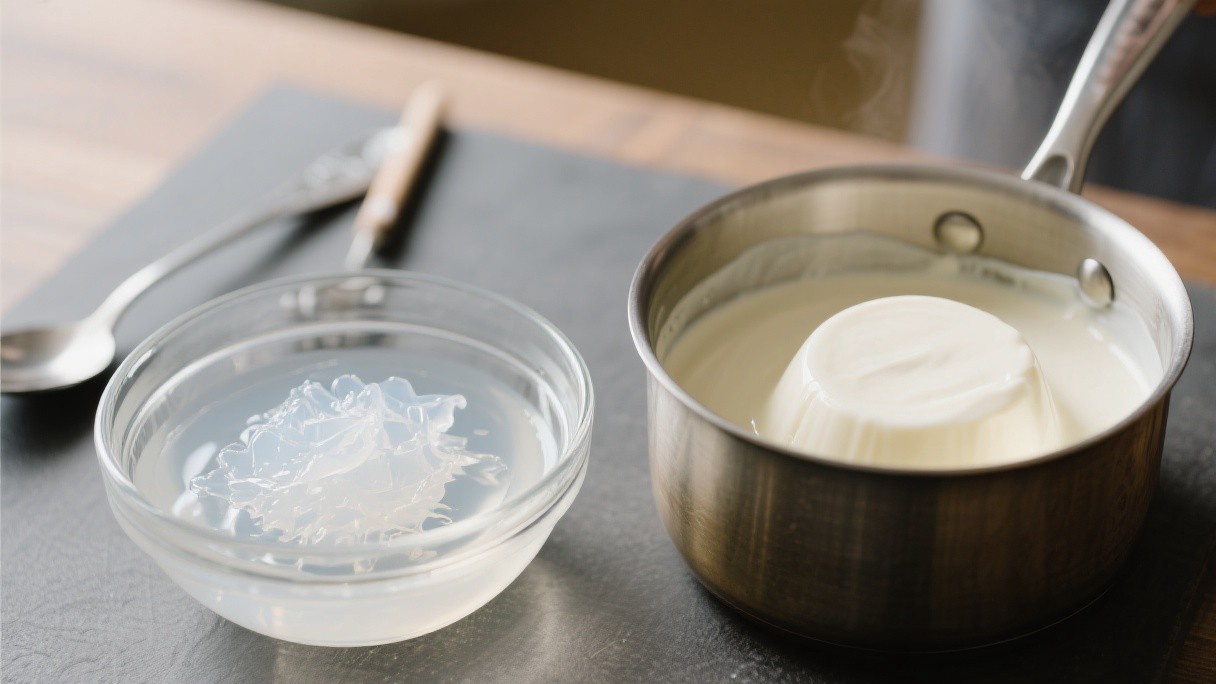
After steeping, I remove the pod and pour the cream through a fine-mesh sieve to remove any vanilla bean residue. For a citrus variation, I add the zest of one lemon or one orange to the cream during steeping and remove it before adding the gelatin. I avoid using vanilla extract, because the alcohol in the extract can interfere with the gelatin setting and the flavor is less nuanced than that of the whole bean.
Molding and Setting Time
I pour the warm cream mixture into four lightly oiled ramekins or silicone molds, filling them to about 1 centimeter below the rim. Silicone molds are ideal because they release cleanly without the need for oil. I tap each mold gently on the counter to release any air bubbles, then cover them with plastic wrap and refrigerate for at least 4 hours, though overnight produces the most stable set.
The panna cotta should be completely firm to the touch and should not jiggle when the mold is tilted. If I am in a hurry, I can speed up the setting process by placing the molds in the freezer for 1 hour and then transferring them to the refrigerator for another hour, but the texture is slightly better when set slowly in the refrigerator alone.
Unmolding Without Damage
To unmold, I run a thin knife around the edge of the ramekin, pressing it against the side to create a small gap between the panna cotta and the mold. Then I dip the bottom of the ramekin in hot water for 5 to 8 seconds, which melts a thin layer of cream against the mold and allows the panna cotta to release cleanly.
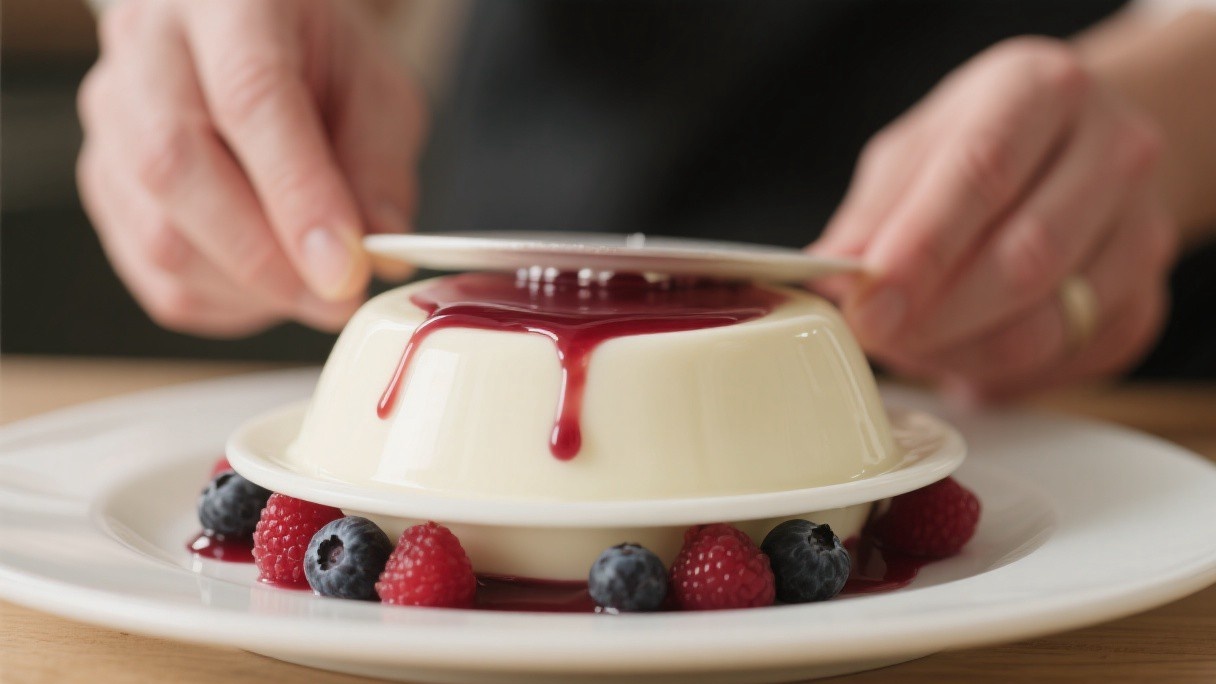
I place a serving plate upside down over the ramekin, invert both together, and give a firm tap on the bottom of the ramekin. The panna cotta should slide out in one piece with a smooth, glossy surface. If it resists, I repeat the hot water dip for another 3 seconds and try again. I never twist or pry the panna cotta, because it is too delicate to withstand forceful handling.
Berry Compote for the Top
A berry compote provides both visual contrast and a tart-sweet counterpoint to the rich cream. I combine 200 grams of mixed berries, blueberries, raspberries, and strawberries, with 40 grams of sugar and 1 tablespoon of lemon juice in a small saucepan. I cook over medium heat for 5 to 7 minutes, stirring occasionally, until the berries break down and the mixture thickens slightly. I let the compote cool completely before spooning it over the unmolded panna cotta.
The compote should be at room temperature or slightly chilled; warm compote will begin to melt the surface of the panna cotta. I spoon it over the top just before serving, letting it cascade down the sides. A few whole berries placed on top add visual appeal and indicate the flavors within.
Panna cotta is one of the most forgiving desserts you can make. Even if the gelatin ratio is slightly off, the result will still be a delicious, creamy treat. The key is to taste the base before chilling and adjust the sweetness and vanilla to your preference. Once you master the basic version, try adding a layer of fruit gelee on top for a stunning visual effect.