Vietnamese Pho: Building Depth Through Charred Bones and Star Anise
Recipe
|
March 7, 2026
There is a reason Vietnamese Pho has endured as a beloved tradition across cultures. When done right, the results far surpass anything store-bought or restaurant-made. The secret lies in understanding a few core principles and applying them consistently. With the right approach, you can achieve professional-quality results in your own kitchen.
Charring Bones and Aromatics for Maillard Complexity
I use about 2 kilograms of beef leg bones and 500 grams of beef knuckle or shank, both of which have high collagen content that will give the broth body. The bones go into a roasting pan and under a broiler set to high heat for 25 minutes, turning once, until they are deeply browned on all sides.
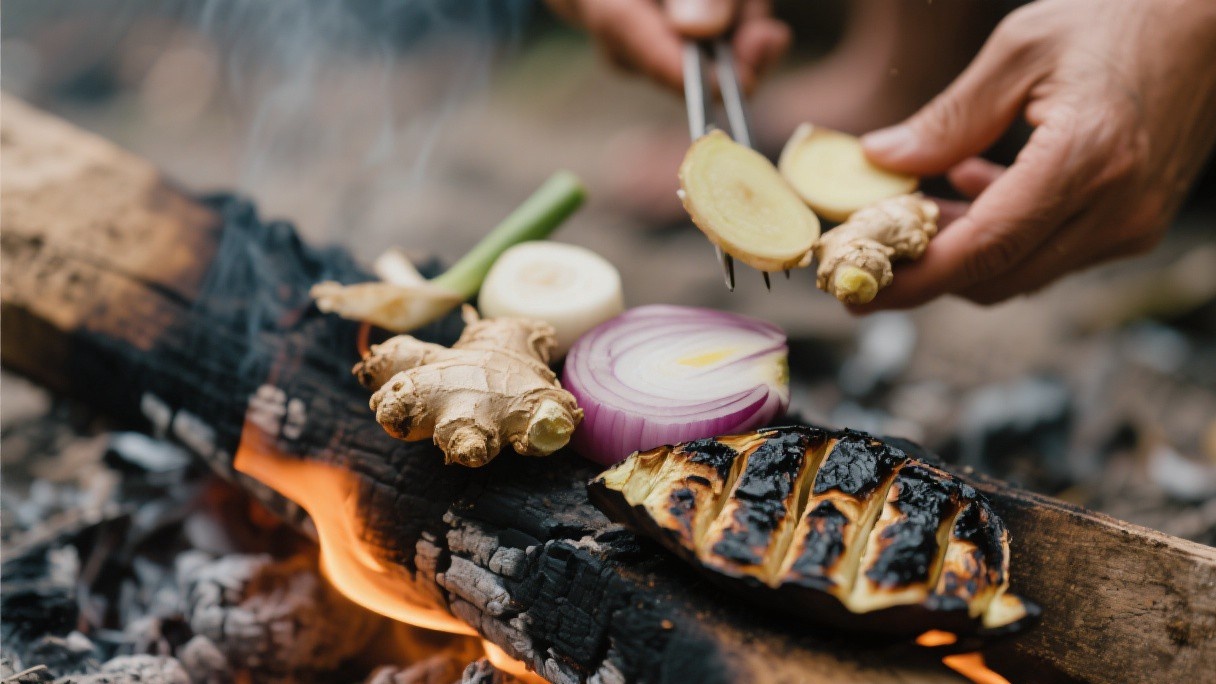
Separately, I halve 2 large onions and char them cut-side down directly on a gas burner over medium-high heat for about 8 minutes until the surfaces are blackened and blistered. A 5-centimeter piece of ginger gets the same treatment. The charred sugars on the onions and ginger contribute a subtle smokiness and sweetness that forms the backbone of the broth's aroma.
The Parboiling Step That Clarifies the Broth
Before the bones enter the main pot, I parboil them in a large stockpot of boiling water for 10 minutes. This step coagulates the blood and impurities on the surface of the bones, which I then drain and discard along with the water. I rinse each bone under cold running water to remove any remaining scum. Skipping this step results in a cloudy broth with a harsh, mineral flavor.
After rinsing, the bones go into a clean pot with 4 liters of fresh cold water. Using cold water at the start is important because it allows the collagen to dissolve gradually as the temperature rises, producing a cleaner extraction.
Spice Sachet and Simmering Protocol
I toast 6 whole star anise pods, 1 cinnamon stick, 4 whole cloves, and 1 tablespoon of coriander seeds in a dry skillet for about 2 minutes until fragrant, then tie them in a piece of cheesecloth along with the charred onion and ginger. The sachet goes into the pot along with 2 tablespoons of fish sauce and 1 tablespoon of rock sugar.
The broth comes to a boil, then I reduce the heat to the lowest possible setting where it still maintains a bare simmer. I keep it at this temperature for 8 to 10 hours, skimming any foam or fat that rises to the surface every 30 minutes for the first 2 hours. The long, gentle simmer extracts maximum collagen without emulsifying the fat into the liquid, which keeps the broth clear.
Preparing the Noodles and Assembly
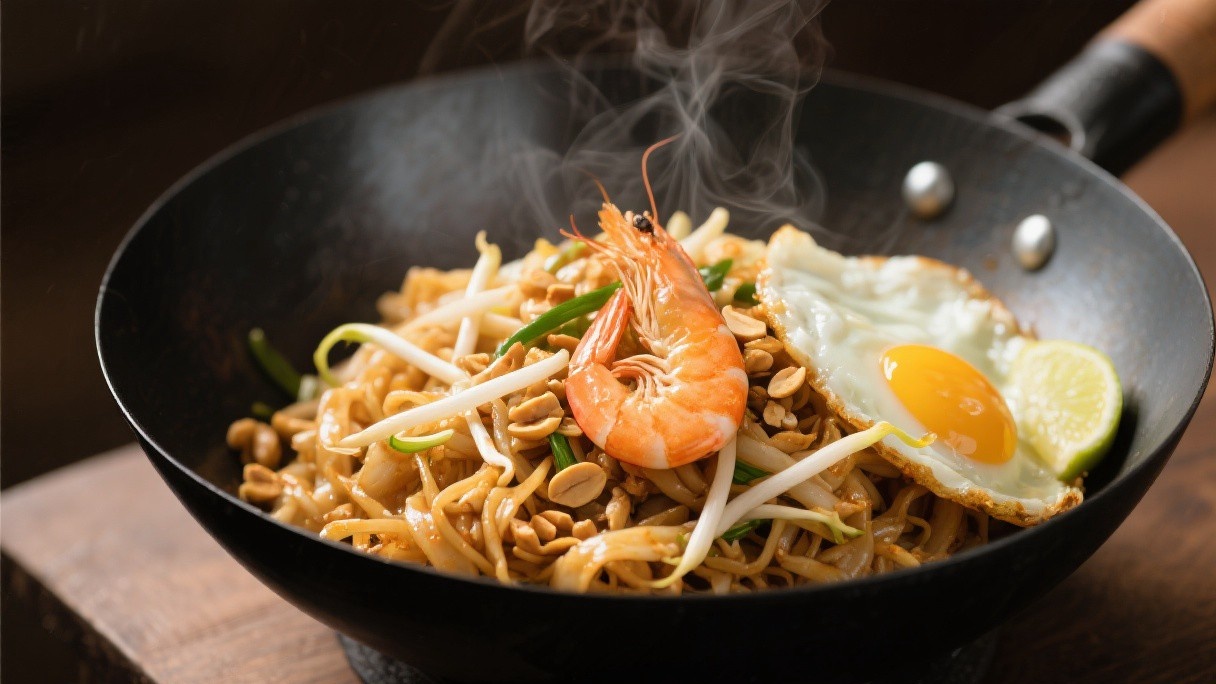
Flat rice noodles for pho are different from the ones used for pad thai; they are wider, typically 10 to 15 millimeters, and have a softer, more gelatinous texture. I cook them separately in boiling water for 3 to 5 minutes depending on their thickness, then drain and rinse under cold water to stop the cooking.
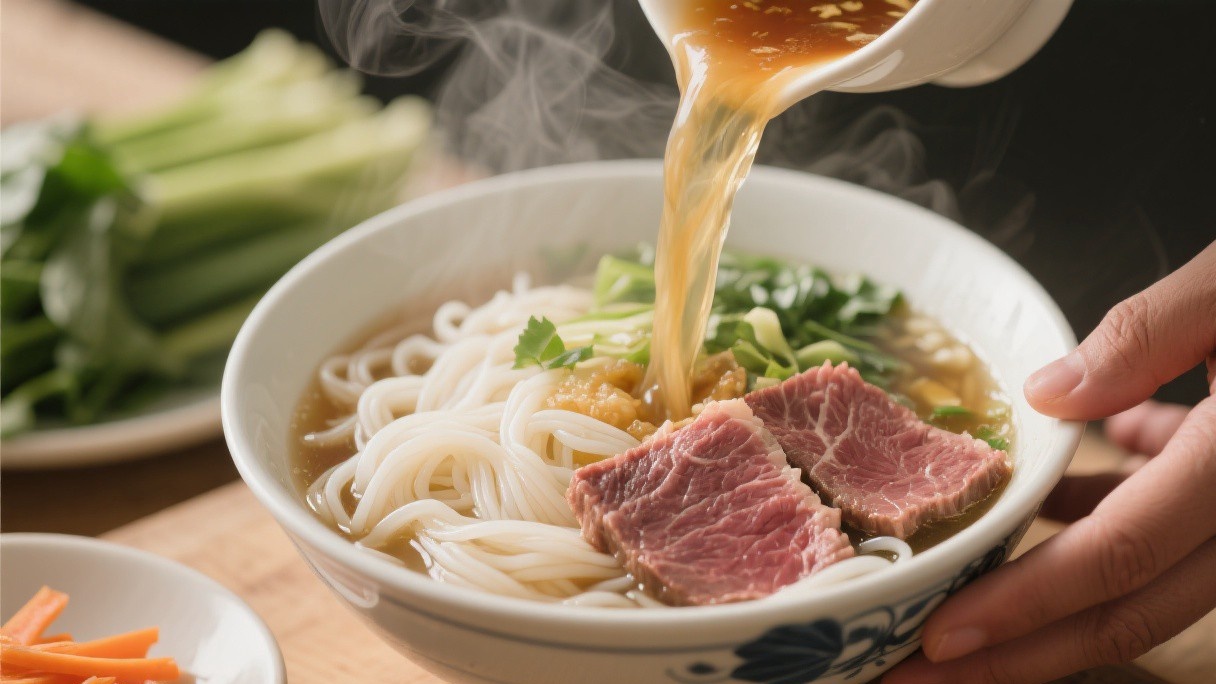
For assembly, I place a portion of noodles in the bottom of a large bowl, top with thinly sliced beef sirloin that has been placed in the freezer for 30 minutes to firm up for easier slicing, and ladle the boiling broth directly over the top. The residual heat of the broth cooks the raw beef to a perfect medium-rare within seconds.
Herb Plate and Final Seasoning
Pho is always served with a plate of fresh herbs and condiments that each diner adds to taste. I prepare Thai basil, cilantro, sawtooth herb, bean sprouts, lime wedges, sliced jalapenos, and hoisin and sriracha sauces. The herbs should be added just before eating so they wilt slightly in the hot broth without losing their fresh character.
I adjust the seasoning of each bowl with additional fish sauce and lime juice at the table rather than seasoning the broth aggressively during cooking, because the final balance depends on personal preference and the specific cuts of meat being used.
Pho Broth Variations and Regional Styles
While the northern Hanoi style of pho uses a simpler, cleaner broth with fewer spices, the southern Saigon style is sweeter and more heavily spiced. I adjust my broth depending on which style I am aiming for. For a northern-style pho, I omit the star anise and cloves, reduce the fish sauce, and add a small amount of rock sugar for subtle sweetness.
For a southern-style pho, I increase the star anise to 8 pods, add a cinnamon stick, and use more fish sauce and rock sugar. Some southern versions also include a small amount of hoisin sauce in the broth, which I add at the very end. Regardless of the regional variation, the quality of the bones remains the most important factor.
I have tried making pho with beef bones from a supermarket and with bones from a specialty butcher, and the difference in depth and body of the broth is significant.
Share what you make with friends and family. Cooking is meant to be enjoyed communally, and feedback from others helps you improve faster than tasting alone. Plus, the act of serving something you made from scratch is one of the most rewarding experiences a home cook can have.