Japanese Dorayaki: Red Bean Pancake Sandwiches
Dessert
|
March 28, 2026
Dorayaki consists of two small, spongy pancakes wrapped around a filling of sweet red bean paste. The pancakes are made from a batter that is similar to a Western pancake but contains honey and mirin, which give them a distinctive sweetness and a slightly elastic, chewy texture.
I first encountered dorayaki through the popular Japanese character Doraemon, whose favorite food it is, and I was surprised to discover that the homemade version is significantly better than the packaged ones available in Asian grocery stores. The pancakes should be soft, pillowy, and faintly sweet, providing a neutral base that lets the red bean filling be the star.
The Batter: Eggs, Sugar, and Honey
I whisk together 2 large eggs and 80 grams of granulated sugar in a bowl for about 5 minutes until the mixture is pale, thick, and has doubled in volume. Then I add 1 tablespoon of honey and 1 tablespoon of mirin, whisking to combine. In a separate bowl, I sift together 120 grams of cake flour and half a teaspoon of baking powder.
I fold the dry ingredients into the egg mixture in two additions, using about 10 gentle folds each time. The batter should be thick, smooth, and slightly sticky. I cover the bowl with plastic wrap and let it rest in the refrigerator for at least 30 minutes, which allows the flour to fully hydrate and the gluten to relax. Resting the batter produces pancakes that are more tender and less prone to tearing.
Cooking the Pancakes on Low Heat
I heat a non-stick skillet or griddle over medium-low heat and lightly oil it with a paper towel dipped in neutral oil. I pour the batter into the pan in circles about 8 centimeters in diameter, using about 2 tablespoons of batter per pancake. The heat must be low; if the pan is too hot, the pancakes brown before the interior cooks through, and they become tough and dry rather than soft and spongy.
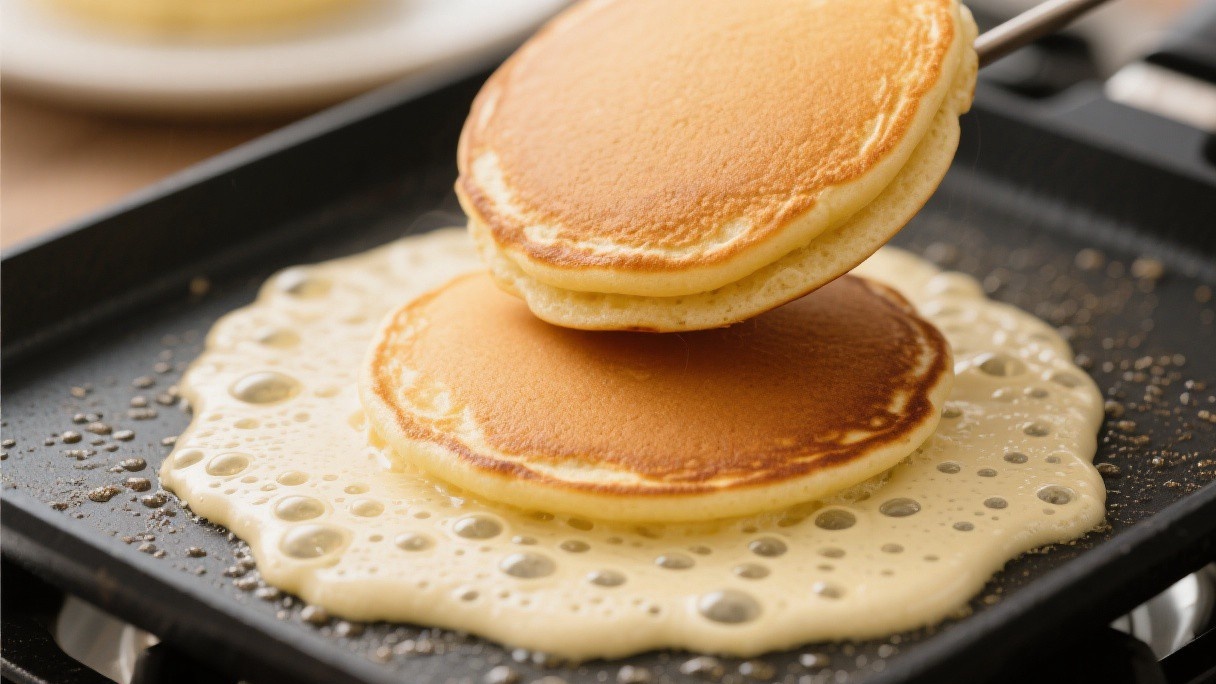
I cook each pancake for about 2 minutes on the first side, until bubbles appear on the surface and the edges look set. Then I flip it carefully and cook for another 1 to 1.5 minutes on the second side. The finished pancakes should be golden brown on both sides, soft and springy to the touch, and about 1 centimeter thick. I stack them on a plate as they come off the pan and let them cool completely.
Making the Red Bean Filling
I use tsubuan, a chunky sweet red bean paste, rather than koshian, which is smooth. The chunky texture provides a more interesting mouthfeel and a stronger sense of the whole beans. I make tsubuan by soaking 200 grams of dried adzuki beans overnight, then simmering them in fresh water for 45 to 60 minutes until tender.
I drain the beans, return them to the pot with 120 grams of sugar and a pinch of salt, and cook over medium heat for 10 to 15 minutes, stirring frequently and mashing some of the beans against the side of the pot with the back of a spoon. The goal is a thick, chunky paste where about half the beans are broken down and half remain whole. I let the paste cool completely before using it.
If I am short on time, I use canned tsubuan, which is a reasonable substitute.
Assembling the Dorayaki
I match the pancakes into pairs of similar size and color. I place one pancake browned-side down on a plate and spread about 30 grams of red bean paste in a thick, even layer over the surface, leaving a 5-millimeter border around the edge. Then I place the second pancake on top, browned-side up, and press gently to spread the filling to the edges.
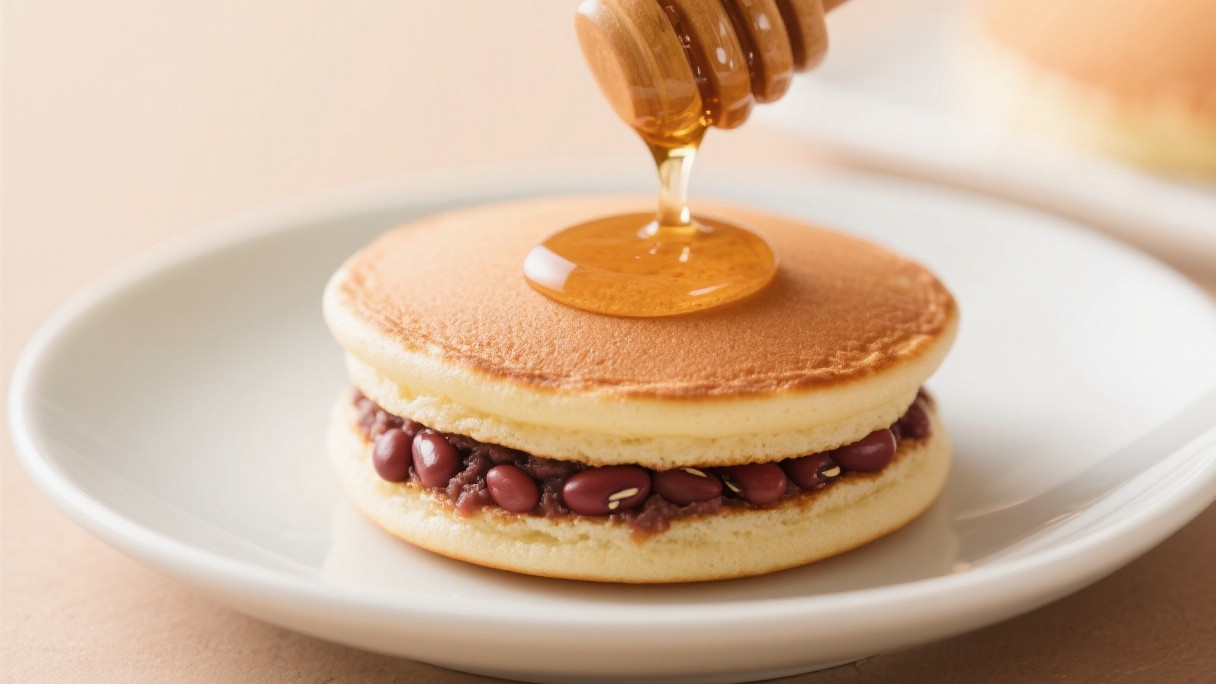
The filling should be thick enough to be visible when the dorayaki is pressed lightly but not so thick that it squeezes out the sides. I wrap each assembled dorayaki individually in plastic wrap and let it rest in the refrigerator for at least 30 minutes before serving. This resting period allows the moisture from the filling to soften the pancakes slightly and helps the flavors meld.
Variations and Serving Suggestions
While red bean is the traditional filling, dorayaki can be filled with other ingredients. I have made versions with chestnut paste, which has a rich, earthy sweetness that pairs well with the honey in the pancake batter. A whipped cream and strawberry version is popular with children and makes a lighter alternative to the red bean filling. Matcha cream, made by folding matcha powder into sweetened whipped cream, provides a bitter-green contrast that works surprisingly well.
I serve dorayaki at room temperature, which allows the texture of the pancakes to be at their softest. They keep in the refrigerator for up to 2 days, wrapped in plastic wrap, and I always bring them to room temperature for 20 minutes before eating.
Dorayaki pancakes are forgiving and fun to make. The key is getting the batter consistency right, so it spreads into even rounds without spreading too thin. Fill them generously with red bean paste and enjoy them while the pancakes are still slightly warm.