Japanese Yakitori: Skewered Chicken with Tare Glaze
Meat
|
March 23, 2026
Yakitori is a deceptively simple dish: chicken pieces skewered on bamboo sticks and grilled over charcoal. The simplicity, but masks a precision of technique that distinguishes exceptional yakitori from merely adequate versions.
I have eaten yakitori at dozens of yakitori-ya in Tokyo, and the best ones share common traits: the chicken is cooked through but still juicy, the skin is crisp and blistered, and the tare, the sweet-savory glaze, is applied in multiple thin layers that build a complex, caramelized coating. The quality of the charcoal, the cut of the chicken, and the timing of the tare application all contribute to the final result.
Cutting and Skewering Different Parts
Yakitori uses every part of the chicken, and each part is skewered and cooked differently. I break down a whole chicken into its component parts: breast, thigh, wings, skin, liver, heart, and tail. For breast meat, I cut it into uniform pieces about 3 centimeters square, threading 4 to 5 pieces per skewer with a small gap between each piece to ensure even cooking.
Thigh meat is cut slightly larger, about 4 centimeters, because it benefits from a bit more char on the exterior. Skin is stretched and folded onto itself, skewered in a ruffled pattern that maximizes the surface area exposed to the grill. I use bamboo skewers that are 15 to 20 centimeters long and soak them in water for at least 30 minutes before grilling to prevent burning.
Each skewer contains only one type of meat, because different parts cook at different rates.
The Tare Glaze: Soy, Mirin, and Sugar
Tare is the basting sauce that gives yakitori its distinctive lacquered appearance and sweet-savory flavor. I make a batch by combining 200 milliliters of soy sauce, 200 milliliters of mirin, 50 grams of sugar, and 50 milliliters of sake in a small saucepan. I bring it to a simmer over medium heat and cook for 10 minutes, skimming any foam that rises to the surface.
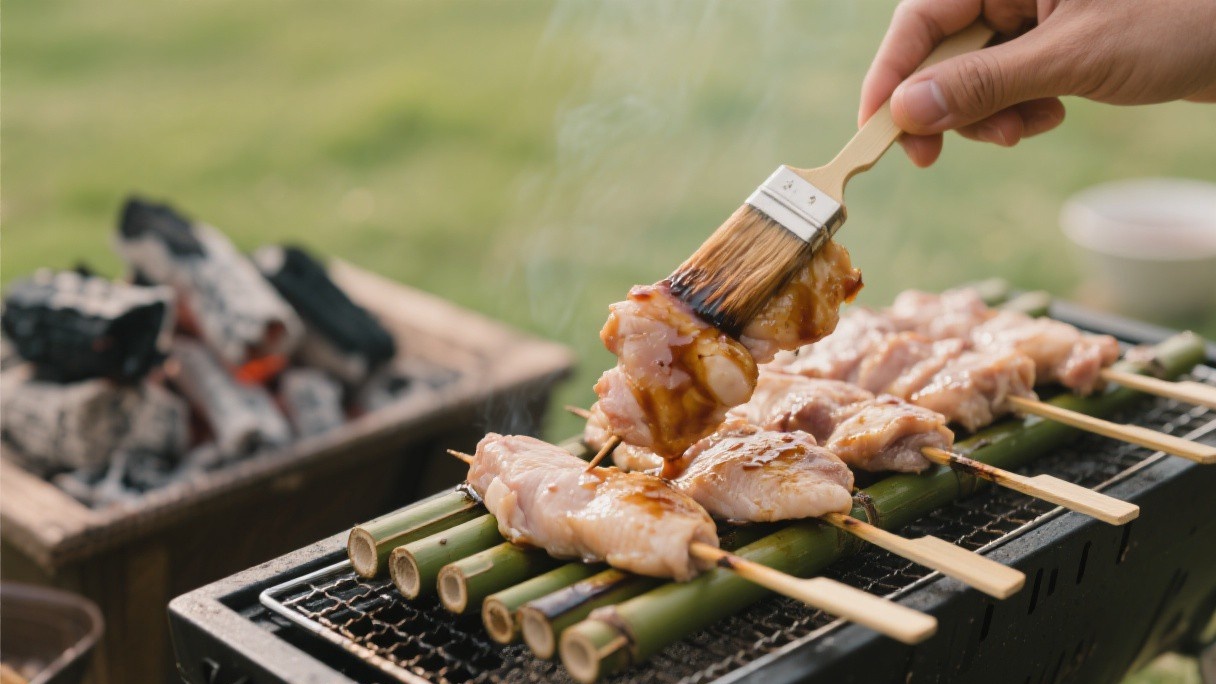
Then I reduce the heat to low and cook for another 20 minutes until the sauce has reduced by about one-third and has a syrupy consistency. I add a small piece of ginger and a clove of garlic during the last 5 minutes of cooking for additional depth, then strain the tare and let it cool. A well-made tare can be reused; after each grilling session, I bring it back to a boil, strain it, and refrigerate it.
The tare deepens in flavor with each use as it accumulates caramelized chicken juices.
Binchotan Charcoal and Heat Control
Traditional yakitori is grilled over binchotan, a type of white charcoal made from ubame oak that burns at an extremely high temperature with very little smoke or flame. Binchotan radiates intense, even heat that sears the chicken quickly and creates the characteristic crispy skin. I light the binchotan in a chimney starter or over a gas burner, which takes about 20 to 30 minutes for the charcoal to be fully ignited and glowing.
The chicken skewers are placed about 10 centimeters above the charcoal, and I control the cooking by adjusting the distance between the meat and the coals. I keep a spray bottle of water nearby to manage flare-ups, and I fan the coals with a handheld fan to increase the heat when needed.
Grilling Technique and Tare Application
I grill the skewers, turning them every 30 seconds, to ensure even cooking on all sides. The chicken is seasoned with a sprinkle of coarse salt before grilling, which draws out moisture and helps the skin crisp. For salt-only skewers, called shio, this is the only seasoning. For tare-glazed skewers, I apply the tare in three coats during the last 2 minutes of cooking.
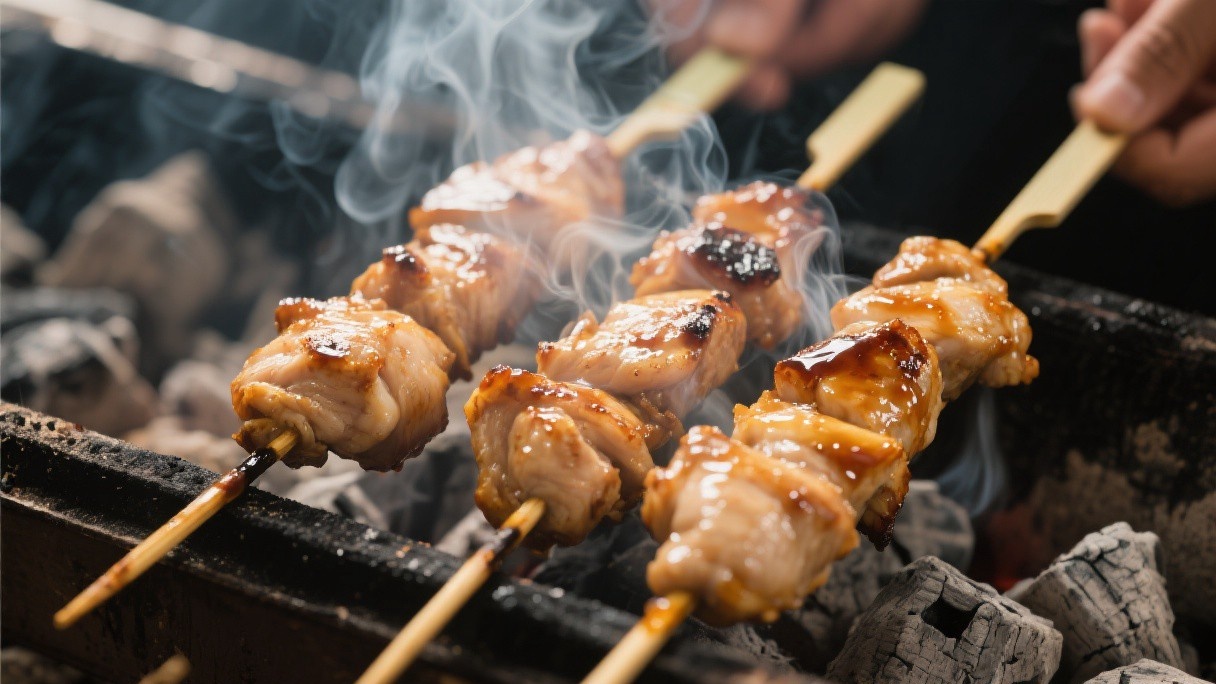
I dip a small brush into the tare and paint a thin, even layer onto the skewer, then continue turning for about 30 seconds until the glaze is set and slightly caramelized. I repeat this process two more times. Each thin layer of tare builds on the previous one, creating a thick, glossy coating that is sweet and savory without being sticky or overwhelming.
I watch the chicken closely during the final minute, because the sugar in the tare can burn quickly.
Serving and Eating
Yakitori is served immediately after grilling, arranged on a plate or directly on the wooden board in which they were grilled. I garnish with a sprinkle of shichimi togarashi, a seven-spice blend, and serve with a side of pickled ginger. The skewers are eaten by sliding the meat off the stick with the teeth or fingers. I serve them alongside cold beer or shochu, which complement the smoky, savory flavors.
At a yakitori-ya, the skewers are ordered one or two at a time and eaten as they arrive, with each round accompanied by a drink. The progression typically moves from lighter cuts like breast and cartilage to richer cuts like thigh and skin, finishing with the more assertive organ meats.
The most important step is the first one. Gather your ingredients, set aside uninterrupted time, and commit to following the process through. Even imperfect results will taste better than anything mass-produced, and the skills you build here carry over to countless other recipes.